


A small living room gets frustrating fast when one oversized sofa decides the whole layout for you. That is exactly why modular living room furniture for small spaces has become such a smart choice for apartments, guest rooms, and flexible homes - it gives you control over comfort, footprint, and function instead of forcing you to work around a fixed setup.
The appeal is not just that modular pieces can move. It is that they let you design around real life. Maybe your living room is also your work zone. Maybe guests stay over often. Maybe you want the room to feel open during the day but still have enough seating when friends come by. In a compact home, furniture needs to do more than look good. It has to earn its place.
Why modular living room furniture works in small spaces
Traditional living room furniture assumes your room is predictable. Small spaces usually are not. You might be dealing with narrow walkways, awkward corners, radiators, windows that cut into wall space, or an open-plan layout where the sofa has to define the room without blocking it.
Modular furniture solves that by breaking one large piece into adaptable components. Instead of committing to a single bulky couch, you can choose a setup that fits your dimensions now and still has room to change later. A two-piece arrangement might be right for your current apartment, while an added module or ottoman could make sense after a move.
That flexibility matters because square footage is only one part of the problem. The bigger issue is often how many jobs your room needs to do. Seating, lounging, sleeping, storage, and visual balance all compete for space. Modular furniture gives you a way to combine those needs instead of buying separate pieces for each one.
What to look for in modular living room furniture for small spaces
The best modular furniture is not automatically the biggest set with the most pieces. In a smaller room, restraint usually looks better and functions better too. Start with proportion.
Choose pieces with a lighter visual footprint
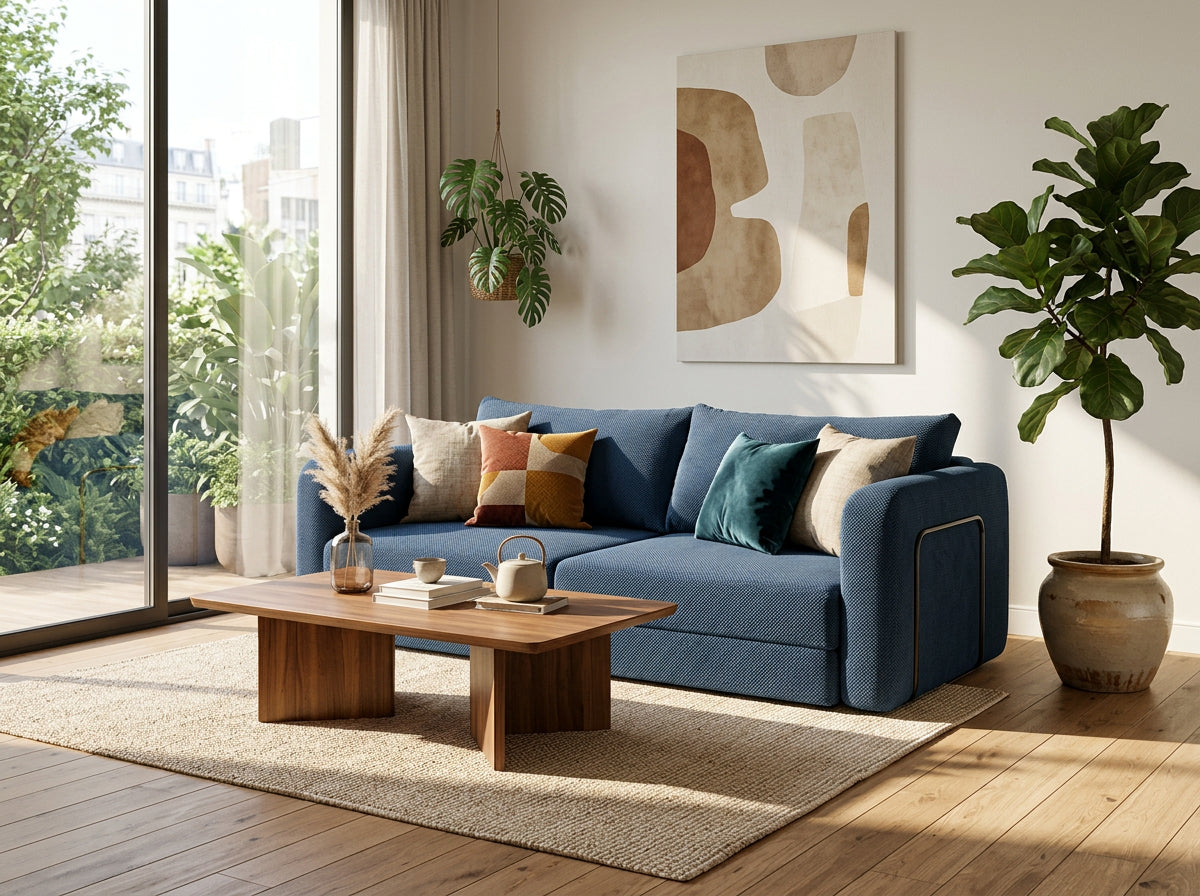
Low, clean silhouettes tend to work well in tighter rooms because they keep sightlines open. Furniture that looks grounded but not heavy helps the room feel calmer. Exposed legs or slim bases can also make a difference, though that depends on the style you want. If your taste leans softer and more architectural, a foam-based design with gentle edges can still feel light if the scale is right.
Depth matters as much as width. Deep seats are comfortable, but in a small room they can eat into walking space quickly. If you love the lounge feel, it helps to balance it with a compact arm profile or a shorter overall length.
Prioritize multi-function over extra pieces
A small-space layout improves when one piece does two jobs well. A modular sofa that converts into a guest bed is usually more useful than trying to fit both a couch and a sleeper chair into the same footprint. The same goes for movable ottomans or modules that can act as a chaise, coffee-table alternative, or extra seat when needed.
This is where trade-offs come in. Some highly functional furniture can look overly technical or compromise comfort. The best options do not make you choose between design and practicality. They feel like a living room first, while still giving you flexibility when plans change.
Make reconfiguration easy, not theoretical
A lot of furniture is called modular when it really just means sectional. True everyday flexibility depends on how easy the pieces are to move, rearrange, and live with. If a module is too heavy, too awkward, or too complicated to shift, most people will leave it in one position forever.
That is why lightweight construction can be a real advantage in compact homes. It makes cleaning easier, layout changes less annoying, and seasonal resets far more realistic. If you actually use your furniture differently over time, modularity becomes more than a selling point.
The small-space layouts that benefit most
Not every room needs the same setup, and modular living room furniture should respond to that.
In studio apartments, a compact modular sofa bed often makes the most sense because it supports both daytime seating and overnight sleeping without adding another dedicated bed. In narrow living rooms, a straight-line configuration can preserve circulation better than an L-shape. In open-plan spaces, a corner arrangement can help define the lounge zone while keeping the room visually organized.
For homes that host often, a modular setup with a sleeper function is especially practical. You get a cleaner everyday footprint than a permanent guest bed, but you still have a real backup when friends or family stay over. That balance is one of the strongest arguments for modular design in modern homes.
Materials and finishes matter more in a small room
When the room is compact, every material choice has more impact. There is less space to hide a color that feels too dark or a fabric that looks worn too quickly.
Lighter fabrics can make a room feel more open, but they also raise obvious concerns about spills and maintenance. Darker tones are more forgiving, though they can visually shrink a room if the rest of the palette is heavy. For many people, the sweet spot is a textured neutral or muted earthy tone that adds depth without overwhelming the space.
Washable or removable covers are especially useful in smaller homes, where the living room often sees constant use. If your sofa handles movie nights, coffee breaks, work calls, and overnight guests, easy care is not a bonus. It is part of long-term livability.
Certified materials matter too. In compact interiors, you are physically closer to everything in the room, so quality and material standards are worth paying attention to. Comfort should feel good now and still hold up later.
How to avoid common small-space furniture mistakes
One of the most common mistakes is trying to solve a space problem by buying the smallest possible furniture. Tiny pieces can make a room feel scattered and underfurnished. What usually works better is choosing fewer pieces with better function.
Another mistake is ignoring the room’s real measurements. Not just wall length, but door clearance, walkway space, and how far a piece extends when converted for sleeping or lounging. A sofa bed that fits when closed but blocks everything when opened is only half a solution.
It also helps to think beyond the first layout. Good modular furniture should still work if you move, change your rug size, swap a side table, or decide the room needs a different flow six months from now. Adaptability is the point.
A more personal way to furnish a compact room
Small spaces tend to expose compromise. You feel every inch that does not work, every function your furniture cannot handle, and every design choice that looked better online than it does in the room. That is why personalization matters.
Being able to choose configuration, fabric, and finish gives you more control over how the room works and how it feels. Instead of settling for a one-format couch and hoping it fits your life, you build around your actual needs. That approach feels especially relevant for people furnishing apartments, multipurpose guest areas, or homes that need to stay flexible as life changes.
Brands built around this idea, including Seesofa, have leaned into a more customer-led furniture experience for exactly that reason. The goal is not just to sell a sofa. It is to let you shape one around your room, your style, and the way you live.
When modular furniture is worth it
Modular furniture is usually worth the investment when your living room has more than one role, when you expect your layout to change, or when you want longer-term flexibility instead of a fixed solution. It may be less necessary if you have a large dedicated living room and a very stable setup that is unlikely to change.
For most small homes, though, adaptability pays off quickly. The right modular piece can replace multiple single-purpose items, reduce clutter, and make the room feel more intentional. That is not about squeezing more in. It is about choosing furniture that gives you more freedom within the space you already have.
A small living room does not need furniture that asks you to compromise on comfort or style. It needs furniture that understands the assignment and leaves room for your life to keep moving.


Leave a comment
This site is protected by hCaptcha and the hCaptcha Privacy Policy and Terms of Service apply.