


A sofa can look perfect in a showroom and still feel wrong once it meets the realities of your home: an awkward corner, a new apartment, overnight guests, a pet, or a living room that has to do more than one job. So, what is a modular sofa? It is seating made from separate, connectable pieces that can be arranged to suit your space, then adjusted when your life changes.
Rather than committing to one fixed shape, you choose the layout, scale, comfort features, and often the fabric and finish. That freedom makes a modular sofa especially useful for contemporary homes where every square foot needs to earn its place.
What Is a Modular Sofa, Exactly?
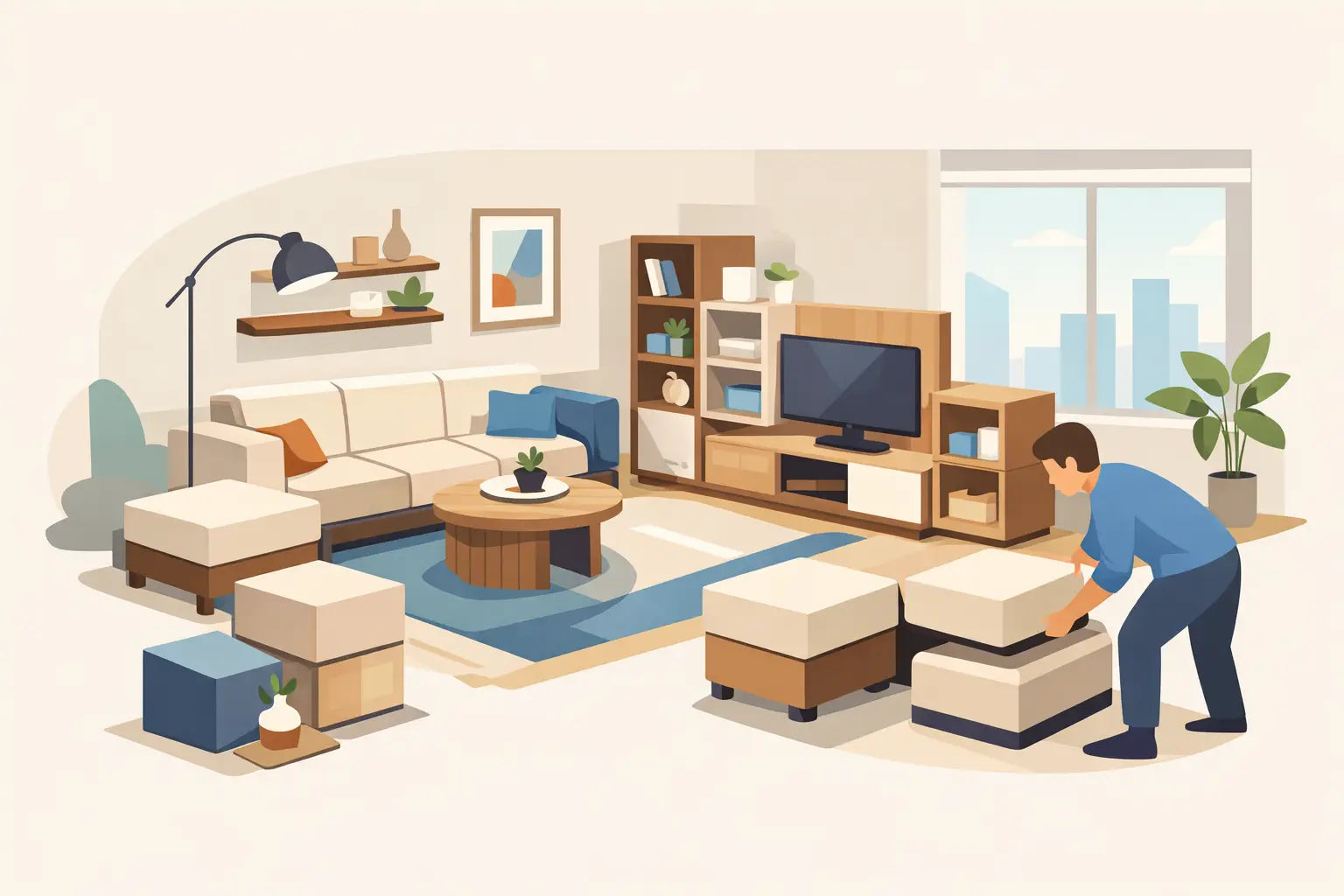
A modular sofa is built in individual sections, often called modules. Depending on the design, those modules may include armless seats, corner units, chaise sections, ottomans, armrests, backrests, and sleeper elements. They work together as one sofa, but they are not permanently locked into a single configuration.
You might begin with a compact two-seat arrangement for an apartment, then add a chaise when you move to a larger home. Or you may place two seats side by side for everyday lounging, separate them for extra guest seating, and bring them together again when friends stay over. The core benefit is simple: your furniture can respond to your room instead of forcing your room to respond to your furniture.
Not every modular sofa has the same level of flexibility. Some have a few predefined pieces that create a sectional. Others are designed as a true system, with components that can be rearranged, expanded, or used independently. Before buying, it helps to understand which kind of flexibility you actually need.
Modular Sofa vs. Sectional Sofa
The terms are often used interchangeably, but they are not quite the same. A sectional sofa is usually a larger sofa made to fit a particular layout, such as an L-shape or U-shape. It may arrive in separate pieces for delivery, yet those pieces are generally intended to stay in one arrangement.
A modular sofa is more open-ended. Its sections are designed to be moved, swapped, added, or configured in different ways. A modular sofa can certainly become an L-shaped sectional, but it can also become a straight sofa, a lounge setup, a guest bed, or separate seats.
That distinction matters if you expect your needs to change. A fixed sectional can be the right choice for a room with a permanent layout and a clear seating plan. A modular design is better suited to renters, frequent movers, growing households, and anyone who wants options without replacing an entire sofa.
Why Modular Seating Works So Well in Modern Homes
Modern living rooms rarely have just one purpose. They may be a movie room after work, a guest room on weekends, a work-from-home backdrop during the day, and a place to stretch out with a book when the house is quiet. A modular sofa gives that room more range.
It lets you design around the room
A narrow living room may need a clean, straight configuration rather than a bulky corner sofa. An open-plan space may benefit from a chaise that defines the lounge area. In a small apartment, an ottoman can work as a footrest, occasional seat, or coffee-table alternative depending on the day.
The practical advantage is not simply having more pieces. It is being able to choose pieces with a purpose. You can create a layout that leaves room for doors to open, keeps walkways clear, and gives the room a calmer visual balance.
It can make hosting easier
When guests come over, a flexible sofa gives you more ways to create comfortable seating. Modules can be arranged as a larger lounging area, pulled apart into individual seats, or paired with an ottoman to make room for one more person.
For homes that regularly host overnight visitors, a modular sofa bed adds another layer of function. Foam-based designs can convert from a relaxed seating setup into a sleep surface without the heavy pull-out mechanism common in traditional sleeper sofas. This is especially appealing in a guest room that also needs to function as an office, studio, or everyday lounge.
It supports changing life stages
Your first configuration does not have to be your forever configuration. A smaller sofa may suit a first apartment, while a larger family room may call for additional seating later. If you move, redesign, or simply want a different rhythm in the room, modular pieces can help you adapt without starting from zero.
That said, flexibility is only useful when the modules are thoughtfully designed. Look for pieces that feel intentional from every angle, connect securely, and remain comfortable whether they are used alone or together.
The Details That Matter Before You Buy
A modular sofa is a major purchase, and the best choice is not always the one with the most possible configurations. Focus on the details that affect how it will live in your home.
Start with dimensions. Measure the wall, but also measure the full room, including door swings, walkways, radiators, windows, and the path from your entryway to the room. Consider each module's size as well as the overall configuration. A sofa that fits on paper can still feel oversized if it crowds the circulation space around it.
Next, think about comfort. Seat depth, seat height, back support, and cushion feel all shape how a sofa performs day to day. Deep, low seating can feel relaxed and sculptural, but it may not suit everyone for upright reading or longer conversations. A more supportive setup may be better if the sofa is your main everyday seat.
The construction also deserves attention. Lightweight foam modules are easier to move and rearrange than heavy frame-and-spring pieces, particularly in apartments or homes with stairs. High-quality foam should still offer support and shape retention, so ask about the materials and certifications behind the comfort.
Finally, consider care before you choose a color. A pale fabric can look striking, but a washable cover may matter more if you have pets, children, frequent guests, or a habit of eating dinner on the sofa. Removable covers make it possible to refresh the look and handle everyday life with less stress. Ordering fabric samples before committing can also make a real difference, since color, texture, and warmth change dramatically between a screen and your home.
Can a Modular Sofa Replace a Guest Bed?
It depends on the design and how often guests stay over. A standard modular sofa with a chaise or ottoman may provide a comfortable place to rest, but it is not automatically a true bed. If sleep functionality is a priority, choose a system specifically designed to create a level, supportive sleep surface.
A foam sofa bed can be particularly useful in compact spaces because it avoids the hard bars, folded mattresses, and complex mechanisms associated with many traditional sleeper sofas. The conversion should feel simple enough that you will actually use it, not like a project reserved for special occasions.
Seesofa's FLOW and FLOWY models are designed around this kind of everyday adaptability, combining configurable foam seating with sleep-ready functionality and removable covers. The goal is not to make your living room feel like a spare bedroom. It is to give one well-designed space the freedom to become both when needed.
When a Modular Sofa May Not Be the Best Fit
Modular furniture is not automatically the answer for every room. If you have a very defined space, know you want one permanent layout, and prefer the tailored look of a classic fixed sofa, a traditional sofa or sectional may feel more straightforward.
There can also be visual trade-offs. More modules may mean more visible seams, and a highly relaxed modular design can look less formal than a tightly upholstered sofa. The right choice comes down to the atmosphere you want as much as the functions you need.
For many homes, though, those seams represent possibility. They allow you to add a lounge seat, switch the chaise to the other side, create a guest bed, or refresh the room without replacing the furniture you already love.
Choose the configuration that works for your life right now, then leave enough room for the life that comes next. A well-chosen modular sofa should not ask you to settle into one fixed idea of home. It should give you the freedom to make the space your own.


Leave a comment
This site is protected by hCaptcha and the hCaptcha Privacy Policy and Terms of Service apply.