

Foam Sofa Styling Ideas: How to Make Your Living Room Look Stunning
A foam sofa is the anchor of almost every living room. It's the largest piece, the one your eye lands on first, and the one that sets the emotional tone for the whole space — calm or energetic, minimal or layered, polished or lived-in. Choosing the right sofa is one decision. Styling it well is another. Here's how to make sure yours looks as good as it feels.
Choosing the Right Color
Color is the single biggest factor in how a foam sofa reads in a room, and it's worth thinking through before you fall for a swatch in isolation.
Neutrals are the safe, smart choice — for a reason. Warm oat, soft greige, deep charcoal: these tones work with almost any wall color, flooring, and decor style you might introduce later. A neutral sofa foam upholstery gives you room to experiment with cushions, throws, and accent pieces without ever needing to replace the largest item in the room. If you're styling for the long term or you tend to change your mind about accent colors seasonally, neutral is the foundation that lets everything else move around it.
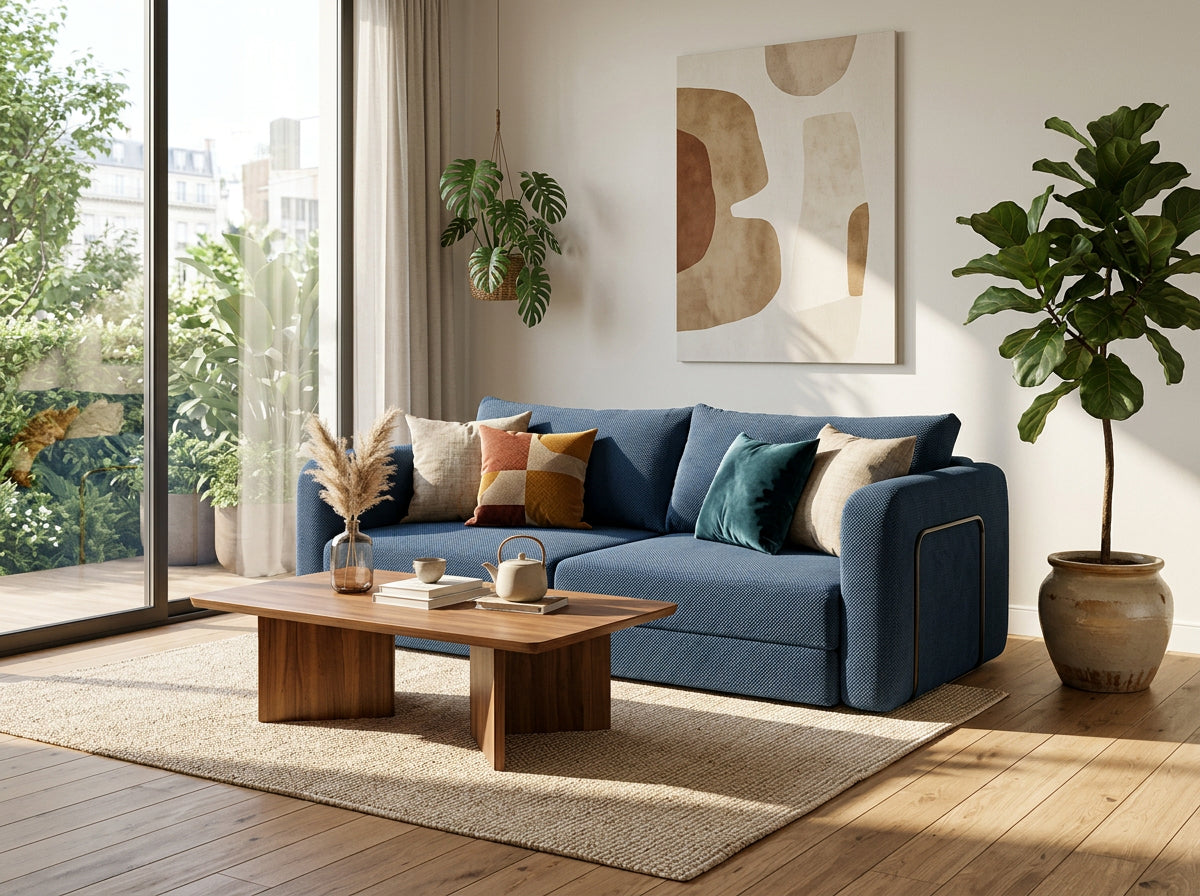
Earth tones bring warmth without commitment. Sage green, terracotta, warm clay — these sit between neutral and bold. They add personality and a sense of groundedness to a room without overwhelming it the way a saturated color might. They also pair beautifully with natural materials: wood, linen, rattan, stone. A sage memory foam sofa next to a wooden coffee table and a few plants creates a room that feels calm and intentional without trying too hard.
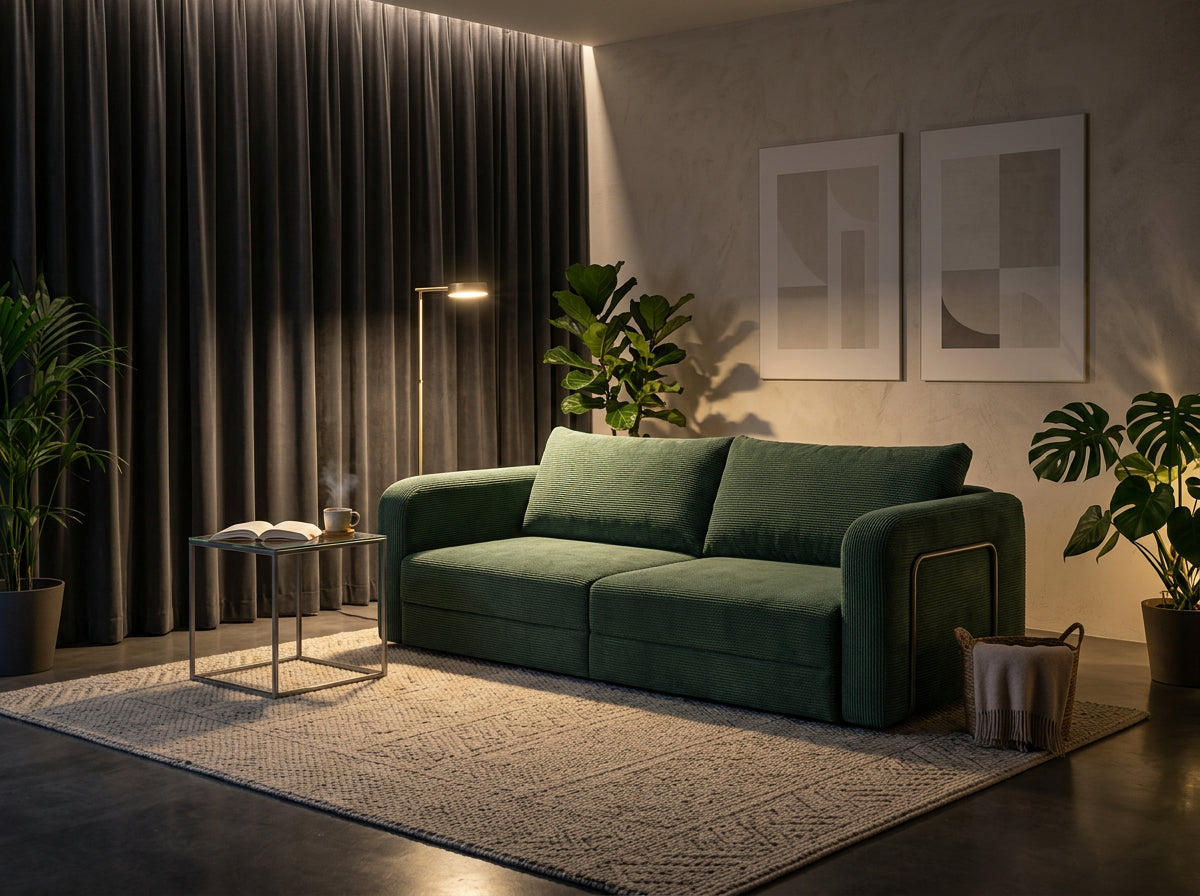
Bold colors make a statement — when the room supports it. Deep emerald, ink blue, rich burgundy: these work best as a single bold gesture in a room that's otherwise kept fairly simple. A bold sofa surrounded by equally bold patterns and colors competes with itself. Let the sofa be the moment, and keep walls, flooring, and major furniture pieces quieter around it.
Match color to light, not just to taste. A color that looks rich and warm in a south-facing room with abundant natural light can look flat or cold in a north-facing room with less sun. If possible, look at fabric swatches in your actual space, at different times of day, before committing.

Styling in Modern vs. Cozy Interiors
The same foam sofa can read completely differently depending on what surrounds it. Here's how to lean into each direction intentionally.
Modern and minimal. Clean lines, low profiles, and a restrained color palette define this style. A foam sofa in a single solid neutral — no pattern, no excess texture — works best here. Pair it with simple geometric cushions in one or two complementary tones, a low coffee table in wood or stone, and sparse, considered decor. Negative space is part of the design in a modern room — resist the urge to fill every surface. The sofa should feel architectural, almost sculptural, within the space.
Warm and cozy. This is where texture does the heavy lifting. A foam sofa in a deeper, richer color — terracotta, deep green, warm brown — becomes the centerpiece of a room built around layering: a chunky knit throw, a mix of cushion textures, a vintage rug underfoot, warm lighting from table lamps rather than overhead fixtures. Books, plants, and personal objects are encouraged here rather than edited out. The goal is a room that invites you to stay, not one that photographs perfectly and feels untouchable.
Finding your version in between. Most living rooms land somewhere between these two poles, and that's not a compromise — it's usually the most livable outcome. A modular foam sofa in a warm neutral, styled with a mix of clean-lined and slightly textured cushions, can move comfortably between both directions depending on the season or your mood. This flexibility is part of why modular systems have become so popular: the sofa itself stays constant while the styling around it evolves.
Mixing Textures and Decor
A single-texture room — even in a beautiful color — can feel flat. The most visually rich living rooms combine multiple textures in a way that feels intentional rather than chaotic.
Start with the sofa fabric itself. Performance velvet, boucle, woven linen-blends — each brings a different tactile quality. Velvet adds richness and catches light beautifully. Boucle introduces a soft, looped texture that feels inherently cozy. A tighter linen weave reads cleaner and more tailored. Whichever you choose for your foam sofa, let the cushions and throws either echo that texture or deliberately contrast it.
Layer cushions in odd numbers. Three or five cushions, in a mix of sizes and at least two complementary textures, tends to look more natural than a symmetrical, matched set. Combine a solid color with a subtle pattern, and vary the texture — a knit alongside a smooth woven cotton, for example.
Add one organic element. A wood coffee table, a woven rattan basket, a stone side table, or simply a few plants — natural materials soften the look of upholstered furniture and keep a room from feeling too uniform or showroom-like.
Don't forget the rug. A rug under or in front of a foam sofa anchors the entire seating area and adds another texture layer underfoot. As a general rule, front legs of the sofa should sit on the rug, not floating just off the edge — this visually ties the furniture to the floor rather than leaving it looking disconnected.
Small Space Styling Tips
A smaller living room doesn't mean fewer styling options — it means being more deliberate about each one.
Choose a sofa with visible legs. Furniture that floats slightly above the floor, rather than sitting flush against it, reads as lighter and makes the room feel more open. This applies to a foam sofa bed just as much as a fixed sofa — a raised profile keeps the visual weight down even when the piece itself is functional and substantial.
Lean into lighter, brighter colors. Darker sofas can work in small spaces, but they read heavier. A lighter neutral foam sofa tends to recede visually, making the room feel larger than a deep, saturated color would in the same footprint.
Consider modular for flexibility. A modular foam sofa lets you configure exactly the footprint your room needs — no more, no less — rather than committing to a fixed size that might be slightly too large. This is particularly useful in oddly shaped or narrow rooms where a standard sofa size leaves either too little walking space or wasted corners.
Use mirrors and reflective surfaces nearby. A mirror positioned to reflect window light, or a glass-topped side table near the sofa, helps a smaller room feel more open without adding visual clutter.
Keep the cushion count modest. Three cushions on a smaller sofa looks intentional; six can look cramped. In tighter spaces, restraint reads as confidence, not as lacking.
Real Homes: #LetsSEEyourSOFA
Every styling tip in this guide is a starting point, not a rulebook — and the best inspiration usually comes from seeing how real people have made these ideas their own. That's exactly what our community shares under #LetsSEEyourSOFA: real living rooms, real configurations, real fabric choices, styled in homes that look genuinely lived in rather than staged for a catalogue.
Browse the tag and you'll find a Flow Sofa in deep slate anchoring a moody, plant-filled reading corner. A sage Flowy paired with rattan and warm wood in a sunlit studio apartment. A terracotta modular foam sofa configuration stretched into an L-shape for a family room that hosts movie nights and Sunday mornings in equal measure. No two setups look the same, because no two homes — or the people in them — are the same.
If you're still deciding on color, texture, or configuration, our Inspirations page collects styled looks across every fabric option, room type, and interior style covered in this guide. And if a photo has you leaning toward a particular shade, request a fabric swatch before you commit — seeing the actual material in your own light tells you more than any screen ever will.
Tag your own setup with #LetsSEEyourSOFA. We'd love to see how you make it yours.

Frequently Asked Questions About Foam Sofa Styling
1. What is the best color for a foam sofa?
Neutral shades like beige, greige, or charcoal are the most versatile because they pair easily with different interior styles and seasonal decor.
2. How can I style a foam sofa in a modern living room?
Choose clean-lined cushions, a simple coffee table, and a limited color palette. Keep accessories minimal to create a balanced, uncluttered look.
3. How do I make a foam sofa feel more cozy?
Layer different textures with throws, cushions, rugs, and warm lighting. Natural materials like wood and rattan also add warmth.
4. Are modular foam sofas good for small spaces?
Yes. Modular sofas can be arranged to fit your room layout, making them a practical choice for compact or awkwardly shaped living rooms.
5. How many cushions should I use on a sofa?
Three to five cushions usually create a balanced look. On smaller sofas, fewer cushions help keep the space feeling open.
6. Should a rug go under a foam sofa?
Yes. Ideally, the front legs of the sofa should rest on the rug to visually connect the seating area and make the room feel more cohesive.
Browse styled looks on our Inspirations page, or request free fabric swatches for the Flow and Flowy collections at SEESOFA.


Leave a comment
This site is protected by hCaptcha and the hCaptcha Privacy Policy and Terms of Service apply.