

Memory Foam Sleeper Sofa: Everything You Need to Know Before Buying
You've made the decision. You want a sofa that actually sleeps well — not one that leaves your guests apologizing for their stiff back at breakfast. A memory foam sleeper sofa is the right call. But before you click "add to cart," there are a few things worth understanding: what separates a genuinely good one from a well-photographed disappointment, how thick the mattress actually needs to be, and why the right choice depends more on your situation than on a "best of" list.
This guide covers all of it — clearly, without the fluff.
What Is a Memory Foam Sleeper Sofa?
A memory foam sleeper sofa is a two-function piece of furniture: a fully functional sofa during the day, and a proper bed when you need it. Unlike traditional pull-out sofas — which typically use thin spring mattresses that you can feel the frame through — a sleeper sofa with memory foam mattress uses pressure-contouring foam as the sleeping surface. The result is a sleeping experience that's genuinely comfortable, not just tolerable.
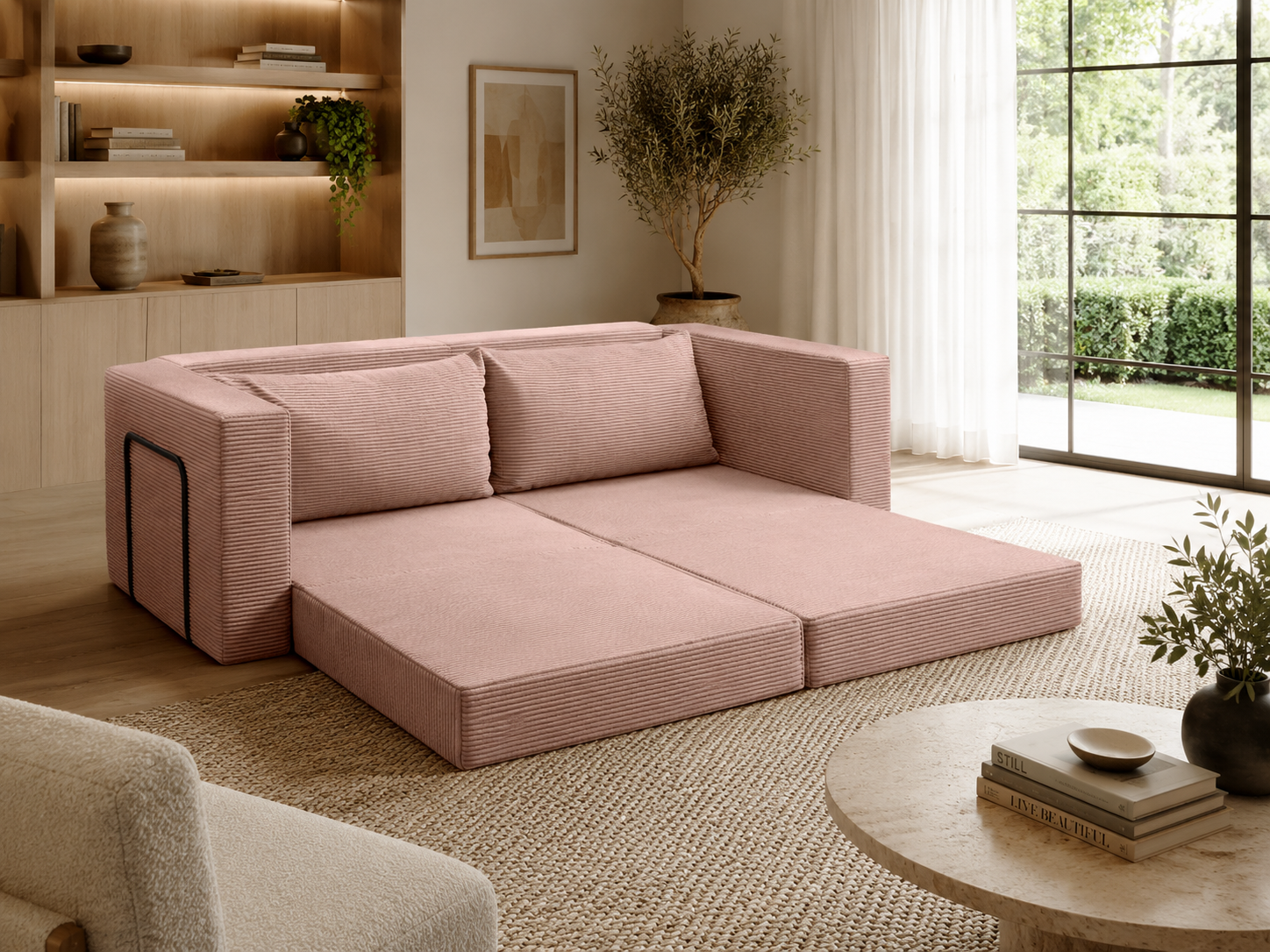
The mechanism varies by design. Some use a fold-out frame where the mattress unfolds from inside the sofa. Others use a more seamless click-clack or glide system where the backrest drops flat, revealing the sleeping surface below. Both approaches work well when built properly. The difference lies in speed, ease of use, and how much floor space the extended position requires.
What makes memory foam the right material for a sleeper sofa specifically? Two things: pressure relief and silence. Memory foam contours to the body rather than pushing back against it, which eliminates the pressure points that make spring-based sleeper sofas uncomfortable. And because foam has no moving parts, it's completely silent — no springs shifting at 2am, no frame sounds when someone adjusts position. In an apartment or open-plan space, that silence matters more than people expect.
A quality foam sleeper sofa is not a compromise. It's a considered solution for people who want to live well in the space they have.

Benefits vs. a Regular Sofa or a Regular Bed
The question most people ask before buying a sleeper sofa is the honest one: why not just buy a sofa and a separate bed? Here's where the memory foam sleeper sofa makes its case.
Space. A sofa and a dedicated guest bed together occupy two footprints permanently. A sleeper sofa occupies one — and only reveals the second when it's needed. In apartments, studios, or any room doing double duty as a living space and a guest room, this isn't a minor convenience. It's the difference between a room that functions and one that doesn't.
Comfort over traditional pull-outs. Standard pull-out sofas — the kind with thin, spring-loaded mattresses — have a deservedly poor reputation. The bars of the frame dig through the mattress. The sleeping surface sags in the middle. Guests tolerate it rather than actually resting. A sleeper sofa with a memory foam mattress breaks from this entirely. When the mattress layer is thick enough and the foam density is appropriate (more on this shortly), guests sleep well. Not "fine for one night" well — actually well.
Daily sofa quality. This is where many sleeper sofas fall short, and it's worth naming directly. Some manufacturers optimize for the bed function and neglect the sofa. The seat cushions are too thin, the back support is shallow, and the sofa spends 90% of its life feeling like an afterthought. A properly designed foam sleeper sofa performs as a primary sofa first — comfortable for sitting, aesthetically considered, built for daily use — and converts to a bed when the occasion demands it.
Cost efficiency. A quality sleeper sofa costs more than a basic sofa, but considerably less than a quality sofa and a quality guest bed combined. For anyone furnishing a space with real constraints, the math works.
How to Pick the Right Memory Foam Sleeper Sofa
Not all options are equal. Here's what actually separates a good memory foam sleeper sofa from one you'll regret.
Foam density. The single most important specification. For a sofa function, look for seat cushion foam rated at minimum 30 kg/m³. For the sleeping surface, aim for 35 kg/m³ or above. Foam below 25 kg/m³ will compress within a year of regular use and offer little genuine pressure relief. Quality brands publish these numbers — if they don't, ask directly. No answer is an answer.
Mattress thickness. The sleeping surface needs to be thick enough to insulate you from the sofa frame beneath it. As a general rule: under 8 cm is insufficient for most adults. 10–12 cm is functional. 12–15 cm is genuinely comfortable. See the full thickness guide in the next section.
The mechanism. Open and close it. Ideally, do this several times. A quality mechanism moves smoothly, requires minimal effort, and locks securely in both positions. Stiff, heavy, or noisy mechanisms become genuine frustrations over time — especially when you're setting up a bed late at night or folding it back up in the morning.
Sofa comfort as a sofa. Sit on it the way you actually sit. Slouch, cross your legs, lean into a corner. A sleeper sofa memory foam mattress model that's only comfortable to sit on straight-backed is going to make your daily life worse. The sofa function should be the priority, not an afterthought.
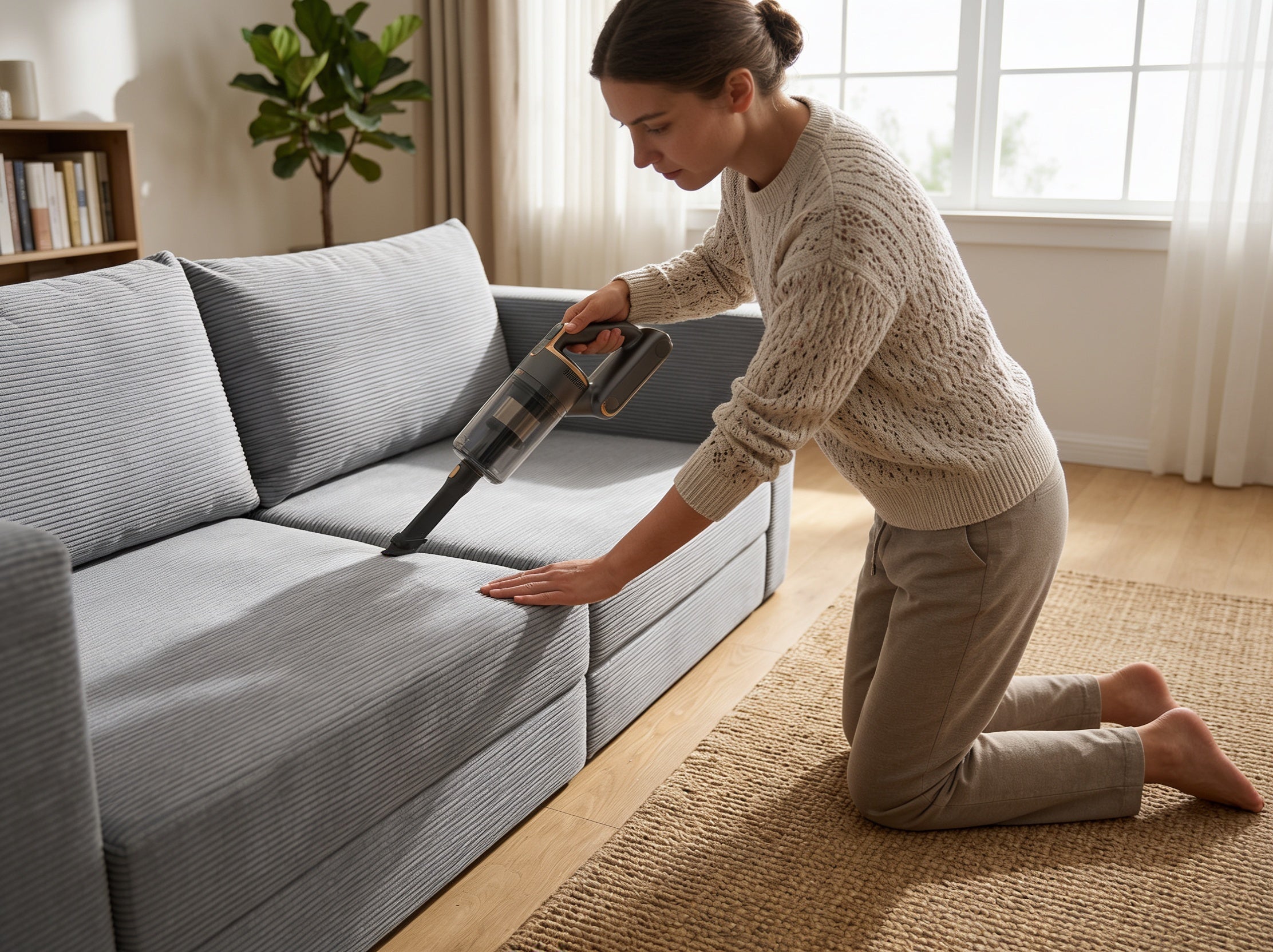
Cover material. Removable, washable covers extend the life of the piece significantly and make maintenance genuinely easy. Performance fabrics — tightly woven polyester, treated velvet — are more practical for a piece that will see regular use in multiple configurations.
Size for sleeping. Double (135–140 cm wide) is comfortable for one adult. Queen (150–160 cm) gives two people adequate space. Measure your room in the extended position before committing to a size.
Mattress Thickness Guide
This is the detail most people skip, and it's one of the most important decisions in choosing a foam sleeper sofa. Mattress thickness determines whether the sleeping experience is genuinely comfortable or merely acceptable.
|
Mattress Thickness |
Sleeping Experience |
Best For |
|
Under 8 cm |
Frame pressure noticeable; uncomfortable for most adults |
Occasional use only, younger guests |
|
8–10 cm |
Adequate for short stays; minimal pressure relief |
1–2 night visits, lighter sleepers |
|
10–12 cm |
Comfortable; good pressure distribution |
Most adults, regular guest use |
|
12–15 cm |
Excellent; comparable to a dedicated guest mattress |
Frequent use, couples, heavier sleepers |
|
15 cm+ |
Premium sleep experience; full body support |
Daily use, primary sleeping surface |
A few things to keep in mind alongside these numbers:
Foam density and thickness work together. A 12 cm mattress in low-density foam will still compress under body weight and offer poor support. A 10 cm mattress in high-density, high-resilience foam can outperform it. Always look at both figures together.
Body weight matters. Heavier sleepers compress foam more deeply, which means the effective support layer is thinner. If the sleeper sofa will be used by adults over 90 kg regularly, prioritize both thickness and density — a minimum of 12 cm at 35 kg/m³ or higher.
The sofa base affects perception. A firm, well-supported sofa frame underneath the mattress acts as a secondary support layer. A sagging or flexible base works against even a good mattress. This is another reason frame construction matters as much as the foam itself.
For a sleeper sofa with memory foam mattress used more than occasionally, 12 cm at 35 kg/m³ or above is the benchmark to aim for.
Flow Sofa: A 3-in-1 Solution
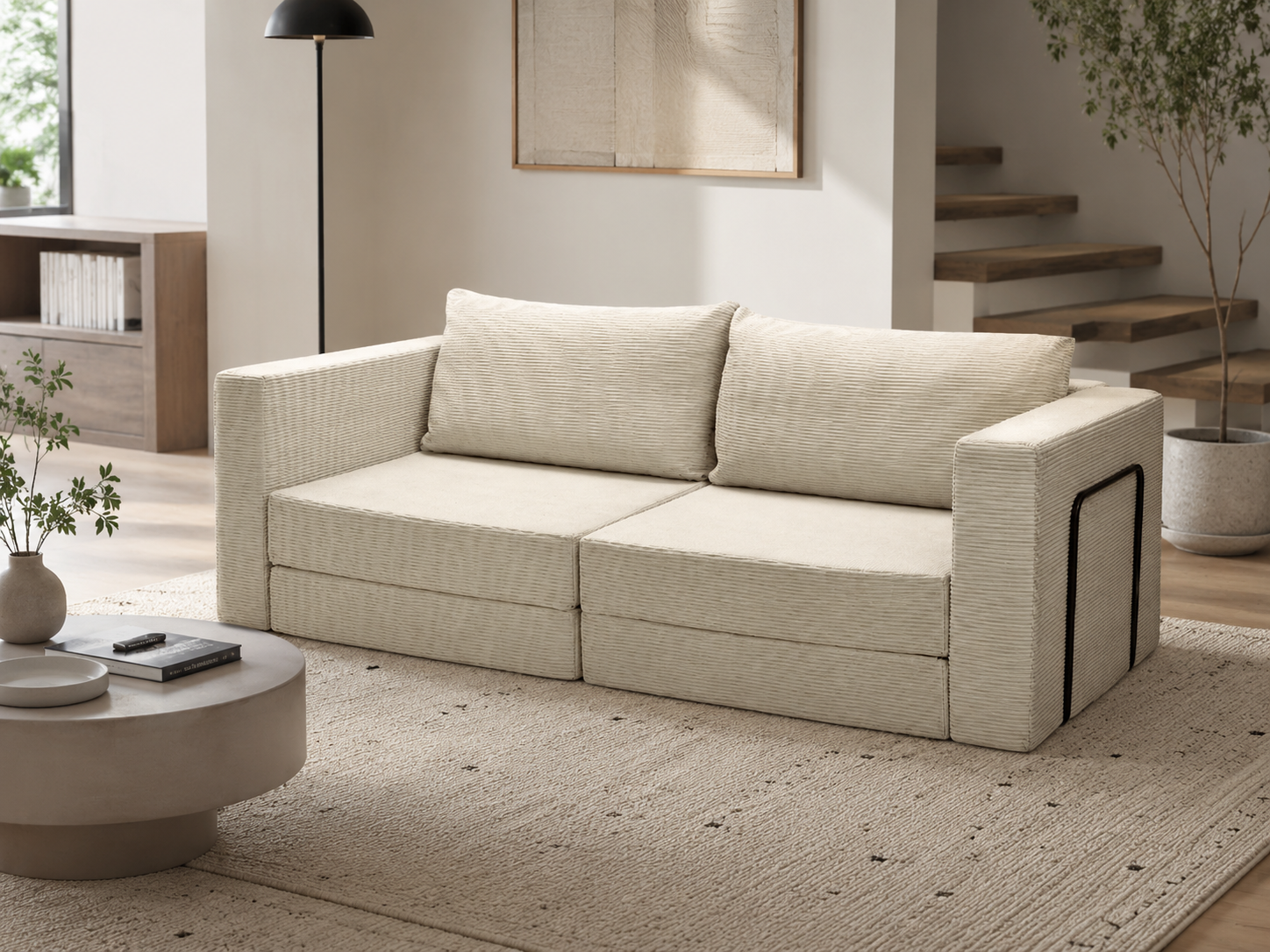
Most sleeper sofas make you choose: sofa or bed. The Flow Sofa from SEESOFA was designed around a third option — a piece that functions as an everyday sofa, a proper guest bed, and a considered expression of how you live. That's the 3-in-1.
As a sofa, the Flow is built on a solid beech frame with corner-block reinforcement and a three-layer cushioning system: a 40 kg/m³ high-density polyfoam base, an HR (high resilience) foam transition layer, and a memory foam top surface. Seat cushions test at ILD 38 — medium-firm, supporting without feeling rigid. The back cushions use a slightly lower ILD for comfort during longer sitting sessions. This is a sofa you'd choose even if it never needed to convert.
As a bed, the Flow uses a patented glide mechanism that opens fully in a single motion — one hand, under five seconds, no effort. The sleeping surface is 190 cm long and available in Full (135 cm wide) or Queen (150 cm wide) configurations. The sleeper sofa memory foam mattress layer sits at 13 cm — above the 12 cm threshold we'd recommend for regular use — at a density that supports most adult body types without bottoming out.
As a design object, the Flow is available in five fabrics: warm oat, deep slate, terracotta, sage, and charcoal. All are performance-weave, stain-resistant, and machine washable via zip-off covers. The solid walnut legs are removable for delivery and replaceable if needed. The frame carries a 15-year warranty.
The Flow also pairs with the Flowy Sofa — SEESOFA's modular armchair version of the same system. The Flowy uses identical foam construction and the same fabric range, designed to work alongside the Flow as a cohesive living room configuration. Together, they create a space that's ready for daily life and ready for guests — without visual compromise.
If you've been looking for a memory foam sleeper sofa that doesn't feel like a concession, the Flow is where that search ends.

Frequently Asked Questions About Memory Foam Sleeper Sofas
1. What is a memory foam sleeper sofa?
It is a sofa that works as everyday seating and converts into a bed with a memory foam sleeping surface.
2. Is a memory foam sleeper sofa comfortable for guests?
Yes, if it has the right foam density and a thick enough mattress. Around 12 cm or more is best for regular use.
3. What mattress thickness should I choose?
For occasional use, 8-10 cm may be enough. For real comfort, choose 12-15 cm.
4. Why is memory foam better than a spring mattress?
Memory foam reduces pressure points, adapts to the body, and stays silent during movement.
5. What should I check before buying?
Check the foam density, mattress thickness, opening mechanism, cover material, and size when fully extended.
6. Can a sleeper sofa be used every day?
Yes, but only if it is built with high-density foam, a strong frame, and a comfortable sofa design.

Leave a comment
This site is protected by hCaptcha and the hCaptcha Privacy Policy and Terms of Service apply.