

How to Care for a Foam Sofa: Tips to Keep It Looking New for Years
A good foam sofa is an investment, and like most investments, it rewards a little ongoing attention. The difference between a sofa that looks tired after eighteen months and one that still looks genuinely good after a decade usually isn't the quality of the piece itself — it's how it's been cared for along the way.
The good news is that caring for a foam sofa doesn't require much. A few consistent habits, the right approach to stains, and an understanding of what your sofa's construction can and can't handle will keep it looking new for years. Here's everything worth knowing.
How Often Should You Clean Your Foam Sofa?
Most people clean their sofa far less than they should — not because they're neglectful, but because nobody tells them what "regular" actually means for furniture.
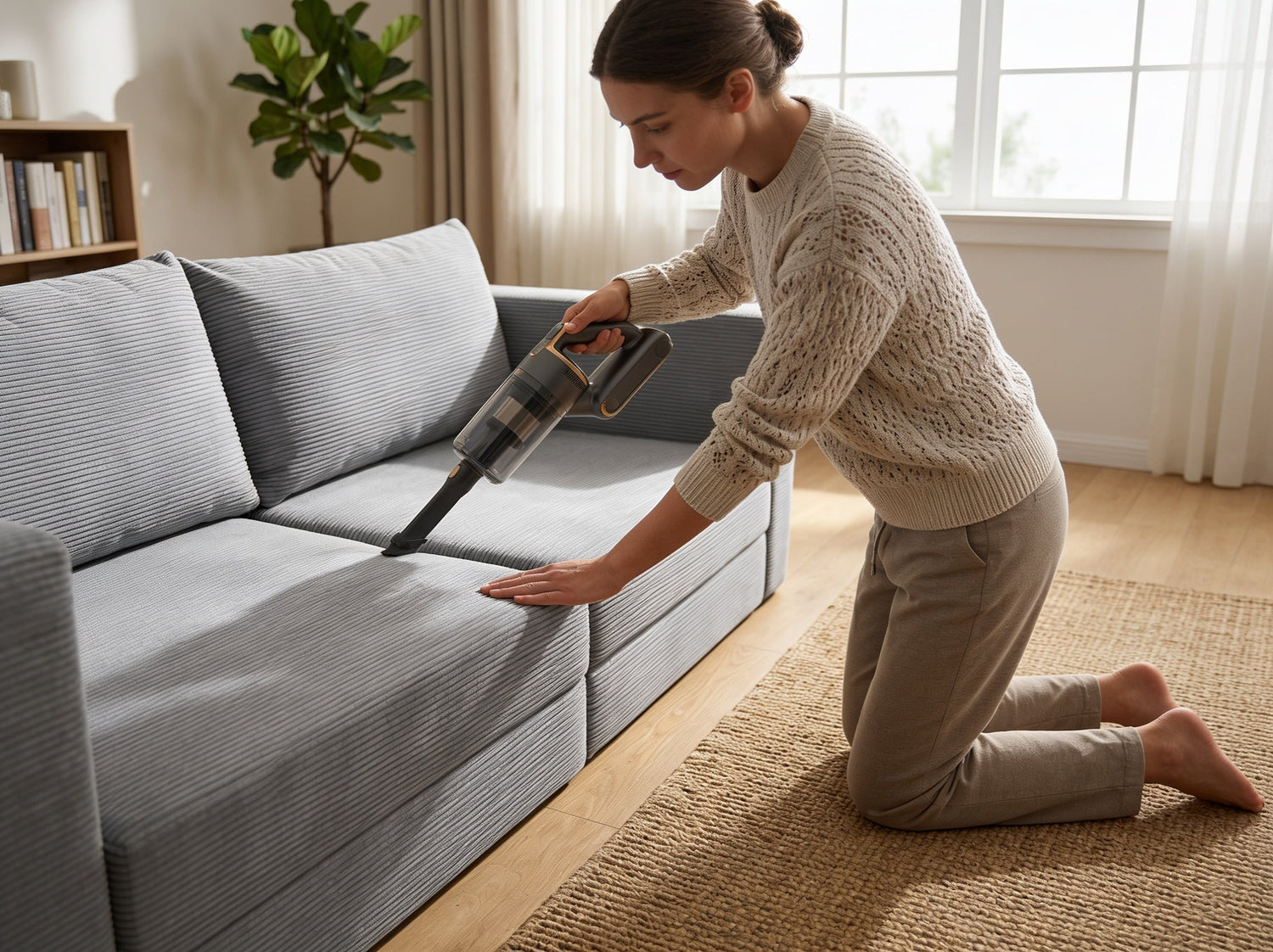
Weekly: vacuum. A quick vacuum with the upholstery attachment removes dust, crumbs, and surface debris before they work their way into the fabric weave and, eventually, into the foam filled sofa beneath. This takes about five minutes and is the single most effective habit for keeping a sofa looking fresh. Pay particular attention to seams, the base of cushions, and any crevices where debris collects.
Monthly: flip and rotate cushions. If your seat cushions are reversible or simply loose, flip and rotate them. This distributes wear evenly across the sofa foam filling rather than concentrating compression in the same spots every time someone sits down. It's a small habit that meaningfully extends the life of the cushioning.
Every 3–4 months: deep clean. This means addressing the fabric itself, not just surface dust — steam cleaning, fabric-safe upholstery cleaner, or professional cleaning depending on the material. A foam sofa that sees daily, heavy use (children, pets, frequent guests) benefits from cleaning closer to the three-month mark. A sofa in a quieter, lower-traffic room can comfortably stretch to four or five months.
As needed: spot treatment. Stains and spills should be addressed immediately, not saved for the next scheduled clean. We'll cover the right approach in the stains section below.
One important note for any memory foam sofa: the foam itself should never be soaked or submerged. Memory foam absorbs moisture readily and dries slowly, which can lead to mildew, odour, and a permanent loss of structure deep inside the cushion. Cleaning should always focus on the cover and surface — never the foam core directly.

Can You Wash Foam Sofa Covers?
This depends entirely on how the sofa was built — and it's one of the most important questions to ask before you buy, not after.
Removable, machine-washable covers are the gold standard. If your sofa was designed with zip-off covers in a performance fabric, washing is straightforward: remove the cover, check the care label for temperature and cycle recommendations, and wash separately from other laundry to avoid pilling or colour transfer. Most performance-weave fabrics can handle a cold or warm gentle cycle and air drying. Avoid high heat in a tumble dryer, which can shrink fabric and damage the fit around cushion foam.
Removable but dry-clean-only covers are common on more delicate fabrics like velvet or certain linens. These require more care logistically — you'll need to remove the cover and take it to a professional cleaner — but they still offer a real advantage over fixed covers because the fabric isn't permanently attached to the foam sofa filling underneath.
Fixed, non-removable covers are the most limiting. These can typically only be spot-cleaned or professionally cleaned in place, which means stains and general wear are harder to fully resolve. If your foam sofa bed has a fixed cover and you're dealing with a deep stain or significant wear, your options are far more limited than they would be with a removable system.
Before washing any cover, always check three things: the manufacturer's specific care instructions, whether the fabric has been pre-shrunk, and whether the zip or fastening can handle repeated washing without weakening. A well-made cover should be designed to come on and off easily, multiple times, without the seams or zips degrading.
Removing Stains from a Foam Sofa
Speed matters more than technique. The faster a stain is addressed, the easier it lifts — and the less likely it is to penetrate through the fabric into the sofa foam filling underneath, where it becomes far harder to fully remove.
General approach for most stains:
- Blot, don't rub. Rubbing pushes the stain deeper into the fibres and can damage the fabric weave. Use a clean, white cloth and blot from the outside of the stain inward.
- Use cold water first. For most fresh stains, cold water and a clean cloth will lift a significant amount before any cleaning product is needed.
- Test any cleaning solution on a hidden area first — the underside of a cushion or the back of the sofa — before applying it to a visible spot.
- Let the area air dry completely before sitting on it again. A damp cushion under body weight pushes moisture further into the foam.
Stain-specific notes:
Food and drink (wine, coffee, sauce): Blot immediately, then use a mild dish soap diluted in cold water. For wine specifically, a small amount of club soda before the soap treatment helps lift the pigment.
Oil and grease: Sprinkle cornstarch or baking soda on the stain and let it sit for fifteen minutes to absorb the oil before vacuuming and treating with mild soap.
Ink: Rubbing alcohol on a cotton swab, applied carefully and only to the stain itself, is usually effective on fabric (not leather — check your material first).
General ground-in dirt: A mixture of white vinegar and water (one part vinegar to two parts water) handles most everyday grime without damaging fabric dyes.
If a stain doesn't lift after one or two attempts, stop. Repeated aggressive treatment can damage the fabric more than the stain itself. This is where removable covers earn their keep — a stubborn stain on a removable cover can go to a professional cleaner or a more thorough wash cycle, while a fixed cover leaves you working in place with limited options.
Pet-Friendly Care Tips for a Foam Sofa
Sharing a sofa with a dog or cat changes the maintenance equation, but it doesn't mean giving up on keeping it looking good.
Choose the right fabric from the start. Tightly woven performance fabrics resist claw snags and are far easier to clean than open-weave linens or delicate velvets. If you're buying a foam sofa bed for a pet household, prioritize fabric durability as much as foam density.
Vacuum more frequently. Pet hair and dander work into fabric weave faster than ordinary household dust. Two to three times weekly, rather than once, keeps things manageable — and a vacuum attachment designed for pet hair makes a real difference.
Address accidents immediately. Pet stains and odours need fast treatment with an enzymatic cleaner specifically designed to break down the proteins in pet urine — regular soap won't fully eliminate the smell, which can encourage repeat accidents in the same spot. Treat the area, then ensure it dries completely.
Trim claws regularly. This sounds unrelated to sofa care, but it's one of the most effective preventative measures. Shorter claws mean less fabric snagging and fewer small tears that, left unaddressed, become larger ones.
Consider a throw or cover for high-traffic spots. If your pet has a favourite sofa spot, a washable throw over that section takes the brunt of wear and hair, and can be washed far more easily and frequently than the sofa's main cover.
A memory foam sofa with removable, washable covers is particularly well suited to pet households — accidents and fur are inevitable, but they don't have to be permanent.

Why Removable Covers Matter
Everything in this guide points back to one underlying factor: whether the cover comes off.
A foam sofa with removable, washable covers gives you control. Stains can be properly treated rather than just managed. Fur and dander can be fully washed out rather than surface-cleaned. Wear concentrates on a cover that can eventually be replaced, rather than on fabric permanently bonded to the sofa foam filling beneath it — meaning the life of the sofa isn't tied to the life of a single piece of fabric.
This is also where fabric choice becomes a genuine design decision rather than an afterthought. A removable cover system means you're not locked into one look for the life of the sofa. If your style evolves, if a fabric wears out faster than expected, or if you simply want a refresh, a well-designed cover system makes that possible without replacing the entire piece.
At SEESOFA, every Flow and Flowy cover is fully removable and machine washable, in a performance-weave fabric chosen specifically for durability and ease of care. Whether you're managing daily life with kids, pets, or simply want a foam sofa bed that stays looking genuinely new for years, the cover system is built to make that realistic — not aspirational.
If you're curious what the fabric actually feels like before deciding, request a swatch. Seeing and touching the material — checking the weave, the colour against your own light, the way it sits in your hand — tells you more in thirty seconds than any product photo can.
Frequently Asked Questions About Foam Sofa Care
How often should you clean a foam sofa?
A foam sofa should be vacuumed once a week and deep cleaned every 3-4 months, depending on how heavily it is used.
Can you wash foam sofa covers in a washing machine?
If the covers are removable and machine washable, yes. Always check the care label and follow the manufacturer's instructions before washing.
What's the best way to remove stains from a foam sofa?
Treat stains as quickly as possible. Blot rather than rub, use cold water first, and test any cleaning solution on a hidden area before applying it.
Can memory foam cushions get wet?
No. Memory foam absorbs moisture easily and dries slowly, which can lead to mildew, odours, and damage to the cushion's structure.
Are foam sofas suitable for homes with pets?
Yes. Durable performance fabrics, removable covers, and regular vacuuming make foam sofas a practical choice for households with dogs or cats.
Why are removable covers important on a foam sofa?
Removable covers make cleaning much easier, allow for proper stain removal, and help extend the overall lifespan and appearance of the sofa.
Request free fabric swatches for the Flow and Flowy collections at SEESOFA. All covers are removable and machine washable, backed by our standard care guidelines for long-term durability.



Leave a comment
This site is protected by hCaptcha and the hCaptcha Privacy Policy and Terms of Service apply.