

Sofa Bed with Memory Foam Mattress: Is It Worth It? (Honest Guide)
If you've been comparing sofa beds for more than ten minutes, you've probably noticed that almost every listing now claims to have a "memory foam mattress." Some genuinely do. Many use the term loosely to describe a thin foam layer that bears little resemblance to actual sleep-quality memory foam. So the real question isn't whether memory foam is worth it in general — it's how to tell the genuine version from the marketing one, and whether it makes sense for your specific situation.
This guide gives you a straight answer, without the sales pitch padding.
Why Memory Foam Matters in a Sofa Bed
The honest case for a sofa bed with memory foam mattress starts with a simple physical problem: traditional sofa bed mattresses were never designed for actual sleep. They were designed to fold flat and fit inside a frame. Comfort was secondary, and it showed.
Standard sofa bed mattresses typically use thin spring units or low-density foam, both of which share the same failure: pressure points. Lie down on a thin spring mattress and you'll feel individual coils through the surface, especially at the hips and shoulders where body weight concentrates. The frame bar underneath — present in almost every pull-out mechanism — becomes noticeable through anything less than a genuinely supportive mattress layer.
Memory foam solves this differently than simply adding more padding. It responds to body heat and weight, softening exactly where pressure is applied and staying firmer everywhere else. This means the mattress contours to your specific body shape rather than fighting against it. The result is even weight distribution — less tossing, fewer pressure points, and a sleep quality that's actually comparable to a standalone mattress, not just an improvement on a bad baseline.
There's a second, quieter benefit: memory foam has no moving parts. A sofa bed memory foam mattress doesn't creak, doesn't shift, doesn't make the small mechanical noises that spring systems produce when someone changes position in the night. In a shared space or a thin-walled apartment, that silence is worth more than people expect until they've lived without it.
None of this means every product labeled "memory foam" delivers on it. Which brings us to what actually matters when evaluating one.

What to Look for in a Sofa Bed Mattress
Marketing language is consistent across the industry. Specifications are not. Here's what separates a genuinely good sofa bed foam mattress from one that's foam in name only.
Foam density. This is the number that matters most and the one brands are least likely to volunteer. Look for a minimum of 30 kg/m³ (roughly 1.8 lb/ft³) for any sofa bed mattress claiming memory foam comfort. Quality options sit at 35 kg/m³ or higher. Below 25 kg/m³, you're dealing with foam that will compress permanently within a year or two of regular use — the "memory foam" label becomes technically true but practically meaningless.
Layer construction. A single layer of foam, however dense, rarely performs as well as a layered system. The best sofa bed memory foam mattresses combine a firmer support base with a softer memory foam comfort layer on top. The base prevents the bottoming-out sensation of sinking too far; the top layer delivers the pressure relief memory foam is known for. If a product description only mentions one layer, ask what's underneath it.
Mattress thickness. Covered in detail in its own section below, but as a quick marker: anything under 8 cm is unlikely to deliver genuine comfort for an adult sleeping a full night. 10 cm or more is where things start to feel like an actual bed.
How it interacts with the frame. A quality mattress sits on a supportive base — slats, a solid platform, or a well-tensioned frame insert. A great mattress on a poorly designed frame will still let you feel the bars underneath. Frame and mattress need to be evaluated as a system, not separately.
Certifications and sourcing. Reputable foam manufacturers test for off-gassing and durability (CertiPUR-US or OEKO-TEX certification, for example). This isn't marketing fluff — it affects both air quality in your home and how long the foam will perform before breaking down.
Real reviews, not just star ratings. A 4.5-star average tells you little. Look specifically for reviews mentioning sleep comfort after weeks or months of use, not just first impressions on delivery day. Compression and sagging take time to show up, and that's exactly the information first-week reviews can't give you.
Memory Foam vs. Spring: Which Actually Wins?
For sofa bed mattresses specifically — not standalone beds, where the comparison is more nuanced — memory foam wins on nearly every practical measure, and it's worth being specific about why.
Comfort. Spring units in sofa beds are almost always thinner and lower quality than springs in a dedicated mattress, simply because they need to fold flat. This makes the pressure-point problem worse, not better, compared to a regular bed. Memory foam doesn't have this limitation — it performs consistently whether folded into a compact mechanism or laid flat.
Noise. Springs shift, creak, and announce every movement. Memory foam is silent by nature. For a sofa bed used regularly — not just for occasional guests — this difference becomes noticeable fast.
Durability under folding. Spring units that fold and unfold repeatedly are mechanically stressed at the fold points over time, which accelerates sagging exactly where you'd notice it most. Quality foam handles repeated folding far better, returning to its original shape consistently over years rather than months.
Where springs still have a case: in mattresses that are rarely folded, or in budget situations where a thin foam layer would be no better than a thin spring unit. If the mattress in question is under 25 kg/m³ foam, a decent spring unit might genuinely perform comparably — which is exactly why density matters more than the foam-versus-spring debate itself. A sofa bed memory foam mattress only outperforms springs when the foam quality actually justifies the claim.
The practical takeaway: don't choose memory foam over springs as a blanket rule. Choose a high-density, well-constructed memory foam mattress over a low-quality spring unit — because that's the comparison that actually predicts comfort.
Mattress Thickness: What You Actually Need
Thickness is the specification most likely to be glossed over in product descriptions, and it has an outsized effect on how the bed actually feels.
|
Thickness |
What to Expect |
Suitable For |
|
Under 8 cm |
Frame and mechanism noticeable through the surface |
Rare, occasional use only |
|
8–10 cm |
Acceptable for short stays, limited pressure relief |
One-night guests, lighter sleepers |
|
10–12 cm |
Comfortable, solid pressure distribution |
Regular guest use, most adults |
|
12–15 cm |
Genuinely good sleep quality, close to a standalone mattress |
Frequent use, couples, heavier sleepers |
|
15 cm+ |
Premium comfort, full-body support |
Daily or near-daily use |
A thicker mattress isn't automatically better if the foam density is low — a thick layer of cheap foam still compresses and still transmits pressure from the frame beneath it. Thickness and density need to be evaluated together, not as substitutes for each other. The benchmark worth aiming for, if the sofa bed will see regular use rather than occasional guests, is 12 cm or more at 35 kg/m³ or higher.
It's also worth measuring your own situation honestly. A sofa bed used once or twice a year for visiting family has different requirements than one functioning as someone's actual nightly bed. The investment in thickness and density should scale with how often the bed is actually used.
Flow Sofa: Comfort Without Compromise
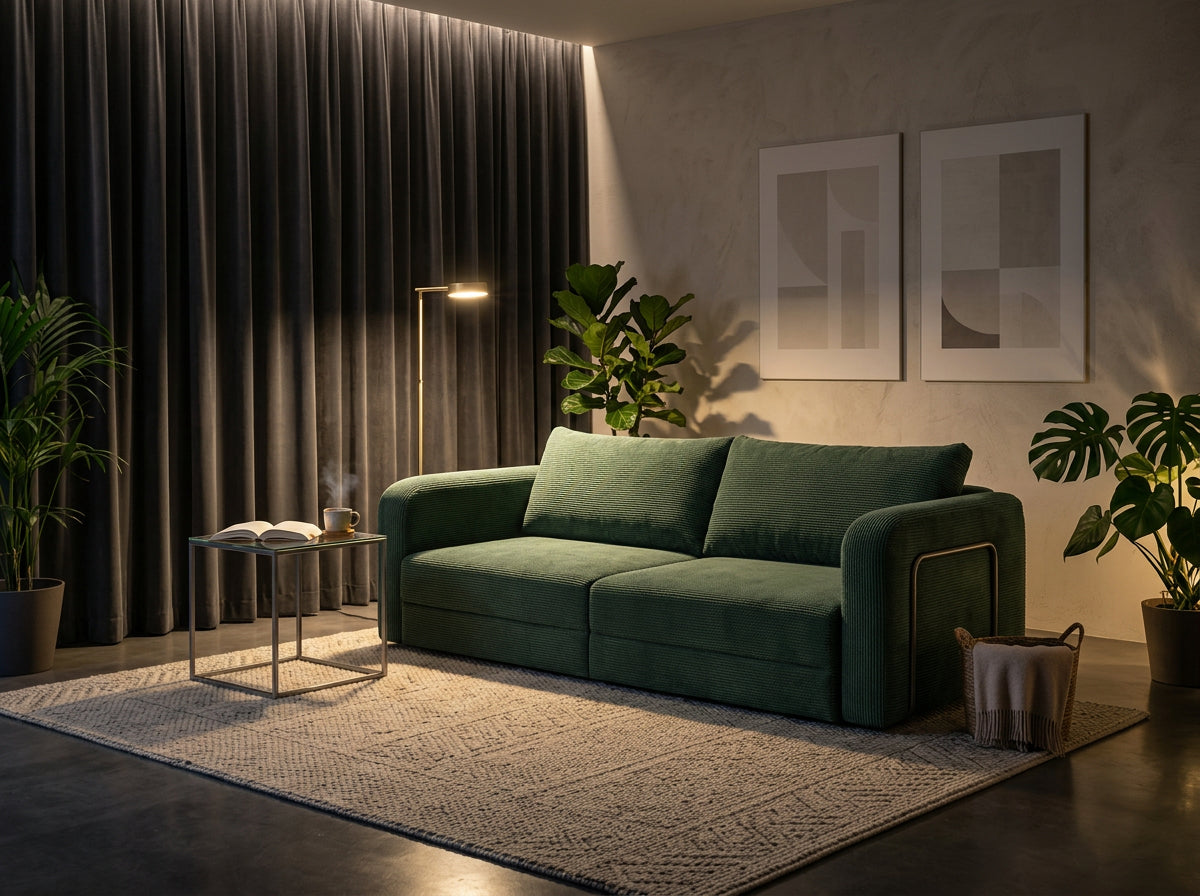
The Flow Sofa from SEESOFA was built specifically to answer the question this guide opened with — whether a sofa bed with memory foam mattress is actually worth it. The short answer, when the construction is right, is yes. Here's what that looks like in practice.
The Flow's sleeping surface uses a 13 cm mattress — above the 12 cm threshold recommended for regular use — built on a three-layer foam system. A high-density polyfoam base (40 kg/m³) provides the structural support that prevents bottoming out. An HR (high resilience) foam transition layer adds responsive bounce-back. A memory foam top layer delivers the pressure relief and contouring that makes the difference between an acceptable sofa bed and a genuinely comfortable one.
This isn't a single thin foam pad marketed as "memory foam." It's a constructed system, with each layer doing a specific job — which is exactly the layered approach the buying section above recommends looking for.
The frame underneath matters just as much. The Flow's solid beech frame, corner-blocked for stability, supports the mattress evenly without the flex that causes sagging in cheaper constructions. The patented glide mechanism opens the bed in a single smooth motion — no wrestling with stiff hinges, no awkward angles, just a clean transition from sofa to bed in under five seconds.
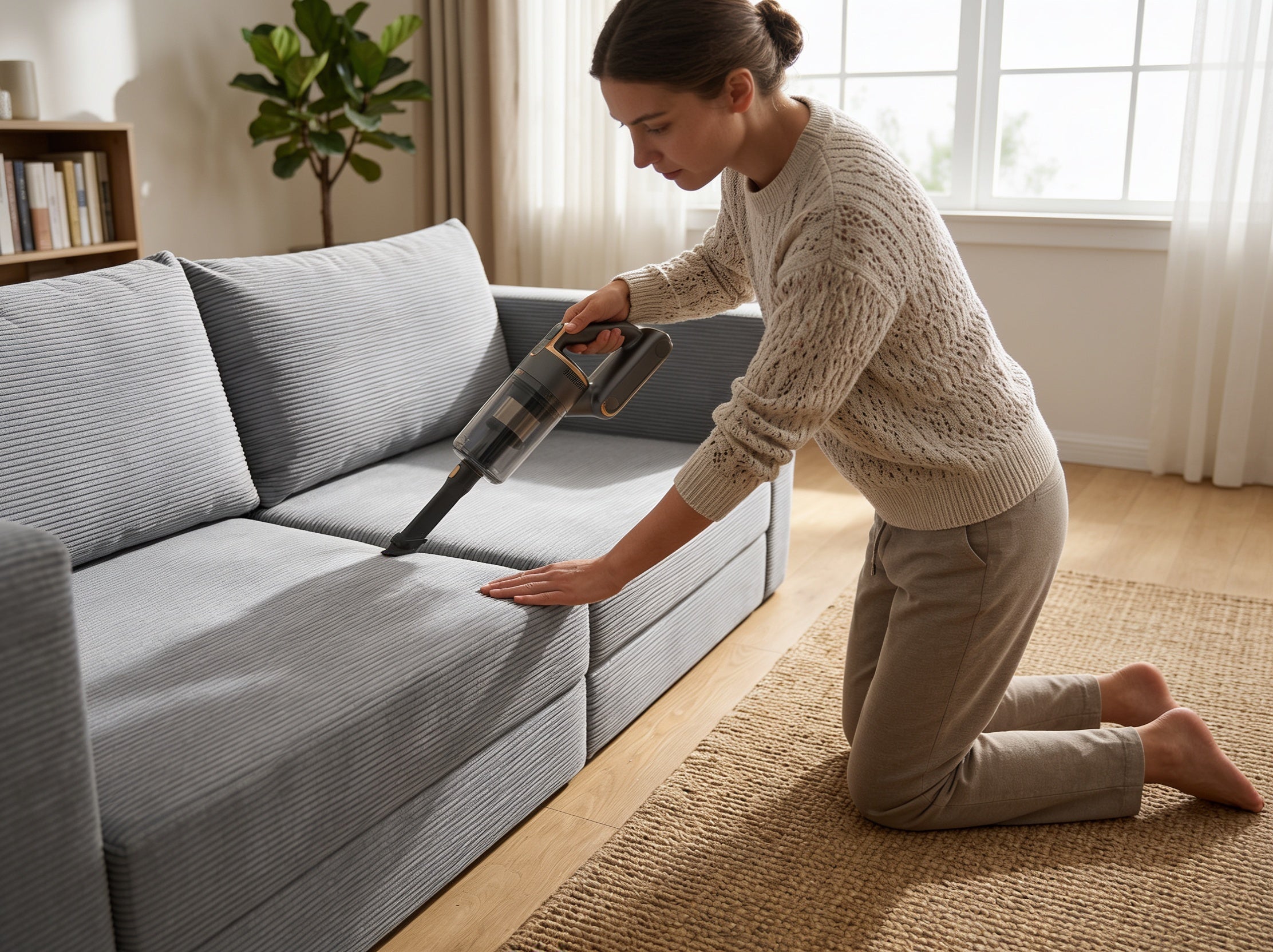
As a sofa, the Flow performs independently of its bed function — seat cushions at ILD 38, a beech frame with a 15-year warranty, and covers that zip off completely for machine washing. It's not a sofa that compromises its daily comfort for the sake of converting well, and it's not a bed that compromises sleep quality for the sake of folding flat.
If the question is whether a quality sofa bed memory foam mattress is worth the investment, the Flow is built to make that answer obvious the first night someone sleeps on it.

Frequently Asked Questions About Sofa Beds with Memory Foam Mattresses
Is a sofa bed with a memory foam mattress suitable for everyday sleeping?
Yes, provided the mattress has sufficient thickness and foam density. Models with mattresses 12 cm thick or more are suitable for regular use.
What mattress thickness is best for a sofa bed?
For frequent use, a mattress thickness of at least 12 cm is recommended. It provides better support and overall sleep comfort.
Is memory foam better than a spring mattress in a sofa bed?
In most cases, yes. Memory foam adapts to the body, reduces pressure points, and minimizes movement transfer during sleep.
What should I look for when buying a memory foam sofa bed?
Focus on foam density, mattress thickness, layered construction, frame quality, and the ease of the opening mechanism.
How long does a memory foam mattress last?
A high-density memory foam mattress can maintain its comfort and support for many years when used properly.
Is a memory foam sofa bed good for guests?
Absolutely. It offers a much more comfortable sleeping experience than most traditional sofa bed mattresses, making it ideal for overnight guests.
The Flow Sofa is available in Full and Queen sizes, in five fabric options. Standard lead time is 3–4 weeks. Free delivery and in-room placement included. View full specifications at SEESOFA.com.


Leave a comment
This site is protected by hCaptcha and the hCaptcha Privacy Policy and Terms of Service apply.