

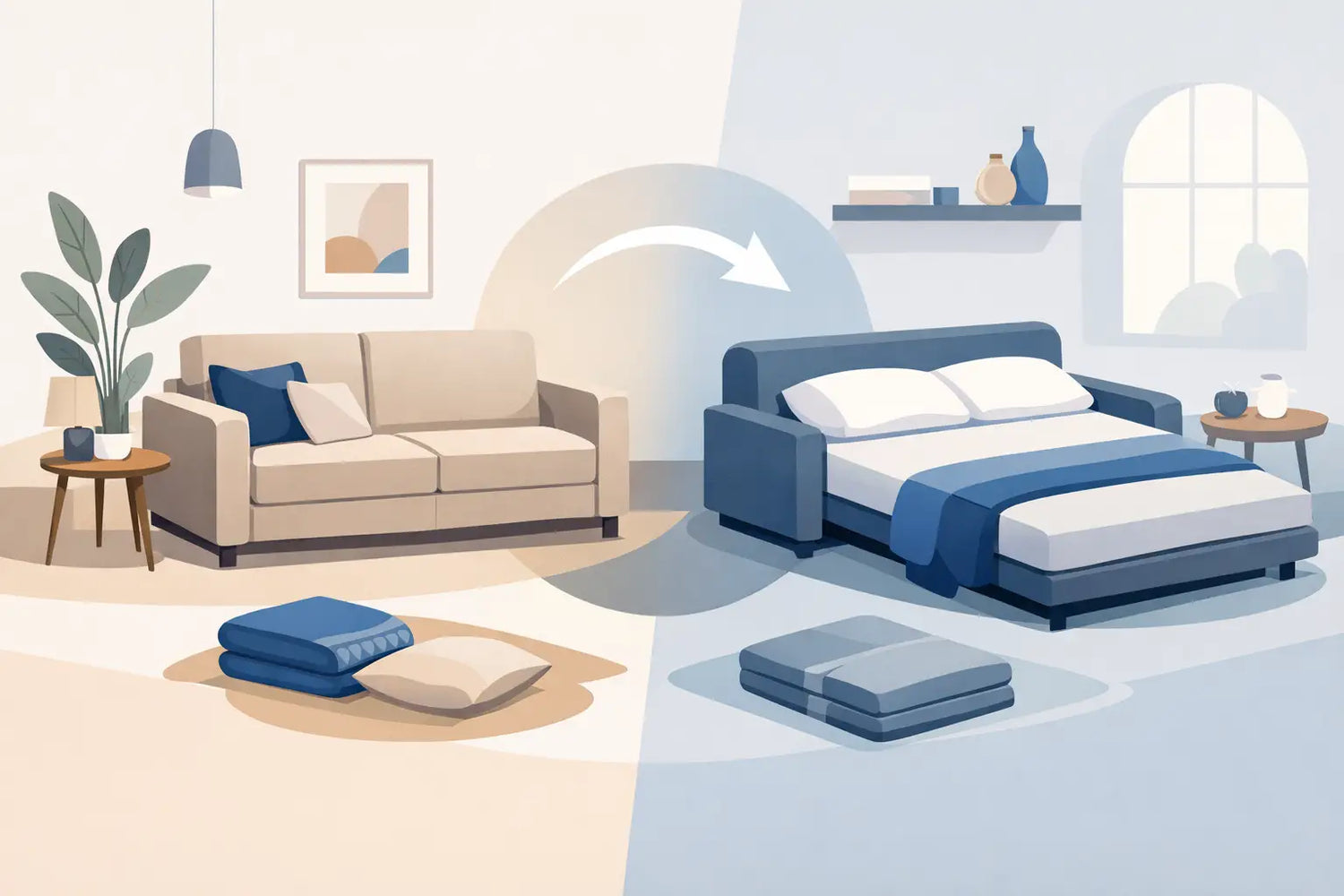
A sofa bed should not force you to choose between a living room you love and a home that can host. The right custom sofa bed design lets one piece do both, with proportions, materials, and details chosen for the way you actually live. It can be the calm center of a studio apartment, a flexible solution for a home office, or the extra sleep space that makes weekend guests easy to welcome.
The best place to start is not with a color. Start with the room, the people who use it, and what needs to happen there after the sun goes down.
Start Your Custom Sofa Bed Design With Real Life
Think about the room on an ordinary Tuesday, not only when it is perfectly styled. Is it where you read, work, watch movies, eat takeout, or stretch out with your dog? Will the bed be used a few times a year for guests, or often enough that nighttime comfort is a daily priority?
A sofa bed used mainly for occasional visitors can prioritize a more compact footprint and a tailored seating layout. If it will serve as a regular bed, generous sleeping dimensions, supportive foam, and easy conversion deserve more attention. Neither choice is better. The right answer depends on how your home needs to flex.
This is where a configurable foam sofa bed has a clear advantage over a fixed pullout. Lightweight foam components can be rearranged, moved through tighter spaces, and adapted as your layout changes. You are not committing to one rigid format for the life of the sofa.
Measure the whole experience, not just the wall
Measure the wall where the sofa will sit, then measure what happens in front of it when it becomes a bed. Account for coffee tables, rugs, pathways, doors, and drawers that need to open. A beautiful sofa bed loses its value if converting it means moving half the room every time someone stays over.
Also consider access before delivery day. Apartment elevators, stairwells, narrow entryways, and sharp turns can make a traditional large-frame sleeper difficult to place. Modular foam pieces are often easier to bring in and position, especially in city apartments and upper-floor rooms.
Choose the Layout Before the Details
Custom does not have to mean complicated. It means making a few decisions in the order that matters most. Begin with the basic shape: a compact straight sofa, a larger lounge-friendly arrangement, or a modular setup that can evolve as your space does.
For a small living room, visual breathing room matters as much as square footage. A low, clean-lined sofa bed can make the room feel open, while a bulky frame may dominate it. In a larger room, additional modules can create more generous seating without making the bed function feel like an afterthought.
Think through where people naturally sit. If your household gathers along one side for movie night, a deeper lounge section may be useful. If the sofa faces a conversation area, a balanced arrangement may work better. When guests stay over, you should be able to create a flat, stable sleeping surface without awkward gaps or a complicated mechanism.
Seating comfort and sleep comfort need equal attention
Many conventional sleeper sofas perform well in one mode and compromise in the other. A handsome couch may hide a thin mattress. A comfortable bed may feel overly firm or overly deep as seating. With premium foam sofa beds, the goal is a more balanced experience: supportive enough to sit on every day, comfortable enough to sleep on with confidence.
Foam density, construction, and cover fit all influence how the surface feels over time. Look for materials designed to hold their shape and provide consistent support, rather than relying on loose, overstuffed cushions that quickly lose structure. Certified materials also offer welcome reassurance when the sofa bed is where you spend hours lounging, sleeping, and living.
Fabric Is Part of How the Sofa Bed Works
Fabric selection changes more than the color of your room. It affects texture, maintenance, durability, and how relaxed or polished the finished piece feels. A softly woven neutral can create a quiet, layered interior. A deeper color may ground an airy room and make everyday marks less noticeable. A textured fabric adds depth when the rest of the space is minimal.
Before settling on a shade, see it in your own home. Daylight, warm bulbs, wall color, and flooring can shift a fabric dramatically. Fabric samples make it easier to compare options beside your existing rug, paint, and wood tones rather than making a major purchase from a screen alone.
For households with kids, pets, frequent visitors, or simply real life, removable washable covers are a practical design feature. They let you enjoy a light color or tactile fabric without treating the sofa like a museum piece. Care becomes part of ownership, not a reason to avoid the look you want.
Build contrast with details, not clutter
A custom sofa bed design can feel personal without becoming overly busy. Choose one or two points of contrast: a warm fabric with a dark metal finish, a cool gray upholstery with a lighter frame, or a soft neutral paired with a more architectural leg. The metal finish matters because it creates a visual bridge between the sofa and nearby lighting, tables, or hardware.
If your room already has strong patterns, keep the sofa fabric quieter. If the room is mostly plain, a subtle texture can bring dimension. The aim is not to make every element match. It is to make the room feel considered.
Design for Change, Not Just Move-In Day
Homes change faster than most furniture does. You may move from a rental to a larger home, turn a spare room into a nursery, begin working from home, or find yourself hosting more often than expected. A fixed sofa can become the wrong size or shape surprisingly quickly.
Modularity gives you more control. It lets you rethink the layout rather than replace the entire piece. You might begin with a compact arrangement for a one-bedroom apartment, then add components later when you have more room. Or you may separate pieces to create flexible seating for a guest room or creative workspace.
That adaptability is also useful when your needs shift week to week. A living room can be a place for two people to unwind on Friday and a comfortable sleep space for a visiting friend on Saturday. Furniture should support that change without making your home feel temporary.
A Smarter Way to Make Your Final Choices
Once you know the dimensions, layout, comfort needs, and fabric direction, review the configuration as a whole. Check that the sleeping setup suits the person most likely to use it. Confirm that the seat height and depth feel right for everyday lounging. Make sure the finish works with the room's permanent elements, not only with a mood board.
At Seesofa, FLOW and FLOWY are designed around this kind of ownership: everyday seating, flexible sleeping, washable covers, and a configuration that can reflect your space instead of asking your space to adjust. Made-in-Europe craftsmanship and practical options such as fabric samples and a 30-day return window help make a personal choice feel more straightforward.
Do not rush the final decision because a sofa bed is functional furniture. Its function is precisely why it deserves care. When it is designed around your routines, it becomes more than a backup bed. It gives your home room to change, host, rest, and still look like yours.



Leave a comment
This site is protected by hCaptcha and the hCaptcha Privacy Policy and Terms of Service apply.