

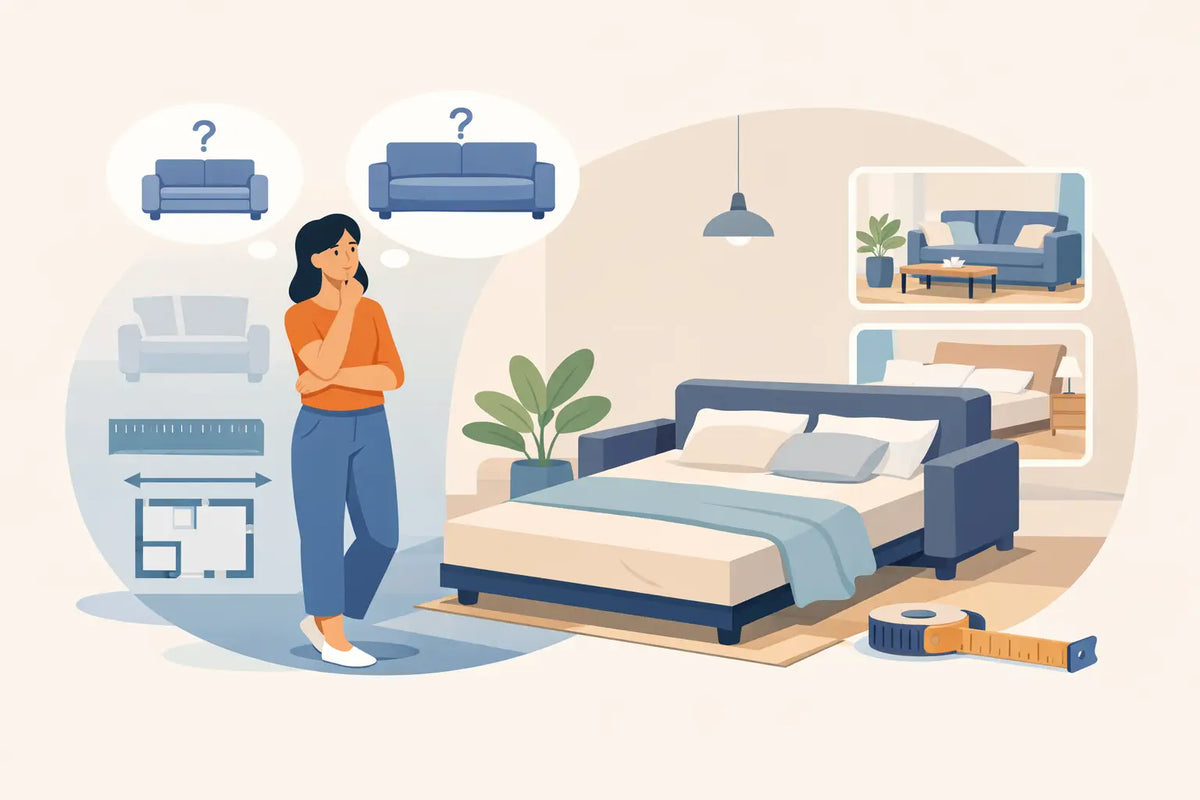
A sofa bed can make a studio feel ready for company, turn a home office into a guest room, or give your living room a little more freedom. But the right choice starts before fabric color or cushion style. Knowing how to choose sofa bed size means planning for two realities: how the sofa lives during the day and how the bed works after dark.
The best size is not always the largest one your room can hold. It is the one that leaves space to move, fits the people who will use it, and still feels like a sofa you want to sit on every day.
Start With the Room, Not the Mattress
It is tempting to begin with the sleeping surface. A full-size bed sounds generous, and a queen may feel like the obvious choice for overnight guests. Yet the footprint of a sofa bed matters just as much as the bed itself, especially in apartments and multifunctional rooms.
Measure the wall or area where the sofa will sit, then measure the full floor space it needs when opened. Include the distance from the front of the sofa to the opposite wall, coffee table, media console, or other furniture. A sofa bed that technically opens but blocks the only path through the room will feel inconvenient from the first night.
Use painter's tape to mark the sofa's closed dimensions on the floor. Then tape out its open sleeping footprint. This simple step makes the scale immediately visible and helps you spot issues that measurements on paper can miss, such as a door that cannot swing open or a drawer that becomes inaccessible.
For a comfortable layout, leave a clear walking path around the open bed whenever possible. In a compact room, that may mean moving a coffee table before guests arrive. That is completely reasonable. The goal is not an empty room - it is a room that can shift easily when life changes.
Measure the routes into your home
A great sofa bed still needs to get through the front door. Measure entry doors, elevators, hallways, stair landings, and tight turns before ordering. Pay attention to ceiling height in stairwells and the width between railings. Lightweight foam sofa beds can be easier to maneuver than bulky pull-out frames, but access measurements are still part of choosing with confidence.
Choose a Sleeping Size Based on Who Stays Over
Think about your actual guests, not an imaginary guest list. A sofa bed for the occasional friend after dinner has different needs than one that hosts parents for a long weekend or serves as a nightly bed in a small apartment.
A twin or single sleeping size is practical for one adult, a teenager, or a child's room. It uses less floor space when open and can be the smart choice when maintaining a clear pathway matters more than sleeping two people.
A full or double size is often the flexible middle ground. It gives one adult plenty of room and can work for two people for a short stay, though it may feel close for taller guests or couples who are used to a larger bed. For many urban homes, this is the size that balances everyday seating with useful guest capacity.
A queen-size sleeping area gives two adults more room to rest comfortably and is a strong option if your sofa bed will be used regularly for overnight visitors. The trade-off is simple: it needs more room when open. Make sure the extra sleeping width does not turn your living area into an obstacle course.
If the sofa bed will be your primary bed, prioritize the open-bed dimensions and sleep comfort first. Your daytime layout should support the bed, rather than forcing you to compromise on rest every night.
Consider Sofa Size in Its Closed Position
The size of the bed does not tell you everything about the sofa. Arm width, seat depth, back height, and configuration all shape how much room the piece occupies and how it feels to use.
A compact two-seat sofa bed can be ideal for a narrow living room, a guest room, or the corner of an open-plan apartment. A wider configuration may better suit a couple who uses the sofa for movie nights, reading, and everyday lounging. If the sofa is your main seating, do not choose solely around the occasional overnight stay. You should enjoy it the other 360 nights of the year, too.
Seat depth deserves a closer look. Deep seats create a relaxed, lounge-forward feel, but they may not be the best match for someone who prefers an upright sitting position or has a smaller room. A lower profile can make a room feel more open, while a taller back can add support and visual presence.
This is where a modular design can make a meaningful difference. Instead of accepting a fixed format, you can build around your room's proportions and the way you use it. A configuration that feels right now can also be a smarter long-term choice when you move, rearrange, or give a room a new purpose.
Plan for the Opening Method
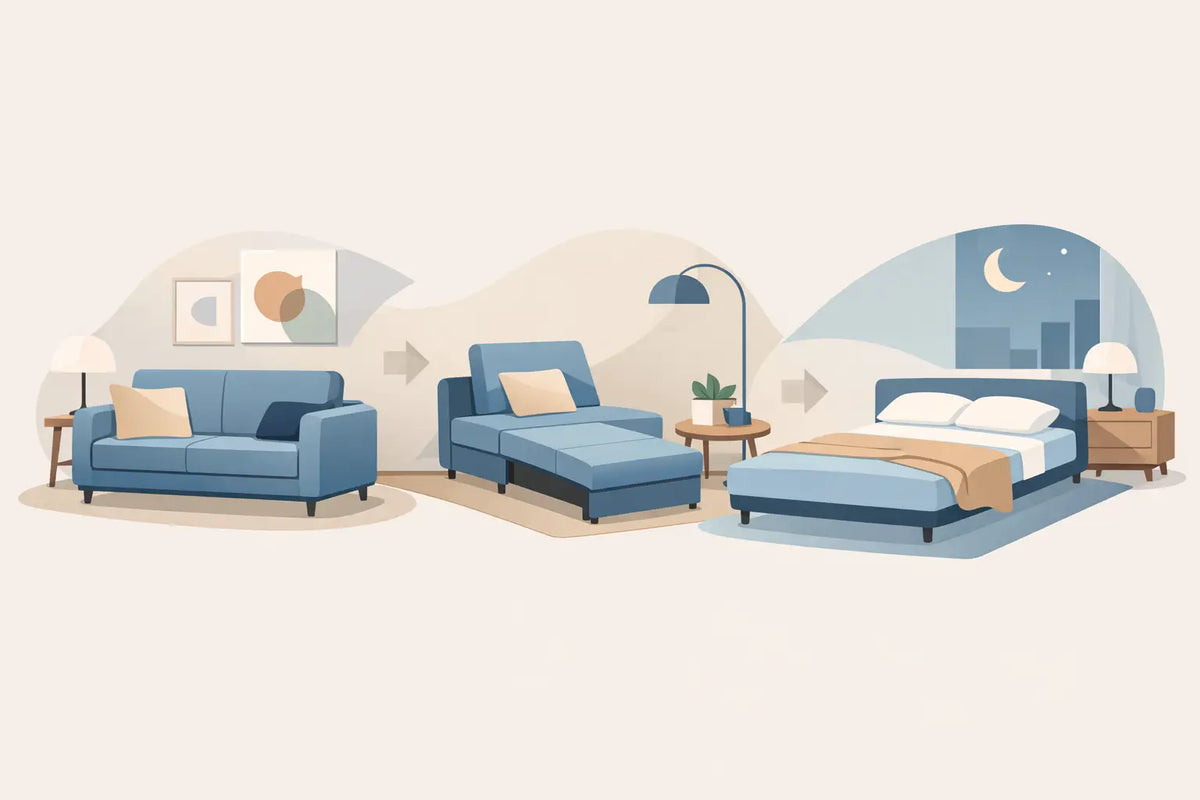
Not all sofa beds create a sleeping surface in the same way. Traditional pull-out styles often extend from inside the frame, while foam sofa beds may unfold or reconfigure into a bed. The opening method affects the floor space you need, how quickly you can set up for guests, and how the bed feels at night.
A pull-out mechanism may preserve the sofa's original seating shape, but it can add weight and require room for a mattress frame to extend. A foam design can offer a more direct transition from sofa to bed, often without the hard bars or complex mechanism associated with older sleeper sofas. The right option depends on what you value most: a familiar sofa silhouette, a quick transformation, lower weight, or a sleep surface with fewer interruptions.
Before deciding, picture the full routine. Where will pillows and bedding go? Does the coffee table need to move? Can one person convert the sofa without a struggle? A sofa bed should make hosting feel relaxed, not like a furniture-moving project at 11 p.m.
Match the Size to How Often It Will Be Used
Frequency changes the answer to how to choose sofa bed size. For occasional sleepovers, a more compact model can be a great use of space. For weekly guests, a larger sleeping surface may be worth the additional footprint. For nightly use, both the sleep area and the support of the foam deserve careful attention.
Consider these common scenarios:
- Studio apartment: Choose a size that works as your primary sofa first, then confirm it opens without trapping the kitchen, bathroom, or entry route.
- Home office or flex room: A single or compact double may provide enough sleep space while preserving room for a desk and storage.
- Family living room: A wider sofa bed can make sense when the room is large enough and guests stay often, but check that it does not overwhelm your everyday seating plan.
- Dedicated guest room: If the room has one job, prioritize the sleeping size your guests will appreciate, especially for couples or extended visits.
Do Not Forget the Details Around the Bed
Once opened, a sofa bed needs more than floor space. Guests need somewhere to set a phone, place a glass of water, charge a device, and store a bag. If a bedside table will not fit, a small movable table or nearby shelf can solve the problem without permanently crowding the room.
Think about bedding, too. A sofa bed with removable, washable covers can be particularly useful in high-use spaces, homes with pets, or rooms that switch between lounging and sleeping often. Easy care gives you more freedom to choose the sofa bed that suits your life instead of treating it as a fragile guest-only piece.
Fabric and color also affect how a larger sofa bed feels in a room. Light, textured fabrics can keep a compact space feeling airy, while a darker color can ground an open room or hide everyday wear. Order fabric samples when possible and view them in your own light. The right shade at noon may look completely different beside warm lamps at night.
Test Your Decision Against Real Life
Before you commit, ask a few honest questions. Can two people sit comfortably on it? Can your guest get in and out of bed without climbing over furniture? Does it leave enough room for your usual coffee table, rug, and storage? Will the size still work if you move to another apartment or turn the room into a nursery, office, or reading space?
At Seesofa, the idea is simple: your furniture should adapt to your space, not ask your space to adapt to it. Choosing the right sofa bed size is less about following a universal rule and more about giving yourself options that feel good now and remain useful later.
Choose the dimensions that let your room stay open, your guests sleep well, and your home keep moving with you. That is the kind of flexibility you will notice long after the first overnight stay.


Leave a comment
This site is protected by hCaptcha and the hCaptcha Privacy Policy and Terms of Service apply.