

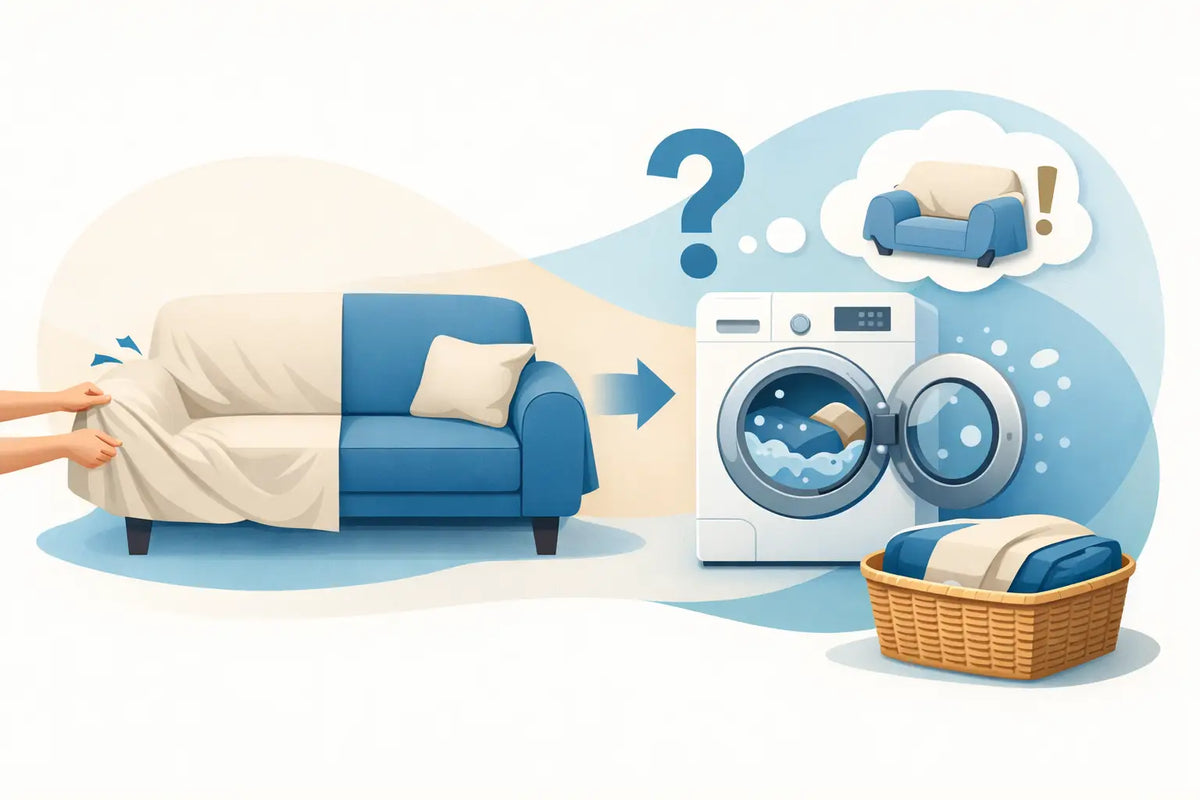
A freshly washed sofa cover should make your room feel renewed, not turn reassembly into a frustrating tug-of-war. So, do sofa covers shrink after washing? They can, especially when heat, the wrong wash cycle, or a fabric that was not preshrunk is involved. The good news is that most removable covers can keep their intended fit when you follow the care label and treat drying as carefully as washing.
For a sofa bed or modular sofa that works hard every day, washable covers are more than a convenience. They give you the freedom to live with your furniture - movie nights, guests, pets, coffee, and all - without treating the upholstery like a museum piece.
Why Sofa Covers Can Shrink After Washing
Natural fibers are usually the main reason. Cotton, linen, rayon, wool, and blends containing these fibers can contract when exposed to water, agitation, and heat. Some shrinkage happens because fibers relax in water and tighten as they dry. High heat from a dryer can make that change much more noticeable.
Synthetic fabrics such as polyester, acrylic, and performance upholstery blends tend to be more stable. That does not mean they are invincible. Excessive dryer heat can still affect texture, backing, coating, color, or the shape of sewn panels. A cover may not technically shrink much but can still look or feel different if it is overheated.
Construction matters, too. A fitted cover has seams, zippers, piping, and several panels pulling in different directions. If one area contracts slightly more than another, the cover can feel unusually tight even when the overall size change is small. This is why a cover that was easy to remove may require more patience to put back on after washing.
Preshrunk Does Not Mean Heat-Proof
Many quality upholstery fabrics are stabilized or preshrunk before they become covers. That helps reduce normal dimensional change, but it is not permission to ignore the care instructions. A preshrunk cotton blend may handle a cold, gentle wash beautifully, then become harder to fit after a hot dryer cycle.
Think of preshrinking as a margin of protection, not a guarantee. The fabric label and the sofa maker's instructions should always make the final call.
What Creates the Biggest Risk of Shrinkage?
The dryer is usually the biggest concern. Heat can shrink natural fibers quickly, and it can set wrinkles that are difficult to release afterward. A hot wash can also contribute, particularly for cotton and linen covers.
Agitation is the other factor people underestimate. Heavy-duty cycles, overcrowded machines, and washing covers alongside towels or jeans can twist and pull the fabric. That may not cause major shrinkage, but it can stress seams, distort piping, and leave the cover looking less tailored.
There is also a practical issue: washing every cover piece at a different time. Fabric can fade or soften gradually with repeated washing. If you clean one cushion cover often and the rest rarely, the mismatch may become more visible than any minor shrinkage.
How to Wash Sofa Covers Without Changing the Fit
Start by checking every label, including the label inside individual cushion covers. It may specify machine washing, hand washing, professional dry cleaning, water temperature, and drying instructions. If the sofa brand gives cover-specific guidance, use that over general fabric advice.
Before removing the covers, take a few photos of the sofa. Capture the position of tags, seams, cushions, and any directional fabric texture. This makes reassembly faster, especially on a modular setup with multiple pieces that look similar at first glance.
Close zippers and fasteners before washing. Turn covers inside out when the label allows it, then wash them in cold water on a delicate cycle with a mild detergent. Avoid bleach unless the care label explicitly permits it. Bleach can weaken fibers and alter color, even when it does not shrink the fabric.
Wash matching cover pieces together where your machine size allows. Do not pack the drum tightly. The covers need room to move through the water without becoming tangled. Keep them away from rough items such as denim, towels, or garments with hooks and hardware.
If your cover is labeled dry-clean only, do not experiment with a home wash. That instruction often reflects the fabric's backing, finish, dye, or structure, not simply a preference for professional care.
The Safest Drying Method
Air-drying is usually the lowest-risk option. Lay covers flat on a clean drying rack or hang them where air can circulate, away from direct sun and strong heat sources. Direct sunlight can fade some fabrics, while radiators and heating vents can create uneven shrinkage.
For fitted sofa covers, the best time to reinstall is often when they are slightly damp, not wet. The fabric is more flexible, which makes it easier to work around corners, foam cushions, and zipper lines. Smooth the cover into place, align the seams, and let it finish drying on the sofa. This can help it settle into its intended shape.
Only use a dryer if the label clearly says it is safe. Choose the lowest heat setting or air-fluff option, remove the cover while it is still a little damp, and put it back on promptly. Never assume a low dryer setting is safe just because the fabric feels durable.
What If Your Sofa Cover Already Shrunk?
First, do not force it. Pulling hard on a tight cover can strain seams, break a zipper, or tear fabric around the corners. Instead, try fitting the cover while it is very slightly damp. A light mist of clean water can make some washable fabrics more workable, but do not soak one section while leaving the rest dry.
Start from the largest, most structured area. On a seat cushion, line up the back corners first, then work toward the front. On a frame cover, match the seams to the arms and back before pulling the fabric downward. Use open palms to smooth and guide the fabric instead of yanking on one point.
If the cover is only a little tight, gentle stretching while damp may help it recover enough to fit. Significant shrinkage is harder to reverse. Wool, linen, and cotton that have been overheated may not return to their original dimensions. At that point, contacting the manufacturer for fabric-specific guidance is smarter than trying harsh treatments or repeated rewashing.
Does Fabric Type Change the Answer?
Yes. Cotton and linen offer a natural, relaxed look, but they require more care around heat. Polyester and polyester blends are generally easier to wash and less likely to shrink, making them a practical choice for homes where covers will be cleaned regularly. Performance fabrics may resist everyday stains well, yet their finishes still need the right detergent and temperature.
Velvet, boucle, chenille, and textured weaves deserve extra caution. Their concern is not always shrinkage alone. Washing can alter pile direction, surface softness, or the way light reflects off the fabric. When you are choosing a sofa, the most beautiful fabric is also the one that suits how you actually live.
At Seesofa, removable covers are part of the idea that a sofa should adapt to your life, not ask you to protect it from life. Choosing a washable fabric and following its care instructions gives you more confidence to use your space freely.
A Few Habits That Keep Covers Looking Tailored
Vacuum the sofa regularly with an upholstery attachment so dust and grit do not work into the weave. Deal with spills quickly by blotting, not rubbing, and use only cleaning products approved for your specific fabric. For full washing, clean all visible pieces at the same time whenever possible to keep the color and texture consistent.
It also helps to spot-clean before deciding on a full wash. A small mark does not always require removing every cover. Less frequent laundering can preserve fabric color and finish, while smart spot care handles the everyday moments in between.
Your sofa is designed to support real routines: an impromptu overnight guest, a slow Sunday, a small apartment that needs to do more than one job. Treat the care label as part of that design. A cold, gentle wash and patient air-dry can keep your covers fresh, fitted, and ready for whatever the room becomes next.



Hinterlasse einen Kommentar
Diese Website ist durch hCaptcha geschützt und es gelten die allgemeinen Geschäftsbedingungen und Datenschutzbestimmungen von hCaptcha.