


A narrow living room does not need a tiny sofa. It needs a sofa that respects the route through the room, leaves visual breathing space, and earns every inch it occupies. The best sofas for narrow rooms are not simply the shortest models on the market. They are thoughtfully proportioned, easy to live with, and flexible enough to support how you actually use the space.
That might mean a streamlined two- or three-seat sofa, a modular layout that stops short of blocking the walkway, or a foam sofa bed that turns the living room into a comfortable guest space without adding another piece of furniture. The right choice starts with your floor plan, not a standard sofa size.
Start With the Walkway, Not the Wall
The most common narrow-room mistake is measuring the available wall and buying a sofa that fills it from end to end. A sofa can technically fit there and still make the whole room feel difficult to move through.
Measure the clear path people need to take from the door to the seating area, window, dining space, or hallway. Aim for roughly 30 to 36 inches of open passage where possible. In a truly compact apartment, you may need to work with less, but the route should still feel natural rather than like an obstacle course.
Then measure the sofa’s depth. This number matters as much as its width in a long, slim room. A deep, lounge-style couch can consume the room’s center even if it is relatively short. A lower-profile sofa with a more considered depth often gives you a better place to sit while keeping the floor plan open.
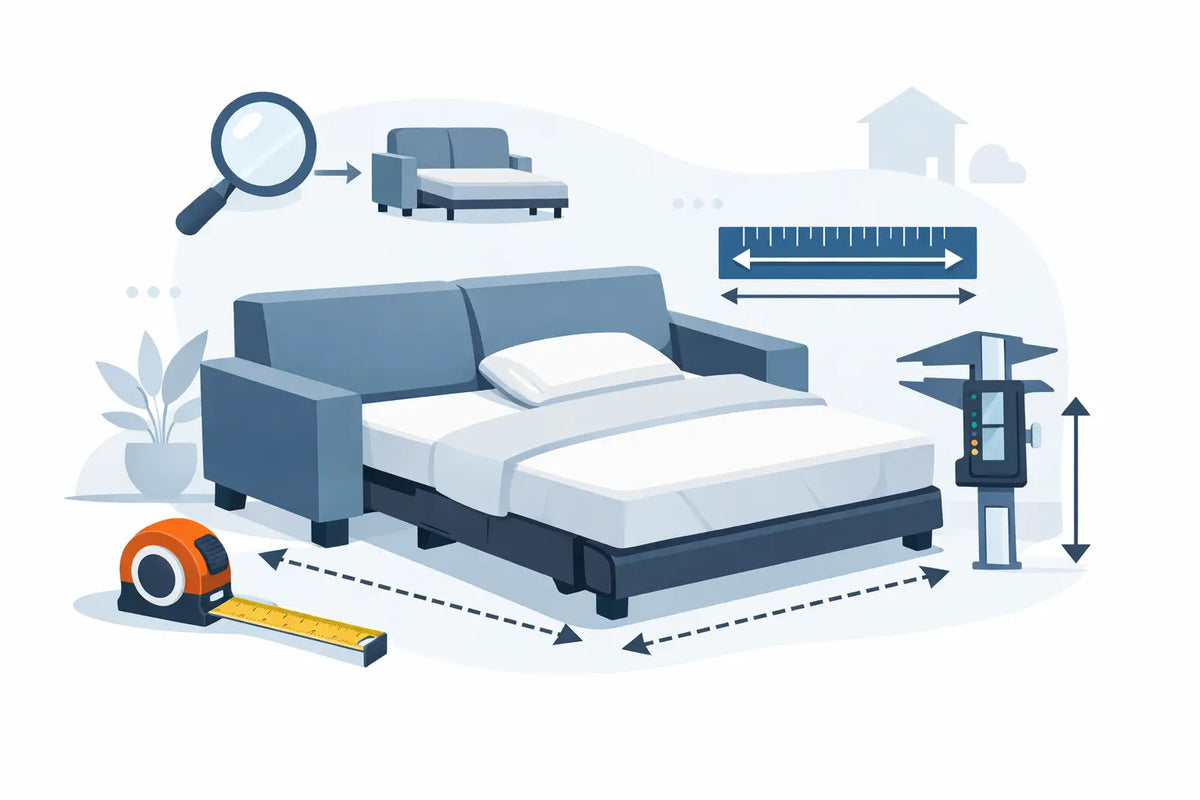
Do not forget the full footprint. Include the sofa’s arms, back cushions, chaise extension if applicable, and the space required to pull out a bed or reposition modular pieces. Marking the outline on the floor with painter’s tape is a simple way to see the layout before committing.
The Best Sofa Shapes for Narrow Rooms
There is no single perfect silhouette. The best shape depends on whether your room needs to prioritize everyday lounging, entertaining, overnight guests, or all three.
Straight sofas keep the room easy to navigate
A straight sofa is often the safest choice for a narrow room because it creates a clean line along one wall. Look for a design with slim arms or armless sections, which can provide generous seating without the bulky outer dimensions of oversized rolled arms.
A sofa on discreet feet can also help. Seeing some floor beneath the piece creates a lighter visual effect, especially when the room has limited natural light. That said, low-profile foam sofas can work beautifully too when their shape is simple and their proportions are intentional. What matters is avoiding unnecessary visual bulk.
Modular sofas let the layout evolve
Modular seating makes sense when your narrow room does more than one job. You may want an open setup for everyday living, then a wider lounging surface for movie nights or a guest bed when friends stay over.
The advantage is control. Instead of accepting a fixed L-shape that may dominate the room, you can choose the number of sections, arrange them to suit the wall length, and adapt later if you move. A compact modular sofa can sit as a straight line during the week, then become a more relaxed setup when the moment calls for it.
This is where lightweight foam construction has a practical edge. It is easier to rearrange than a traditional heavy frame sofa, which makes flexibility feel usable rather than theoretical.
Chaise layouts need a clear reason
A chaise can be comfortable in a narrow room, but only when its longer side does not interrupt circulation. Place it at the far end of the sofa, away from the room’s main entrance or route to another space. If the chaise projects into the path people use most, the room will feel tighter every day.
If you love the look but need adaptability, a modular section that can move or be used separately is often a better long-term answer than a permanent chaise.
Choose a Sofa Depth That Leaves Room to Live
Sofa depth is one of the most useful specifications to compare. Many compact living rooms work best with seating around 32 to 38 inches deep, though your comfort preference should guide the final choice. Shallower models tend to support a more upright sit and preserve more floor space. Deeper sofas feel more relaxed, but they demand more of the room.
Think about what happens opposite the sofa. Is there a coffee table, media console, dining table, or another chair? You need enough room to stand, sit, and pass through without constantly shifting furniture.
A smaller coffee table or a pair of nesting tables can be a smarter match than a large rectangular centerpiece. In particularly tight spaces, an upholstered ottoman that can move aside gives you flexibility without adding a hard visual block to the room.
Sofa Beds Make Small Rooms Work Harder
If your living room also has to host guests, a sofa bed can be one of the best investments you make. The key is choosing a design that feels like a real sofa first, rather than a temporary guest-bed solution that takes over the room.
Traditional pull-out mechanisms can be heavy and may need substantial clearance. A foam sofa bed or convertible modular system can offer a more direct setup, often by rearranging sections into a sleep surface. That can be especially useful in a narrow room because you are not trying to operate a large mechanism in a tight gap.
Before choosing, measure the sleeping configuration as carefully as the seating configuration. Ask where side tables, rugs, and coffee tables will go when the bed is open. Consider who will sleep there and how often. A setup for occasional guests has different needs than a space used for weekly overnight stays.
For flexible homes, this is the appeal of Seesofa’s FLOW and FLOWY designs: you can build seating around the room you have now while retaining the option to rearrange it when hosting calls for more sleeping space.
Use Color and Fabric to Reduce Visual Weight
The silhouette may be right, but fabric and color can still change how large the sofa feels. Light neutrals tend to recede and work well when you want the room to feel airy. Mid-tone, textured fabrics are practical for busy households because they add depth without showing every small mark. A deeper color can create a striking focal point, especially in a room with pale walls, but keep the rest of the palette edited so the sofa does not feel overly dominant.
Fabric choice should be practical, not just visual. In a narrow room, the sofa is likely to be used hard because there is less space for extra chairs and separate guest furniture. Removable, washable covers can make everyday ownership much easier, particularly with pets, children, frequent visitors, or a light-colored finish.
Samples are worth the time. View fabric in the morning, at night, and beside your flooring and wall color. A shade that looks warm online can shift cooler under your home’s actual light.
Create a Layout That Feels Intentional
The sofa should define the room without turning it into a corridor. In a long narrow living room, placing the sofa along the longest wall is usually the most natural arrangement. Keep the opposite side lighter with a slim console, floating shelves, or one occasional chair rather than matching the sofa with another large couch.
A rug can help anchor the seating zone, but size it carefully. A rug that is too small makes every piece look disconnected. One that extends under the sofa’s front edge and reaches toward the coffee table usually gives the layout more purpose without swallowing the floor.
Use vertical space to add personality. Wall lighting, art, and curtains hung closer to the ceiling pull the eye upward, which can make a narrow room feel more balanced. Choose fewer, better pieces instead of filling every surface. In a compact room, editing is a design decision.
A Better Way to Decide
When comparing sofas, write down your maximum width, maximum depth, ideal walkway, and any sleeper requirements before looking at fabrics or colors. Then narrow your choices by function. A beautiful sofa that prevents you from opening a door, accessing storage, or hosting comfortably is not the right fit.
The best choice will feel proportionate from every angle, not just in a product photo. It should leave room for daily movement, support the way you relax, and adapt when your plans change. In a narrow room, that sense of freedom is the real luxury.


Efterlad en kommentar
Denne side er beskyttet af hCaptcha, og hCaptchas Politik om beskyttelse af persondata og Servicevilkår er gældende.