

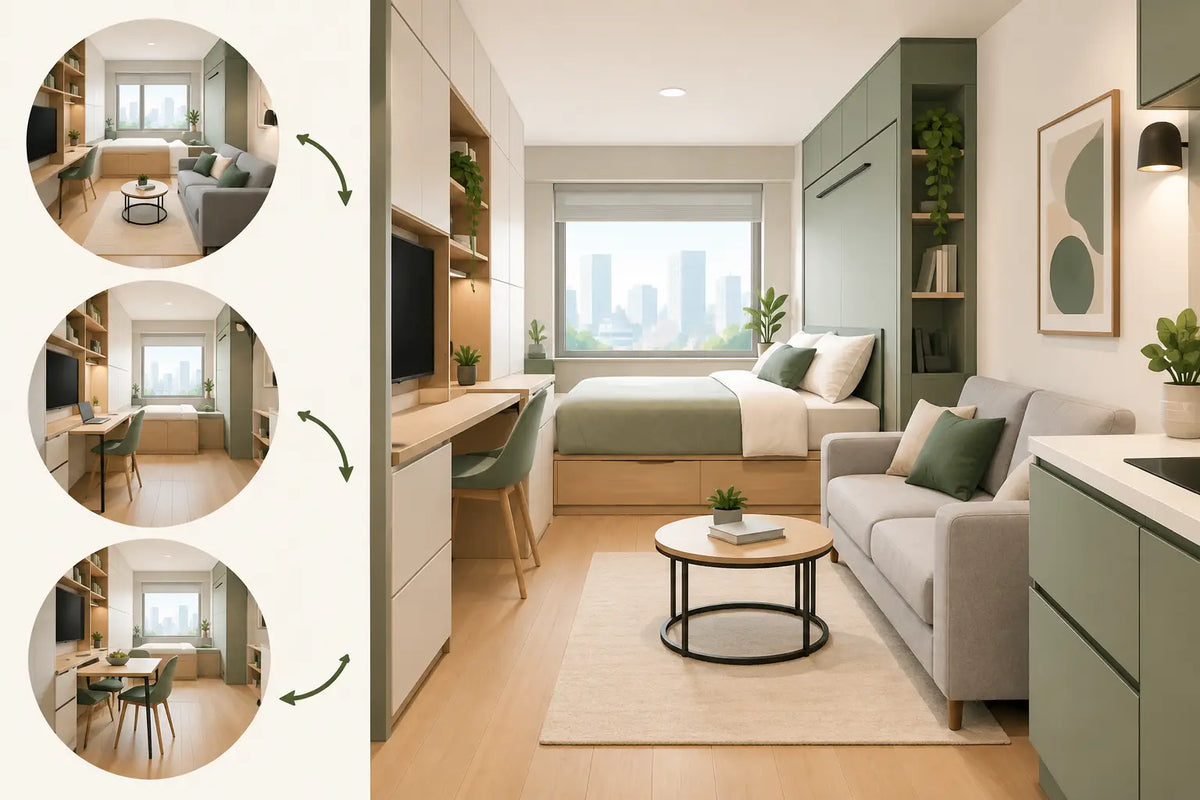
A great micro apartment redesign starts with one honest question: what needs to happen in this room before the day is over? It may be your living room at 6 p.m., your dining spot at 8 p.m., a guest room on Saturday, and a calm bedroom by midnight. The goal is not to squeeze in more furniture. It is to give every square foot a clear job, then choose pieces that can do more than one.
Start Your Micro Apartment Redesign With Real Life
Before measuring for a sofa or choosing a paint color, map how you actually use your home. Not how you wish you used it, and not how a staged apartment looks online. Think about where you drink coffee, work on a laptop, drop a bag, eat dinner, stretch out for a movie, and host an overnight guest.
This is where small-space design gets personal. A solo renter who works from a coffee shop can prioritize an expansive lounge area. A couple sharing a studio may need a more defined sleep zone and a table that works for two. If friends visit often, guest-ready seating should come before a large dining setup.
Write down the room's non-negotiables, then rank them. Most micro apartments work best when you select two primary functions and support the rest with adaptable pieces. Trying to give every activity a full-size, dedicated setup is how a compact home begins to feel crowded.
Measure More Than the Floor
Measure wall lengths, ceiling height, door swings, window placement, radiators, outlets, and the route from the building entrance to your apartment. A furniture piece that fits on a floor plan can still be frustrating if it blocks a closet, catches a door, or cannot make it around the hallway corner.
Leave circulation space on purpose. You should be able to move from the entry to the kitchen, bathroom, and bed without turning sideways around furniture. In a small home, an open pathway does as much for comfort as an extra few inches of floor space.
Build Zones Without Building Walls
A micro apartment feels more generous when each activity has a visual home. You do not need permanent partitions to create that feeling. Use furniture placement, rugs, lighting, and changes in height to signal where one zone ends and another begins.
Position the sofa with its back toward the sleep area or dining nook when the layout allows. It creates an instant boundary while keeping sightlines open. A low bookcase can also work as a divider, but keep it light enough that it does not cut the room in half.
A rug is one of the simplest zone-makers. Place the front legs of your seating on it to anchor the lounge area. Add a small pendant or table lamp near your dining surface so meals do not feel like they happen in the middle of the living room. Separate pools of light make a single room feel intentional after dark.
The trade-off is visual noise. Too many rugs, shelves, and screens can make a micro apartment redesign feel fragmented. Choose only the separators that solve a real problem, such as creating privacy around a bed or defining a work corner.
Choose Flexible Furniture First
In a compact apartment, furniture should justify its footprint. That does not mean every item needs hidden compartments or complicated mechanisms. It means the pieces you bring home should adapt to more than one moment of your life.
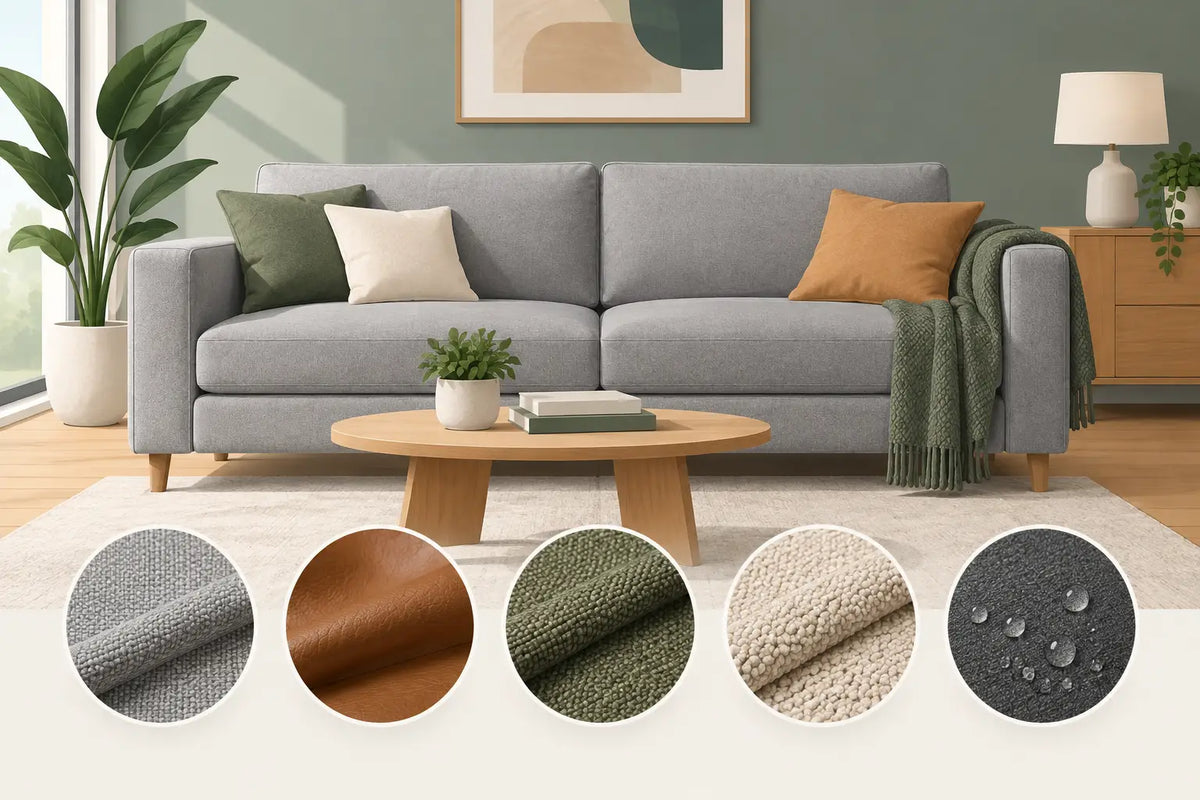
A sofa bed is often the most valuable upgrade because it supports everyday comfort and occasional sleeping without requiring a separate guest room. Look beyond the idea of a bed that folds out. Consider how it feels as your daily seat, how easily it changes configuration, and whether the fabric can handle coffee, pets, and regular use.
A modular foam sofa bed can be especially useful in a micro apartment because it is easier to move, reposition, and live with than a heavy fixed-frame piece. With customizable layouts, you can create a lounge that fits a narrow wall now and adjust it later if you move to a different apartment. Seesofa's FLOW and FLOWY designs are built around that kind of freedom, with removable washable covers and configurations that can suit both daily lounging and overnight guests.
Keep secondary furniture equally purposeful. Choose a nesting table over a large coffee table if you need flexible surface area. Consider a slim console that can become a desk or serving station. If you need a dining table, a round pedestal base often improves movement because there are no corners to navigate around.
Avoid buying small furniture simply because the apartment is small. Undersized seating can make a room feel temporary and uncomfortable. One properly scaled, comfortable sofa paired with lighter accent pieces usually works better than several petite chairs competing for space.
Use Storage to Protect the Room's Calm
Storage is not just about fitting more into cabinets. It is about reducing the number of objects left in view. In a micro apartment, a countertop full of appliances or a chair covered in clothing can change the entire mood of the room.
Start with closed storage for the things you use but do not want to see: chargers, paperwork, cleaning supplies, extra linens, and seasonal accessories. Reserve open shelving for a small number of books, ceramics, or objects you genuinely enjoy looking at. Open storage can add character, but it requires editing.
Go vertical where possible. Wall-mounted shelves, tall cabinets, hooks behind doors, and storage above eye level can free up valuable floor space. Keep the heaviest, most frequently used items within easy reach, and place occasional items higher up.
For bedding, choose a simple system that supports the guest bed you actually have. If your seating converts for sleep, store a folded duvet, pillows, and a fitted sheet in one labeled bin or cabinet. That keeps hosting easy rather than turning it into a late-night search through multiple closets.
Let Light and Color Do More Than Decorate
Small spaces do not need to be all white, but they do benefit from visual continuity. Use a limited palette across walls, large furniture, and window treatments so the room reads as one composed space instead of a collection of separate purchases.
A tonal approach works well: warm white walls, a soft sand or gray sofa, natural wood, and one deeper accent color. If you love bold color, place it where it can be enjoyed without visually shrinking the room, such as in art, cushions, a throw, or a single painted wall.
Window treatments should frame light, not fight it. Hang curtains close to the ceiling and wide enough to sit outside the window when open. This makes the window feel larger and allows more daylight into the room. At night, layer lighting with an overhead source, a floor or table lamp, and a focused reading light. One ceiling fixture rarely creates the warm, flexible atmosphere a multi-use room needs.
Mirrors can help, especially when placed opposite a window or near a light source. But use them strategically. A mirror should reflect light, a view, or a clean part of the room, not amplify clutter.
Design for Change, Not Perfection
The best micro apartment redesign is rarely finished in one shopping trip. Live with the new layout for a week or two. Notice where bags land, whether the table interrupts the path to the kitchen, and if the sofa provides enough room to truly relax. Those details matter more than whether every corner looked complete on day one.
Give yourself permission to adjust. Move the rug. Change the direction of the sofa. Replace a bulky side table with a slimmer one. A flexible home should respond to a new job, a roommate, a pet, more frequent guests, or simply a better understanding of how you want to live.
Your apartment does not need more square footage to feel more like yours. It needs a layout that respects your routines, furniture that earns its space, and enough visual calm to make coming home feel easy.
Seesofa in numbers
- All-foam sofa beds, chairs and corner sofas made in Europe
- Sofa bed: two folding foam mattresses, each 100 × 170 × 17 cm – open both for a 200 × 170 cm bed, or just one for a single bed next to a seat; no mechanism
- Removable, washable covers with zips
- Flow in GROSSO corduroy (28 colours), Flowy in AMIGO fabric (23 colours)


Leave a comment
This site is protected by hCaptcha and the hCaptcha Privacy Policy and Terms of Service apply.