

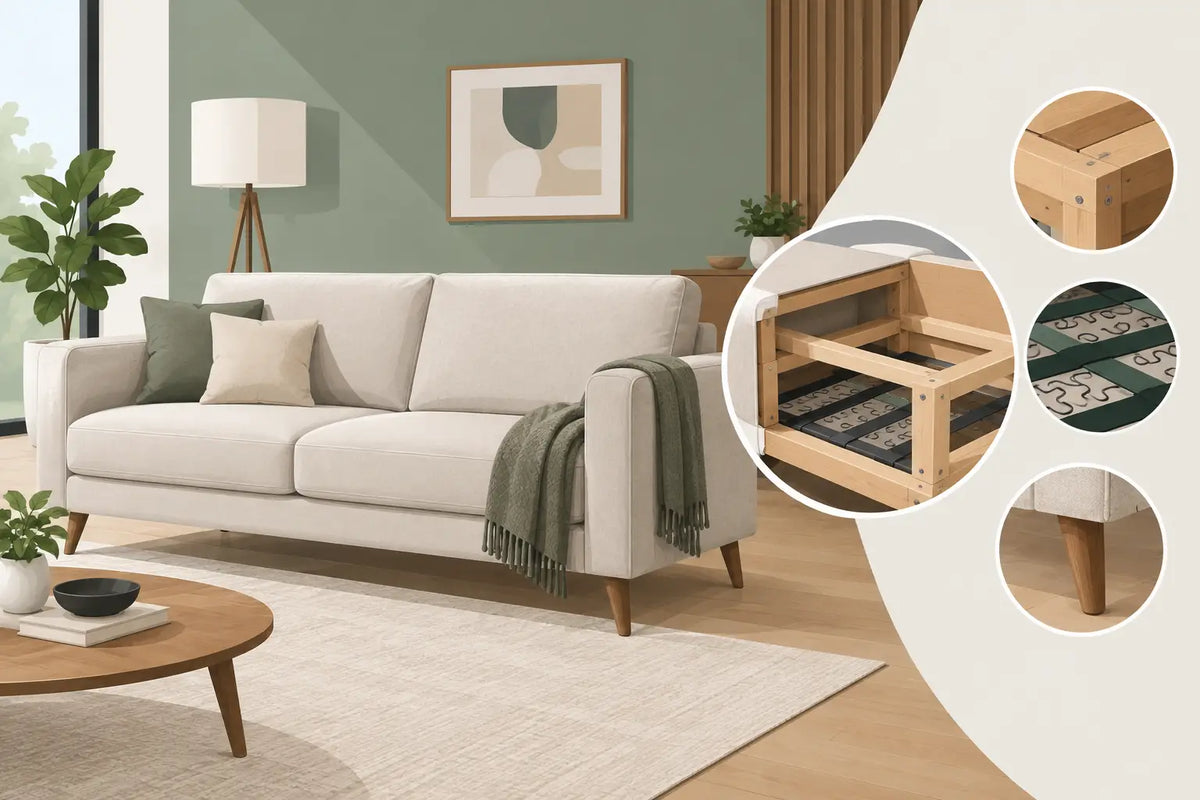
A sofa can look perfect on delivery day and still become the piece you avoid sitting on a year later. The difference is often hidden beneath the cushions: the frame, its joints, and the way the whole structure handles daily weight and movement. This guide to durable sofa frames helps you look past surface-level style and choose seating that suits real life - movie nights, overnight guests, small apartments, and every rearrangement in between.
What Makes a Sofa Frame Durable?
Durability is not one material, one label, or one price point. It is how the frame material, joinery, support system, and intended use work together. A well-made sofa should feel stable when you sit down, stay level when someone shifts beside you, and avoid the creaks, twists, and sagging that make a room feel less comfortable over time.
Traditional sofa frames are usually made from solid wood, engineered wood, metal, or a combination of these materials. Each can be a smart choice. The best option depends on whether you want a substantial permanent sofa, a sleeper for frequent guests, or a flexible piece that can move easily with you.
A durable frame also needs thoughtful support. Even excellent wood will not perform well if the seat deck, slats, webbing, or suspension underneath are poorly designed. Think of the frame as the foundation and the support system as the part that keeps comfort consistent.
A Guide to Durable Sofa Frames by Material
Kiln-Dried Hardwood
Kiln-dried hardwood has long been a favorite for conventional upholstered sofas. Woods such as oak, maple, ash, and beech are dense, naturally strong, and less likely to shift as indoor humidity changes when they are properly dried.
For a sofa that will stay in one home for many years, hardwood is a strong choice. It can handle regular use and provides a solid base for upholstery, cushions, and sleeper mechanisms. The trade-off is weight. A hardwood-framed sectional can be difficult to carry up apartment stairs, reposition in a room, or move to a new home.
Ask what type of hardwood is used and whether it is kiln-dried. “Solid wood” sounds reassuring, but it is not a complete answer. The quality of the joints matters just as much as the wood itself.
Plywood and Engineered Wood
Quality furniture-grade plywood can be a dependable frame material. It is made from layered wood veneers, which can make it dimensionally stable and less prone to splitting than low-grade solid lumber. It is commonly used in well-designed contemporary furniture, especially where clean lines and efficient construction matter.
The key word is quality. Multi-ply furniture-grade plywood performs very differently from thin particleboard or fiberboard. Particleboard can work in limited, low-stress areas, but it is not the material you want carrying the main load of a sofa used every day.
If you are shopping online, look for clear construction details rather than broad phrases like “wood frame.” Brands that explain where engineered wood is used give you a better basis for comparison.
Metal Frames
Metal is especially useful for sofa beds, modular designs, and pieces that need a slim profile without feeling flimsy. Steel offers excellent strength for its weight and can be shaped precisely, making it a practical choice for moving parts, legs, and structural components.
A metal frame should feel steady rather than hollow or rattly. Pay attention to the connections, welds, and attachment points between metal and other materials. A great metal structure can still feel unstable if the legs are undersized or the fasteners loosen easily.
Metal also suits flexible living well. It can reduce overall weight compared with a large hardwood frame, which is helpful if your living room doubles as a guest room or changes shape often.
Frameless Foam Construction
Not every durable sofa relies on a conventional internal frame. High-density foam designs use carefully engineered foam layers to create support, shape, and comfort without a heavy wood or metal skeleton throughout the seat.
This approach makes sense for homes where flexibility matters. A lightweight foam sofa can be easier to move, reconfigure, and use as a bed, while still offering a supportive place to sit. It also removes some of the failure points found in traditional furniture, such as cracked rails, loose corner blocks, and noisy mechanisms.
The trade-off is that foam quality becomes the central durability question. Low-density foam may soften quickly and lose its shape. High-quality foam should recover after use, support the body evenly, and retain a tailored look with regular care. For a flexible sofa bed, look at the density, layer construction, and cover design instead of judging durability by the presence of a heavy frame alone.
Joints Matter More Than Most Shoppers Realize
Frames do not fail only because the material is weak. They often fail where pieces meet. On a traditional frame, reinforced corner blocks, dowels, screws, and quality glue create a more secure structure than basic staples alone.
You do not need to inspect every joint in person to shop well. Product details, customer support, and clear care guidance can reveal how seriously a brand treats construction. If a sofa is designed to be moved, converted into a bed, or configured in multiple ways, its connection points deserve even closer attention.
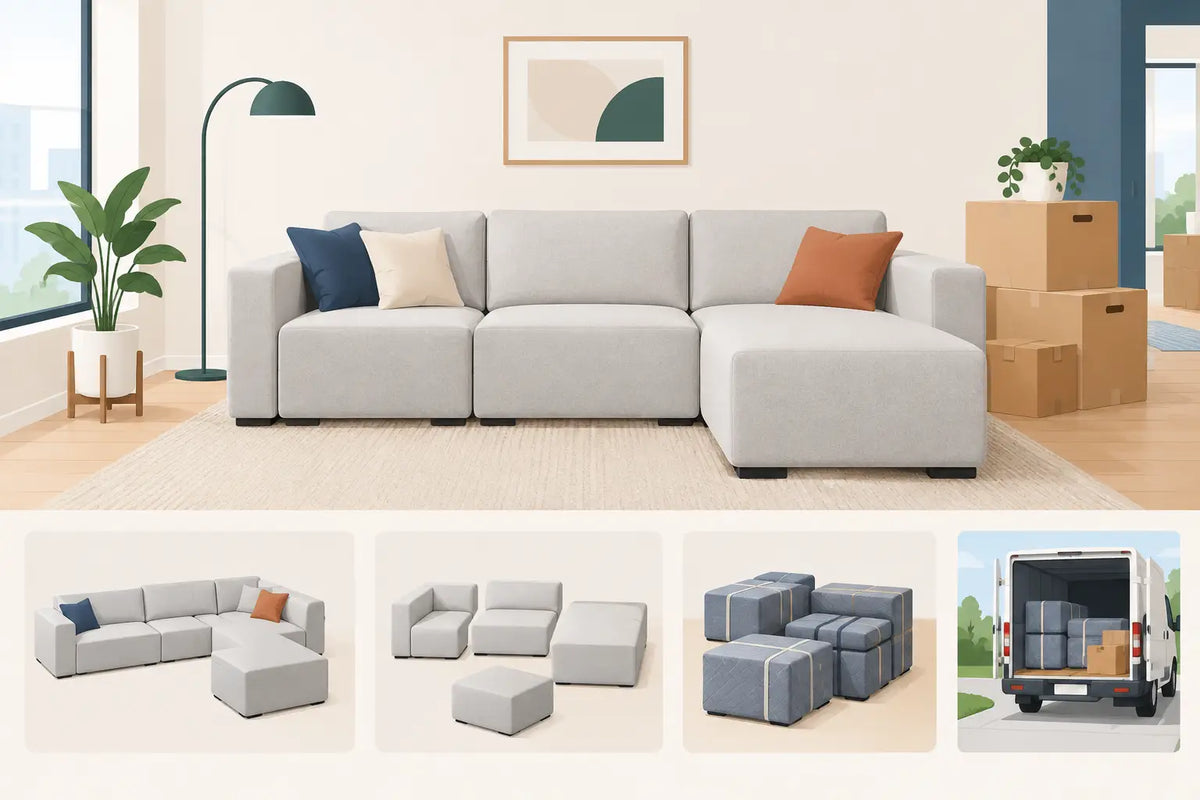
For modular seating, consider how sections stay aligned. Connectors should hold modules together during normal use while still allowing you to adjust the layout when your space changes. That freedom is valuable, but it should not come at the expense of a sofa that drifts apart whenever someone sits down.
Match the Frame to How You Actually Live
The most durable sofa is the one built for your routine, not someone else’s idea of a forever home. A heavyweight hardwood sofa may be ideal for a settled family room. It may be less ideal for a fourth-floor walk-up, a renter who moves regularly, or a studio where the sofa becomes a bed on weekends.
If you host often, test the sleeping setup in your decision process. A sofa bed needs to be easy to convert, supportive enough for real rest, and simple to reset the next morning. If you have pets, kids, or a habit of eating dinner on the couch, removable washable covers can make the sofa feel new longer by protecting the parts you see and touch every day.
For compact spaces, consider the full footprint in every position. Measure the sofa in seating mode, sleeping mode, and with enough clearance to walk around it. Durability includes avoiding the daily strain of forcing furniture through a layout that does not fit.
How to Assess a Sofa Before You Buy
Start with the product specifications, but read them like a practical homeowner. Look for the frame material, support system, weight capacity where available, and whether the sofa is intended for daily sleeping or occasional guests. Vague claims of “premium construction” are less useful than specific information.
Then consider movement. If you can see the sofa in a showroom, sit at different points across the seat, lean into the arms, and shift your weight. The piece should not rock, squeak, or feel noticeably weaker at the corners. For an online purchase, fabric samples, detailed dimensions, care instructions, and a clear return window reduce the risk of buying blind.
Finally, look at ownership beyond day one. Can the covers be removed and cleaned? Can damaged fabric be replaced? Is the sofa light enough to move when you repaint, relocate, or rethink your layout? A design that is easy to maintain is more likely to stay in your home and in your style for longer.
Durability Is Also About Care
Even a strong sofa benefits from simple habits. Rotate and fluff loose cushions when the design allows it, keep the frame out of prolonged direct sunlight and damp conditions, and avoid dragging a sofa by one arm or leg. When moving a sectional or sofa bed, lift it with help rather than pulling it across the floor.
Washable covers are a practical advantage, but follow the specified care instructions. Using excessive heat or harsh products can affect fabric color, texture, or fit. A little routine care protects both the visual finish and the comfort you chose.
A durable sofa should support the way you live now while leaving room for what comes next. Whether you choose a reinforced hardwood frame, a streamlined metal structure, or high-quality frameless foam, choose the construction that gives your home more comfort, more flexibility, and fewer reasons to settle.
Seesofa in numbers
- All-foam sofa beds, chairs and corner sofas made in Europe
- Polyurethane foam T3045 (not memory foam)
- Metal base in 8 colours
- Removable, washable covers with zips


Leave a comment
This site is protected by hCaptcha and the hCaptcha Privacy Policy and Terms of Service apply.