

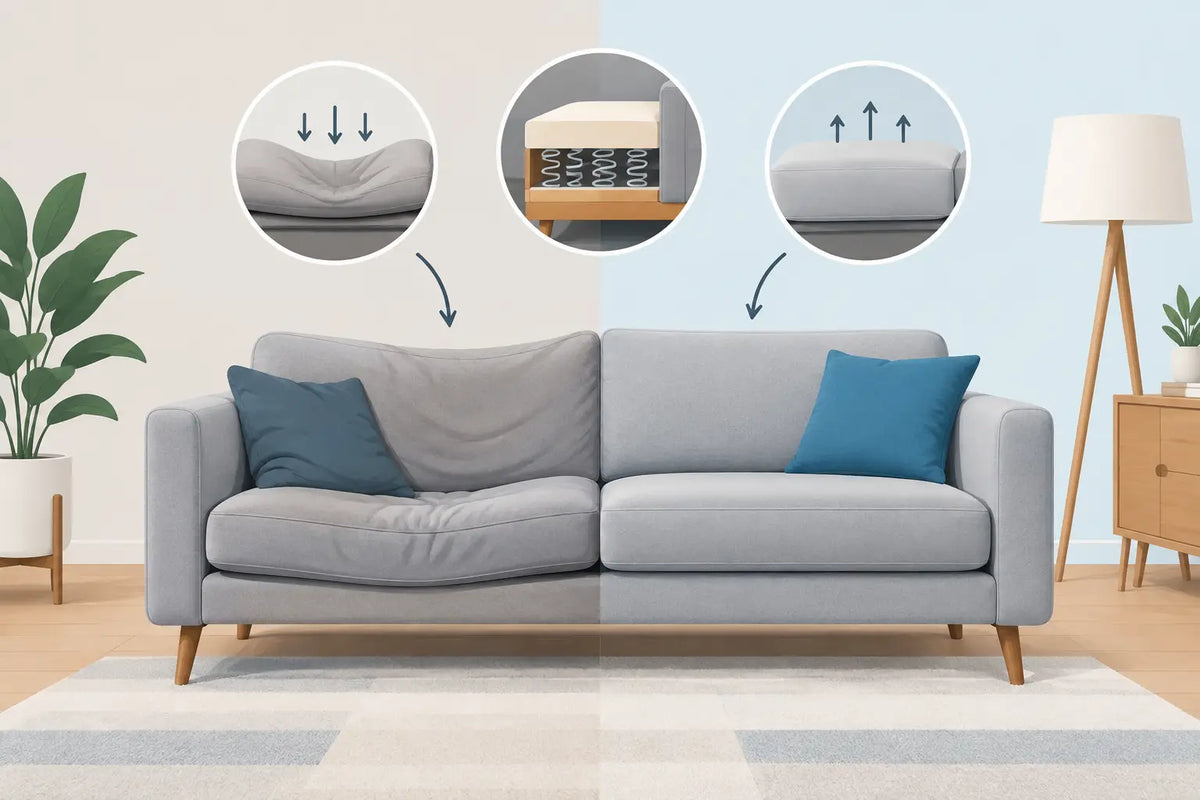
A sofa rarely sags all at once. It starts with the seat everyone claims during movie night, the corner where you work from home, or the spot that becomes a landing pad for bags and laundry. Learning how to prevent sofa sagging means protecting the comfort you feel every day, as well as the clean, tailored shape that makes your living room look considered.
The good news is that sagging is not inevitable. Some settling is normal, especially in the first few weeks with new foam cushions. Deep dips, a tilted seat, squeaking springs, or cushions that do not recover after use are different. Those signs usually point to uneven wear, weak support beneath the cushions, or materials that were not designed for the demands of daily living.
How to Prevent Sofa Sagging Starts Before You Buy
A sofa's long-term comfort is largely decided by what you cannot see: its internal support system, cushion construction, frame, and how those parts work together. Fabric matters for appearance and care, but it will not stop a seat from losing its shape.
Choose a support system built for real use
Traditional sofas may rely on webbing, sinuous springs, pocket springs, or combinations of these materials. Each approach can work well when it is properly engineered, but the quality of the components and the way they are secured matter more than the label alone. Weak webbing can stretch. Springs can loosen or bend. A frame that flexes under weight puts added stress on everything above it.
For foam-based seating, look for substantial, resilient foam that is designed to rebound rather than simply feel soft on day one. High-quality foam can provide a supportive, even sit without the shifting and spring noise some conventional constructions develop over time. It also suits flexible furniture particularly well, since cushions and modules need to hold their form through sitting, lounging, and occasional overnight use.
Do not judge comfort from a quick showroom sit alone. Sit back for several minutes, shift positions, and pay attention to whether the seat supports your hips and thighs evenly. If the cushion compresses dramatically at the front edge or you feel the base underneath, it may not be the right choice for everyday use.
Match the sofa to the way you live
The softest seat is not always the most durable one. A low-density, sink-in cushion may feel inviting at first, yet it can show body impressions sooner in a high-traffic home. On the other hand, an overly firm sofa can feel unwelcoming if it is meant for long movie nights or regular sleeping.
Think about your actual routine. A compact apartment sofa that doubles as a guest bed needs materials that recover well after repeated changes between seating and sleeping. A family-room sectional needs dependable support across the seats people use most. If you rent or move often, lightweight modular pieces can be easier to reposition without stressing a large frame.
This is where customization has practical value, not just visual appeal. Choosing the size, layout, and configuration that fit your room helps prevent the awkward use patterns that wear a sofa unevenly. If a sofa is too small for the people using it, everyone ends up perched on the same few inches.
Give Your Sofa Even Support
Even a well-made sofa can develop problems if it sits on an uneven surface. Before blaming the cushions, check the floor and the legs.
Place the sofa where all legs make solid contact with the floor. A wobble may seem minor, but it concentrates pressure on one corner of the frame and can eventually affect the seat above it. If your floor slopes or has uneven boards, use appropriate furniture shims under the legs rather than stacking books, cardboard, or loose materials that can shift.
For sofa beds and modular seating, make sure every component is connected and aligned as intended. A partially disconnected module can create a gap or uneven edge that feels like sagging, even when the foam itself is in good condition. When moving the sofa, lift from the base with help instead of dragging it across the room or pulling hard on a single arm.
Avoid using armrests, back cushions, or the front edge of a seat as a step stool. Occasional sitting on an arm will not necessarily cause immediate damage, but repeated concentrated weight can distort areas that were never intended to carry it. The same goes for dropping heavily into a seat. Sofas are made for living, not for impact testing.
Build Small Care Habits Into Your Routine
Good sofa care does not need to become another household chore. A few quick habits, repeated consistently, make the biggest difference.
Change where you sit
If one person always uses one seat, that seat will naturally soften faster. Encourage a little rotation in how the sofa is used, especially in households with a favorite corner. This does not mean treating your living room like assigned seating. Simply switching spots occasionally spreads compression across the sofa.
If your sofa has loose, reversible cushions, rotate them from side to side and front to back according to the manufacturer's care guidance. Some cushions can also be flipped. Others are designed with a specific top and bottom, so flipping them may affect their feel or appearance. Never force a rotation routine that does not suit the construction.
With one-piece foam seats or fixed modular cushions, focus on varying use rather than flipping. These designs often benefit from light, even use and a quick visual reset after hosting guests or using the sofa bed function.
Smooth and reshape cushions after heavy use
Foam cushions generally recover on their own, but a little attention helps them settle evenly. After a long evening of lounging, smooth the upholstery with your hands and gently press along the cushion surface to release minor creases. For fiber-filled back cushions, redistribute the fill by patting and shaping them before they become flat or lumpy.
Do not aggressively punch foam cushions or bend them sharply. The goal is to maintain their natural shape, not force them into place.
Keep weight distributed
A sofa can handle daily sitting, but large concentrated loads create unnecessary stress. Avoid storing heavy boxes, exercise equipment, or stacks of books on the seat for extended periods. When guests sleep on a sofa bed, make sure the sleeping surface is set up fully and evenly, rather than placing a mattress or topper on a partially folded mechanism.
Children and pets are part of a real home, so perfection is not the point. A practical rule works better: use the sofa for the purpose it was designed for, and give it a reset after unusually heavy use.
Protect Foam From Heat, Moisture, and Neglect
Foam is durable, but its environment affects how it performs. Direct, intense sunlight can fade upholstery and create localized heat over time. Position your sofa away from strong sun where possible, or use window treatments during the brightest hours. This protects the fabric and helps the materials beneath it age more evenly.
Moisture is another concern. Address spills promptly according to the fabric care instructions, and allow cushions to dry thoroughly before covering or using them again. Moisture trapped inside upholstery can lead to odors, mildew, and material breakdown. Removable washable covers make everyday care much simpler, but they do not replace careful drying and sensible spill response.
Vacuum upholstery regularly with a soft brush attachment to remove dust, crumbs, and pet hair from seams. It may seem unrelated to structure, yet clean seams and covers make it easier to spot early issues such as shifting cushions, a loose connection, or a developing dip.
Know the Difference Between Settling and Sagging
New cushions often soften slightly as they adapt to use. This is normal and should happen relatively evenly. Sagging is more likely when a visible depression remains after the cushion has had time to recover, when one seat feels distinctly lower than the next, or when you can feel a hard bar, spring, or unstable base below you.
Start troubleshooting from the bottom up. Check that the sofa is level, legs are secure, modules are connected, and cushions are positioned correctly. Remove the cushions if possible and inspect the platform underneath for loose fasteners, stretched webbing, or damage. If the issue is a removable cushion, moving it to another position for a few days can help reveal whether the cushion or the base is the source of the problem.
Do not ignore a sudden change in support. A small repair made early is usually easier than continuing to use a damaged area until it affects the frame, upholstery, and surrounding cushions. Follow the manufacturer’s warranty and care instructions before attempting a repair yourself, particularly with sofa bed mechanisms or modular connectors.
A sofa should adapt to your life, not demand that you tiptoe around it. Choose supportive materials, give it a level foundation, and build in a few simple care habits. Then let it do what great furniture is meant to do: make room for everyday living, changing plans, and people you want to keep close.
Seesofa in numbers
- All-foam sofa beds, chairs and corner sofas made in Europe
- Polyurethane foam T3045 (not memory foam)
- Removable, washable covers with zips
- Flow in GROSSO corduroy (28 colours), Flowy in AMIGO fabric (23 colours)


Leave a comment
This site is protected by hCaptcha and the hCaptcha Privacy Policy and Terms of Service apply.