

A sofa fabric can look perfect on a screen and still feel wrong once it is in your home. Maybe the texture catches on your favorite knit, the pale color makes every coffee spill feel high-stakes, or the weave looks too formal next to the relaxed room you had in mind. Learning how to choose upholstery fabric means looking beyond color and choosing for the real life that happens around your sofa.
For a piece that works as a lounge spot, guest bed, reading corner, and everyday landing place, fabric is not a finishing touch. It is part of the design. The right choice makes your sofa feel personal, easy to live with, and ready to keep up when your plans change.
Start With How Your Sofa Will Be Used
Before comparing swatches, think about the room and the people using it. A sofa in a quiet formal sitting room can support more delicate fabrics than one in a studio apartment where it handles movie nights, meals, pets, and overnight guests.
Ask yourself what happens on the sofa most often. Do you stretch out there every evening? Is it the first place friends gather when they visit? Will children or pets climb on it? Does it convert into a bed? These answers shape the right balance of softness, strength, and care.
A tightly woven fabric is often a smart choice for high-use spaces because it holds its shape and tends to resist snagging better than a loose, textured weave. If your sofa bed will be used for sleeping, prioritize a surface that feels comfortable against bare skin and does not feel overly slippery or rough. A beautiful fabric should still make you want to sit, nap, and stay awhile.
How to Choose Upholstery Fabric by Performance
Durability is about more than choosing the thickest fabric. Fiber type, weave, finish, and construction all affect how upholstery handles daily use. There is no single best material for every home, but knowing the trade-offs helps you choose with confidence.
Natural fibers: warm, breathable, and tactile
Cotton and linen bring an easy, relaxed character to a room. They feel breathable and inviting, which makes them especially appealing in light-filled, casual interiors. Cotton can be durable when blended or tightly woven, while linen has a beautiful natural texture that suits a softer, more lived-in look.
The trade-off is maintenance. Natural fibers may wrinkle, fade, or absorb spills more readily than performance-focused options. They can be a great fit for lower-traffic rooms or for sofas with removable, washable covers, where everyday care is much less intimidating.
Wool and wool blends offer another route. They have a rich hand feel, natural resilience, and a tailored appearance, but their texture may not be right for everyone. If you want a fabric that feels smooth and relaxed for sleeping, always test it rather than relying on a product photo.
Synthetic fibers: practical without looking basic
Polyester, nylon, acrylic, and other synthetic fibers are common in modern upholstery for good reason. They can be colorfast, durable, and easier to clean than many natural materials. Polyester blends, in particular, often offer a soft feel with the practical performance needed in an active home.
This does not mean every synthetic fabric feels the same. Some have a crisp woven finish, some mimic the softness of natural fibers, and others have a more structured, tailored surface. Look at the fabric up close and run your hand across it. A material can be durable and still suit a design-led room.
Velvet and textured fabrics: choose with intention
Velvet creates depth immediately. Its pile catches the light, so the color can look lighter or darker depending on where you stand. It is a strong choice when you want the sofa to be a focal point, especially in rich shades like forest green, rust, ink, or warm brown.
Textured weaves and bouclé-style fabrics add softness and visual interest, but they ask for a little more consideration. A loose loop can be vulnerable to claws, jewelry, or rough use. If you love texture but your home is busy, choose a denser weave or a fabric with a more compact surface.
Choose a Color That Works Beyond the Swatch
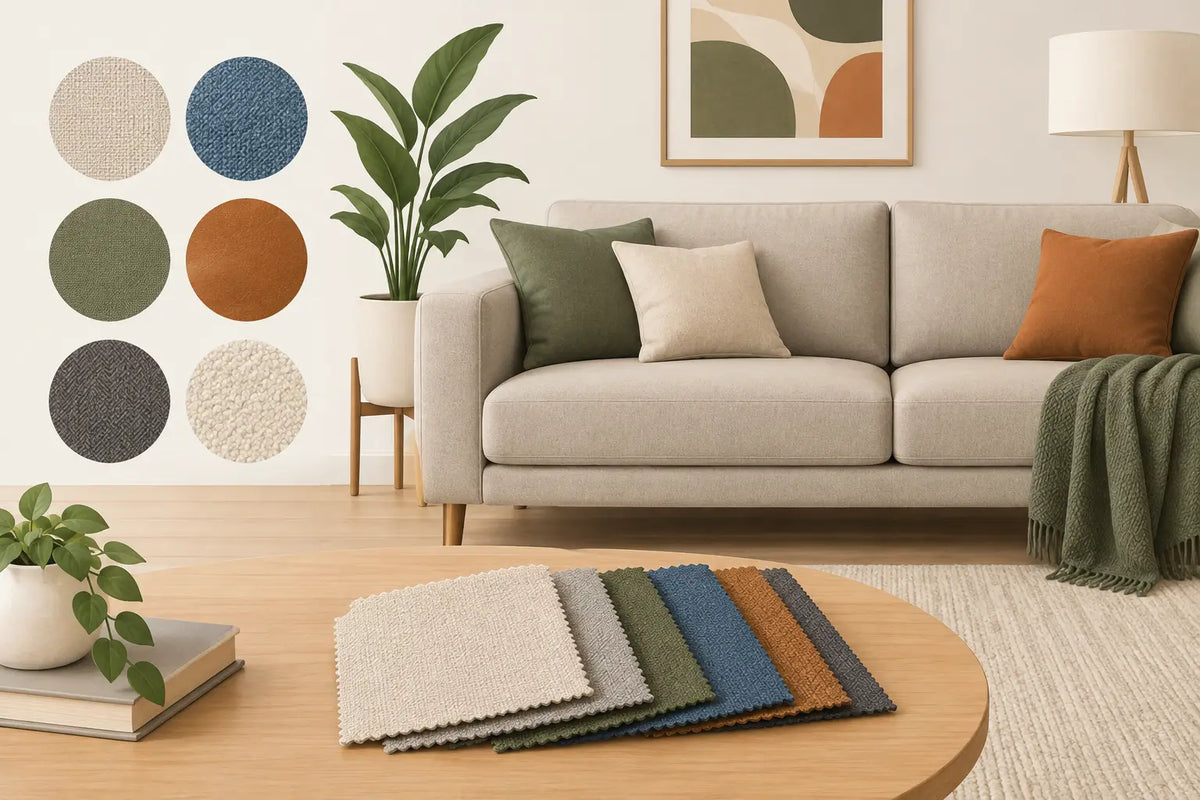
A fabric swatch is a starting point, not the whole story. Color changes with daylight, overhead lighting, wall paint, flooring, and even the metal finishes around it. Order samples when possible, then look at them in the exact room where the sofa will live.
View each sample in the morning, afternoon, and evening. Hold it next to your wall, rug, curtains, and wood tones. A cool gray can look blue near warm oak. A creamy neutral can turn yellow against bright white paint. These small shifts are easier to notice at home than in a showroom or on a calibrated screen.
Neutrals are flexible, but they do not have to be timid. Warm beige, mushroom, stone, taupe, and soft charcoal can create a calm base while still adding depth. Mid-tone fabrics are often forgiving in active spaces because they hide everyday dust and small marks better than very pale or very dark colors.
If you want more personality, a sofa is an excellent place to use it. A deep blue, clay red, olive, or saturated green can anchor an otherwise simple room. The key is to consider how permanent you want that statement to feel. A removable-cover sofa gives you more freedom to choose boldly now and refresh the look later.
Feel the Fabric Before You Commit
Texture changes how a sofa feels visually and physically. Smooth fabrics read cleaner and more minimal. Nubby weaves add warmth. Brushed finishes can make a large piece feel softer and more inviting. None is automatically better - it depends on the mood you want to create.
Samples help with more than color. Sit with the fabric against your skin. Place it next to the throws and pillows you already own. Notice whether it feels cool, cozy, structured, or relaxed. If you are choosing a sofa bed, this step matters even more. The fabric should feel good during a quick afternoon nap as well as an overnight stay.
Also consider sheen. Matte upholstery usually hides minor marks and blends easily into contemporary interiors. Fabrics with a subtle luster can feel more elevated, but they may show pressure marks, directional shading, or changes in the pile more clearly.
Make Cleaning Part of the Design Decision
The most beautiful fabric is not the right fabric if you will worry about using it. Be honest about your tolerance for maintenance. If the thought of a spill makes you nervous, choose a material designed for easy care, a darker or mid-tone shade, or a sofa with removable covers.
Read the care guidance before you buy. Can the cover be removed? Is it machine washable, spot-clean only, or professionally clean only? Are there specific products you should avoid? Clear care instructions are a sign that a fabric has been selected for life beyond the showroom floor.
For households with pets, avoid very loose weaves and fabrics that attract hair if that will become a daily frustration. For young children, washable covers and forgiving colors can be more valuable than a delicate statement textile. In a low-traffic guest room, you may decide that a lighter linen-look fabric is worth the extra care. Your lifestyle sets the rules.
Think About the Whole Sofa, Not Just the Seat
Fabric works with every other choice you make. The same warm gray can feel Scandinavian and understated with brushed metal legs, or more tailored with black metal. A chunky texture can balance a slim, low-profile silhouette, while a smooth fabric can sharpen a more modular, relaxed shape.
Consider scale, too. In a compact apartment, a light or mid-tone fabric can help a sofa feel less visually heavy. In a larger room, a darker color or rich texture can give the seating area more presence. If you are configuring modules, remember that the fabric will cover a larger visual footprint than a standard two-seat sofa.
At Seesofa, free fabric samples and removable washable covers make it easier to choose for your actual home rather than an imagined one. That is the advantage of designing around your space: comfort, color, and care can all work together instead of competing.
The best upholstery fabric is the one you can live on without overthinking it. Bring the samples into your room, test them in real light, picture an ordinary Tuesday night, and choose the fabric that still feels like you.
Seesofa in numbers
- All-foam sofa beds, chairs and corner sofas made in Europe
- Metal base in 8 colours
- Removable, washable covers with zips
- Flow in GROSSO corduroy (28 colours), Flowy in AMIGO fabric (23 colours)


Leave a comment
This site is protected by hCaptcha and the hCaptcha Privacy Policy and Terms of Service apply.