

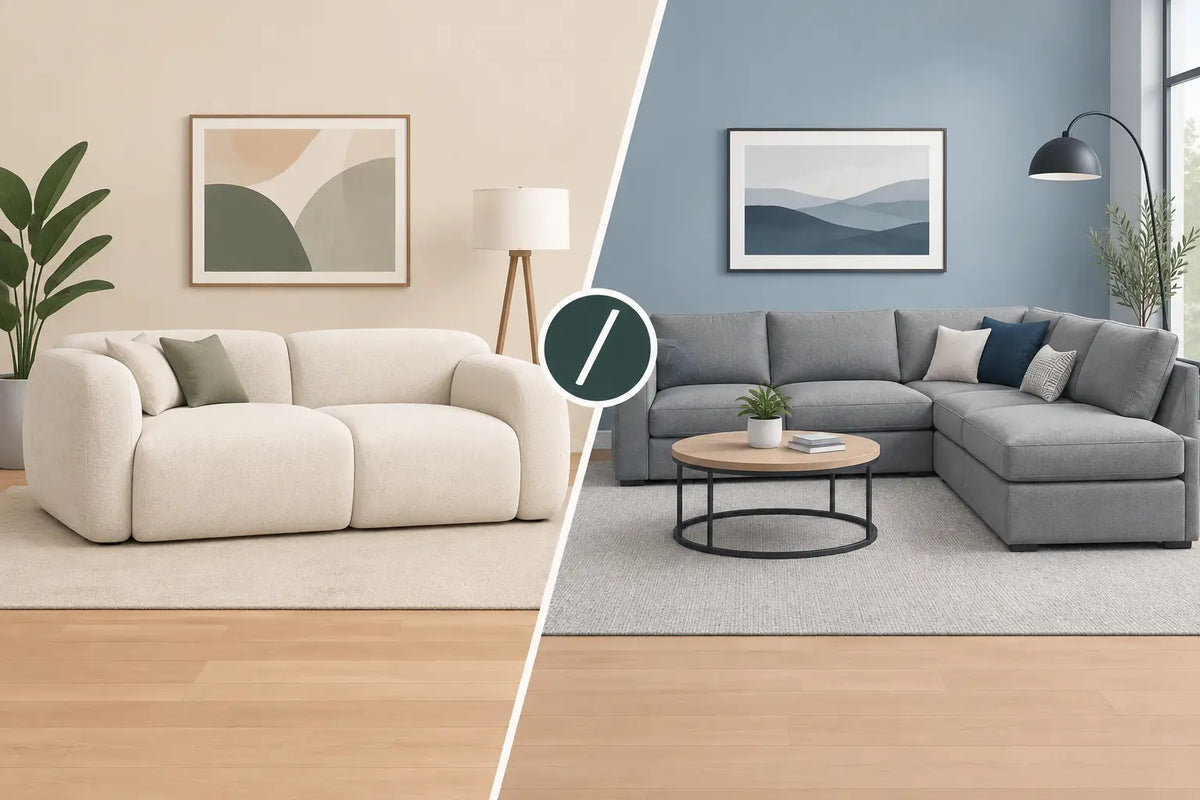
A corner can make or break a living room. It can become the spot where everyone gathers, or it can swallow valuable floor space and make the room feel permanently arranged around one oversized piece. That is the real question behind a foam sofa versus sectional couch: which one gives you the comfort you want without asking your home to stay the same forever?
For apartments, guest rooms, and homes where the living room works hard, the answer is rarely about which option looks better in a product photo. It comes down to layout freedom, everyday comfort, overnight guests, care, and how much control you want over the finished look.
Foam Sofa Versus Sectional Couch: The Core Difference
A sectional couch is traditionally a large seating system made from connected pieces. It is designed to fill a corner, divide an open-plan room, or create generous lounge seating for a family. Many sectionals are upholstered over a wood or metal frame and use separate cushions for the seat and back.
A foam sofa uses high-density foam as its primary structure and comfort layer. Depending on the design, it may be low-profile, modular, lightweight, or able to unfold into a bed. Rather than relying on a heavy internal frame, it creates its shape through supportive foam construction and tailored upholstery.
Neither is automatically the better choice. A large, dedicated family room may benefit from the grounded presence and abundant seating of a sectional. A compact living space or flexible guest area may get more value from a foam sofa that can move, reconfigure, and sleep someone comfortably when needed.
Start With the Room, Not the Sofa
The best seating choice begins with what your room needs to do on an ordinary Tuesday, not just when friends visit. Measure the full space, including walkways, door swings, radiators, windows, and the path from the entryway to the room. A sofa that fits on paper can still feel too large if it interrupts how people move through the home.
A sectional works beautifully when the room has a natural corner or a wide wall to support it. It can create a clear lounge zone in an open floor plan and provide enough room for multiple people to stretch out at once. The trade-off is commitment. Once it is positioned, the room often has one obvious layout.
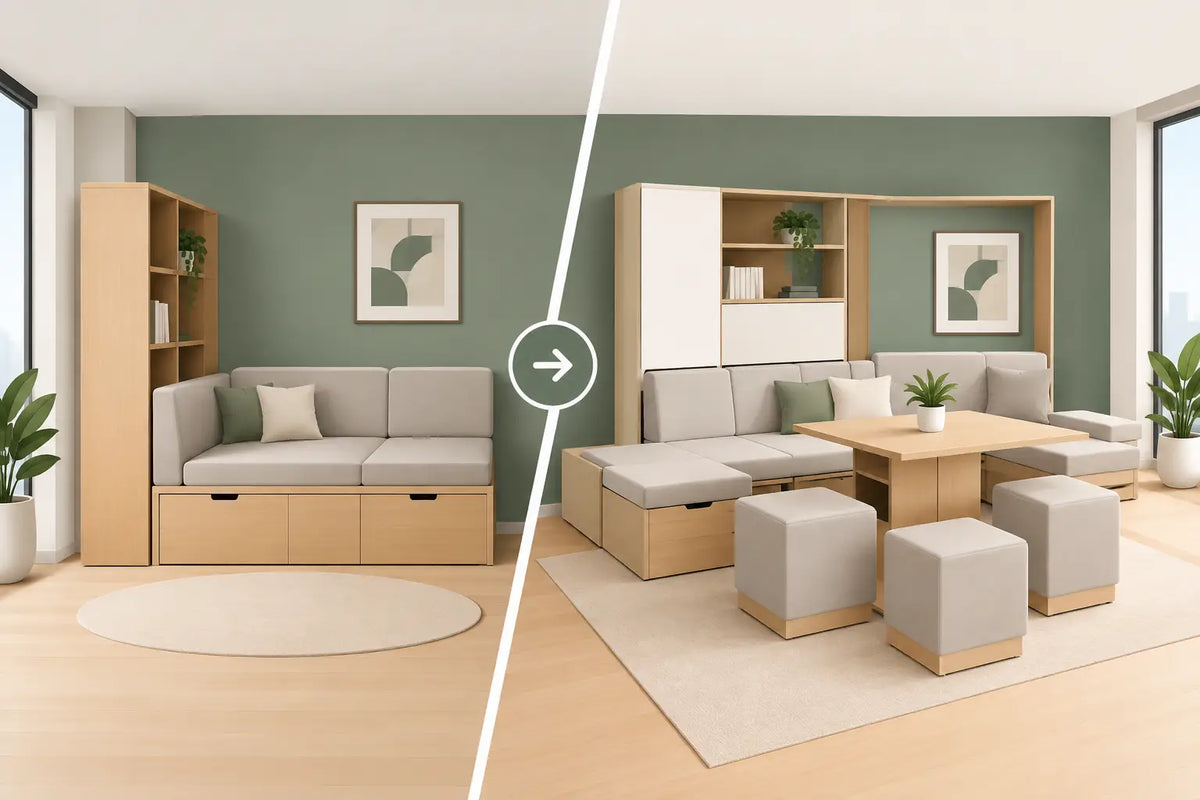
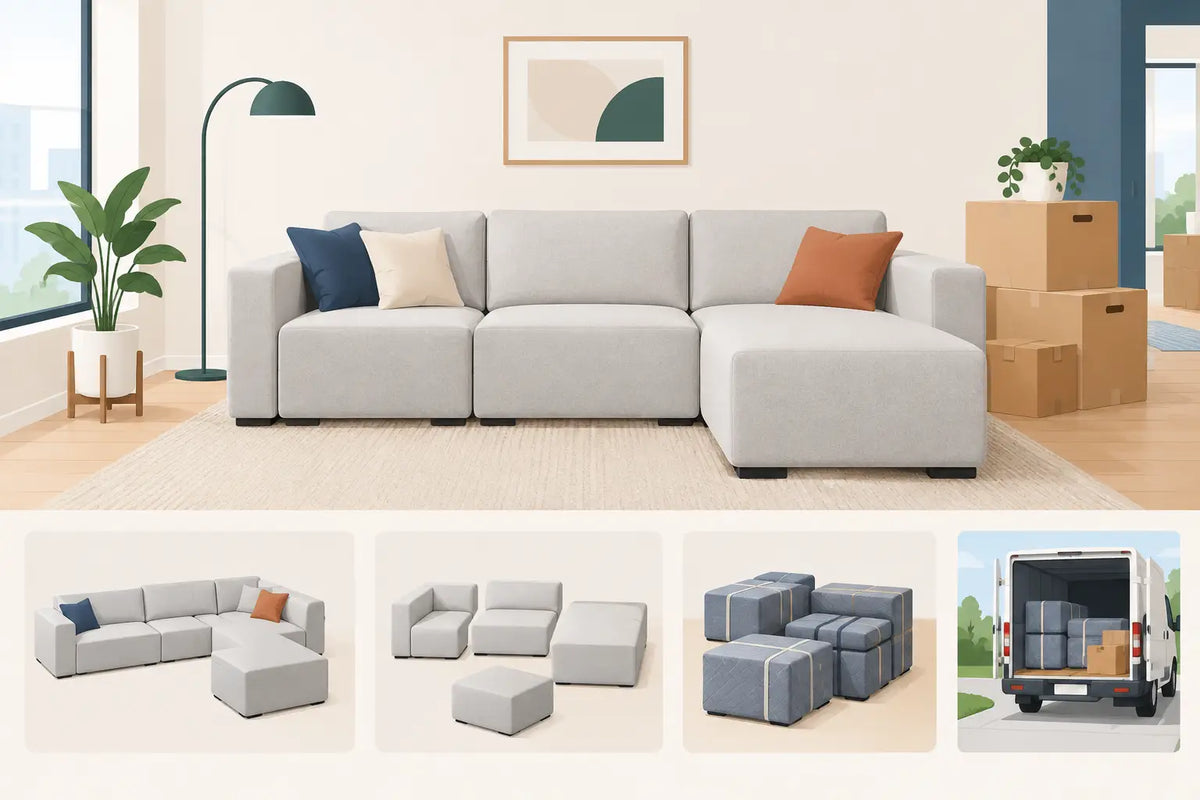
A foam sofa can be a smarter fit when your layout is less predictable. Maybe your living room is also your guest room. Maybe you move frequently, or you like shifting furniture with the seasons. Lightweight foam pieces are easier to carry through narrow hallways and stairwells, and a modular configuration gives you more ways to respond to a new space.
Think Beyond the Footprint
Sectionals do not only occupy floor space. Their depth, arm height, chaise direction, and visual weight can make a small room feel more closed in. This is especially true with bulky arms, tall backs, and dark upholstery.
A foam sofa often has a more relaxed, lower profile. That can preserve sightlines and create a more open feel, particularly in a studio or one-bedroom apartment. Low-profile seating is not for everyone, though. If you prefer a higher sitting position or need extra support when standing up, check seat height carefully before you commit.
Comfort Is About How You Actually Lounge
The stereotype is that a traditional sectional is more supportive and a foam sofa is softer. In practice, construction matters more than category. Cushion fill, foam density, seat depth, back angle, and fabric tension all influence how a sofa feels.
A sectional can offer a familiar upright sit, with defined cushions and armrests that suit reading, watching a movie, or hosting a group. Its chaise is ideal for one person who wants to put their feet up without taking over the whole sofa.
A well-made foam sofa offers a different kind of comfort: broad, continuous surfaces with fewer gaps and a more relaxed invitation to lounge. It can be especially appealing for people who sit cross-legged, curl up with a book, or want a sofa that feels just as good for a movie night as it does for an afternoon nap.
The question is not whether one is softer. Ask whether you want structured seating or adaptable lounging. If possible, order fabric samples and use the product dimensions to mark out the sofa on your floor. That simple exercise reveals more than a perfectly styled image ever will.
Sleeping Capacity Changes the Decision
If guests stay overnight more than once or twice a year, a sofa bed can earn its place quickly. Many sectional sleepers include a pull-out mattress, but the mechanism adds weight, complexity, and limits where the sectional can go. It may also mean moving cushions and rearranging the room each time someone stays over.
A foam sofa bed can turn the same surface you sit on into a sleeping area by unfolding or rearranging the pieces. There is no separate mattress to store and no metal mechanism to pull out. That makes it especially useful in homes where a guest bed cannot take up a permanent room.
There is a trade-off here, too. A sectional sleeper may feel more like a conventional bed depending on its mattress construction. A foam sofa bed provides a simpler, more integrated sleep setup. For frequent overnight use, look for supportive, certified foam and a sleeping surface large enough for the people you expect to host.
Cleaning and Long-Term Ownership
A sofa is not just a design decision. It is where coffee spills, pet hair, weekend snacks, and everyday life land. Before choosing either option, look past the color and ask what happens after the first stain.
Traditional sectionals may have removable cushion covers, but that varies by model. Fixed upholstery can make deep cleaning more difficult, especially on a large chaise or tightly upholstered frame. Replacing one worn cushion can also be challenging if the fabric has faded over time.
Foam sofas with removable, washable covers offer a more practical ownership experience. You can refresh the look, manage everyday messes, and choose a fabric that suits your household rather than treating the sofa like a no-touch object. For homes with children, pets, or frequent guests, that level of care flexibility matters.
Fabric choice still deserves attention. Textured weaves can hide minor wear, while smoother fabrics create a cleaner, more tailored look. Consider how the color will live in your space at different times of day, and choose a finish that works with your real routine, not just your ideal one.
Style Freedom and Personalization
A sectional makes a strong visual statement. That is part of its appeal. It can anchor a large room and establish a clear, inviting lounge area with little additional furniture.
But its shape is often decided before it reaches your home. You choose a left-facing or right-facing chaise, a fabric, and perhaps a few cushion options. If you later move to a different apartment or want to change the room flow, that fixed orientation can become limiting.
A configurable foam sofa gives you more authorship. You can select the size, fabric, and details that make sense for your room, then adjust the arrangement as your needs change. Seesofa’s FLOW and FLOWY models are designed around that idea: everyday seating, guest-ready sleeping, and a look that feels personal rather than pre-set.
This does not mean every room needs maximum modularity. If you have a large, stable layout and love the tailored presence of a classic L-shaped couch, a sectional may be exactly right. Flexibility has the most value when your home, household, or hosting needs are likely to evolve.
Which Option Fits Your Life?
Choose a sectional couch when you have a generous, dedicated living area, regularly seat several people at once, and want a defined anchor for the room. It is a strong choice for a home where the layout is settled and the sofa’s main job is lounging.
Choose a foam sofa when you want seating that can also handle sleepovers, smaller rooms, frequent moves, or changing layouts. It is particularly useful when you want a clean design without giving up practical features such as washable covers and modular possibilities.
The best sofa should not make your home work around it. It should give you a comfortable place to land today, then make room for the way you will live tomorrow.
Seesofa in numbers
- All-foam sofa beds, chairs and corner sofas made in Europe
- Polyurethane foam T3045 (not memory foam)
- Sofa bed: two folding foam mattresses, each 100 × 170 × 17 cm – open both for a 200 × 170 cm bed, or just one for a single bed next to a seat; no mechanism
- Removable, washable covers with zips

Leave a comment
This site is protected by hCaptcha and the hCaptcha Privacy Policy and Terms of Service apply.