

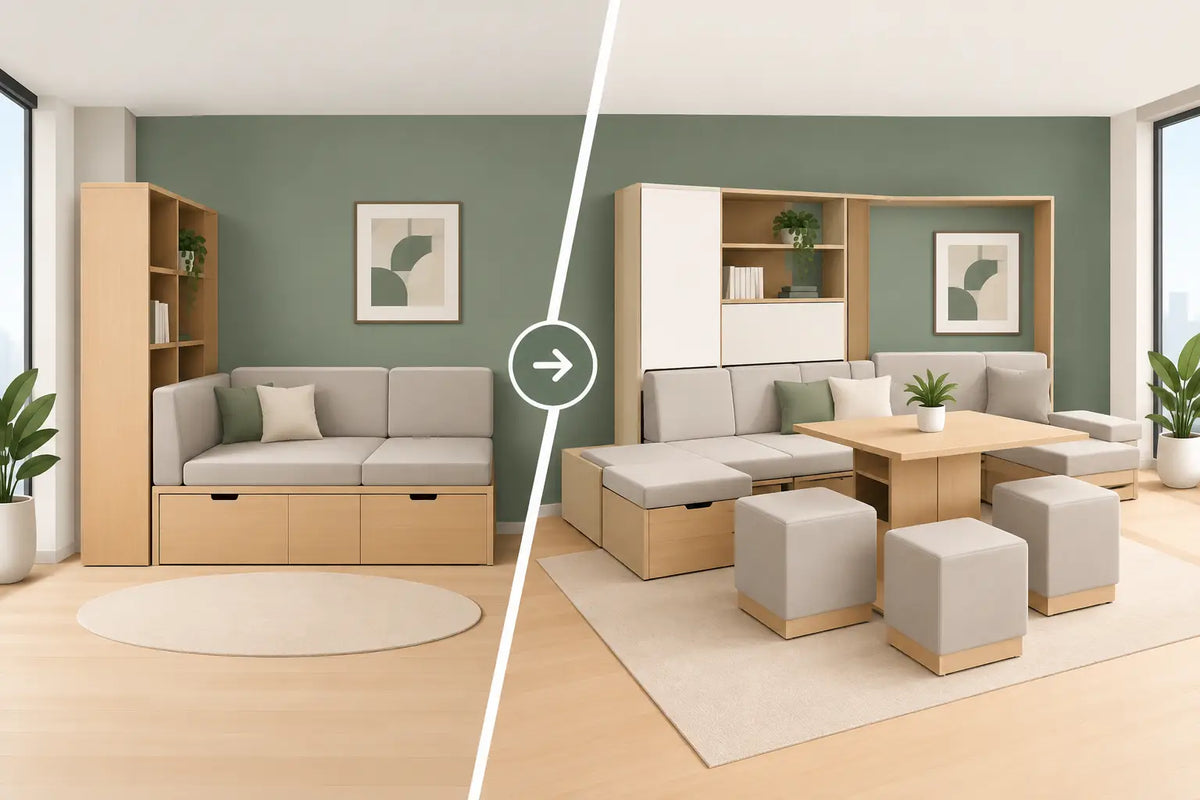
A living room can feel crowded long before it is actually full. Often, the issue is not square footage. It is furniture that asks the room to do only one job. So, does modular furniture save space? It can - especially when it replaces separate pieces, adapts to an awkward layout, and changes with the way you host, relax, and live.
The key is choosing modular pieces with a purpose. A sectional that is too large for the room will still overwhelm it, no matter how many ways it can be arranged. But a thoughtfully sized modular sofa bed can turn one area into a lounge, movie-night setup, reading corner, or guest sleep space without requiring a dedicated room for each function.
Does Modular Furniture Save Space in Real Homes?
Modular furniture saves space by making the same floor area more useful. Instead of buying a sofa, an occasional guest bed, extra chairs, and perhaps a chaise, you can build a single seating system that covers more of those needs.
That matters most in apartments, studios, guest rooms, townhomes, and open-plan homes where every square foot needs to earn its place. A modular configuration lets you create the seating you need now, then adjust it when your space or routine changes. Move a section to open a walkway. Separate pieces for extra seats when friends visit. Reconfigure the sofa for lounging. Convert it into a bed when someone stays over.
Traditional furniture tends to lock you into one layout. A fixed three-seat sofa may fit beautifully until you move, work from home, add a pet, or decide that the corner of your living room would work better as a reading spot. Modular furniture gives you more control over those moments without asking you to start over.
The Space-Saving Benefit Is Flexibility, Not Magic
A modular sofa does not shrink the physical dimensions of a room. What it changes is how efficiently the room functions. That distinction is worth keeping in mind when you are planning a purchase.
The best modular pieces save space in three practical ways: they reduce the number of furniture items you need, fit more precisely into available room dimensions, and make it easier to change the layout as your needs shift. A sofa bed is especially effective because it eliminates the need to reserve a separate guest bedroom or squeeze in a bulky air mattress and storage cabinet.
Consider a one-bedroom apartment with a living room that doubles as a hosting space. A conventional sofa may be perfectly comfortable for everyday use, but overnight guests require another solution. A modular foam sofa bed keeps the room looking like a living room while giving you a ready sleep surface when needed. In this case, the space savings come from avoiding a second bed, not from having a smaller sofa.
The same principle applies in a home office or flex room. Two modular seats can function as a compact sofa most days, then become a sleep setup for visiting family. When the room needs to feel more open, individual modules may be easier to reposition than one heavy, fixed frame.
Where Modular Furniture Works Best
Modular furniture is most valuable when the room has to support more than one mode of living. That could mean working during the day and relaxing at night, entertaining on weekends, or accommodating guests a few times a year.
In a small living room, low-profile modular seating can preserve visual breathing room while still providing generous comfort. In an open-plan home, it can define a lounge zone without the permanence of built-in partitions. For renters, it offers a major advantage: a configuration that fits one apartment can often be adjusted for the next.
It is also useful in homes with changing rhythms. Couples may want a compact arrangement now and a larger lounging setup later. Families may need more floor space when children are young, then more seating as they grow. A modular design gives you the option to rethink the setup instead of replacing the entire sofa.
This is where personalization matters. Selecting the number of modules, the arrangement, fabric, and frame colour helps the furniture feel intentional in the room rather than temporary or improvised. Your space should reflect your routine, not force you into one.
How to Choose a Modular Piece That Actually Saves Space
Start with the room, not the product photo. Measure the usable area of the room, including door swings, radiators, windows, and the paths people take from one area to another. A layout can look compact on paper and still make daily movement feel difficult.
Leave enough clearance around the seating. In most living rooms, you want a comfortable route through the space rather than a narrow gap that makes the room feel like an obstacle course. If the sofa will convert into a bed, measure the fully open sleep footprint too. The question is not only whether it fits against the wall, but whether it works when it is doing its second job.
Think carefully about the configuration you will use most often. A corner arrangement may maximize seating, but a straight sofa can be better for a narrow room. An ottoman-style module can add a place to stretch out without committing to a full chaise. Separate modules can create flexible guest seating, although more individual pieces may mean more visual movement in a very small room.
Scale matters as much as modularity. Deep seats are inviting, but they can consume more floor depth than a compact apartment allows. Tall backs can create a cozy, grounded look, while lower profiles often help a room feel more open. Neither is universally better. The right choice depends on your ceiling height, sightlines, comfort preferences, and how much open floor you want to keep.
A Sofa Bed Can Replace More Than One Piece
For flexible homes, a sofa bed is often the clearest example of furniture working harder without taking over. It combines the everyday comfort of a sofa with a sleeping solution that is already part of the room.
Not all sofa beds deliver the same experience, though. Some rely on complicated mechanisms, thin mattresses, or frames that make them feel like a compromise in both forms. Foam-based modular sofa beds take a different approach: they are designed around supportive, substantial cushions that can be rearranged into a sleep surface. That can make setup simpler and avoid the extra bulk associated with traditional pullout beds.
At Seesofa, the FLOW and FLOWY models are designed for exactly this kind of flexible living. Their lightweight foam construction makes reconfiguration more approachable, while removable, washable covers help the sofa stay practical for everyday life, pets, guests, and the occasional spilled coffee. The goal is not to make a room feel temporary. It is to give it more than one useful setting.
The Trade-Offs to Consider
Modular furniture is not automatically the right answer for every home. More flexibility can mean more decisions, from selecting the right configuration to keeping modules aligned in a high-traffic room. If you love a highly tailored, fixed silhouette and know your layout will not change, a traditional sofa may be the simpler choice.
Price can also be a factor. Well-made modular furniture is an investment because it is designed to perform across multiple uses. The better comparison is not always modular versus a basic sofa. It may be one adaptable sofa bed versus buying a sofa, guest bed, and additional seating separately.
There is also a visual consideration. A modular piece with too many sections, oversized arms, or bulky proportions can make a small room look busier than it needs to. Choose clean lines, a configuration that respects the room's circulation, and a fabric color that supports the feeling you want. Lighter tones can make a compact room feel more open, while deeper colors can add definition when the rest of the space is airy.
Make the Layout Work Harder
Once you have chosen the right size, let the room stay flexible around it. Avoid filling every open edge with side tables, baskets, and accent chairs just because there is a small gap. Empty floor space is useful space. It makes conversion easier, improves flow, and gives the room a calmer look.
A modular sofa can also help you create zones without closing off the room. Positioning a chaise or back section toward the living area can define the lounge, while keeping the other side open to a dining area or kitchen. When guests arrive, the arrangement can shift to encourage conversation rather than leaving everyone facing the same direction.
The best space-saving furniture does not make a home feel smaller. It gives you permission to use the home you already have in more ways. Choose the configuration that supports your real life - quiet evenings, last-minute guests, slow Sundays, and all the plans that change between them.
Seesofa in numbers
- All-foam sofa beds, chairs and corner sofas made in Europe
- Polyurethane foam T3045 (not memory foam)
- Sofa bed: two folding foam mattresses, each 100 × 170 × 17 cm – open both for a 200 × 170 cm bed, or just one for a single bed next to a seat; no mechanism
- Removable, washable covers with zips


Leave a comment
This site is protected by hCaptcha and the hCaptcha Privacy Policy and Terms of Service apply.