

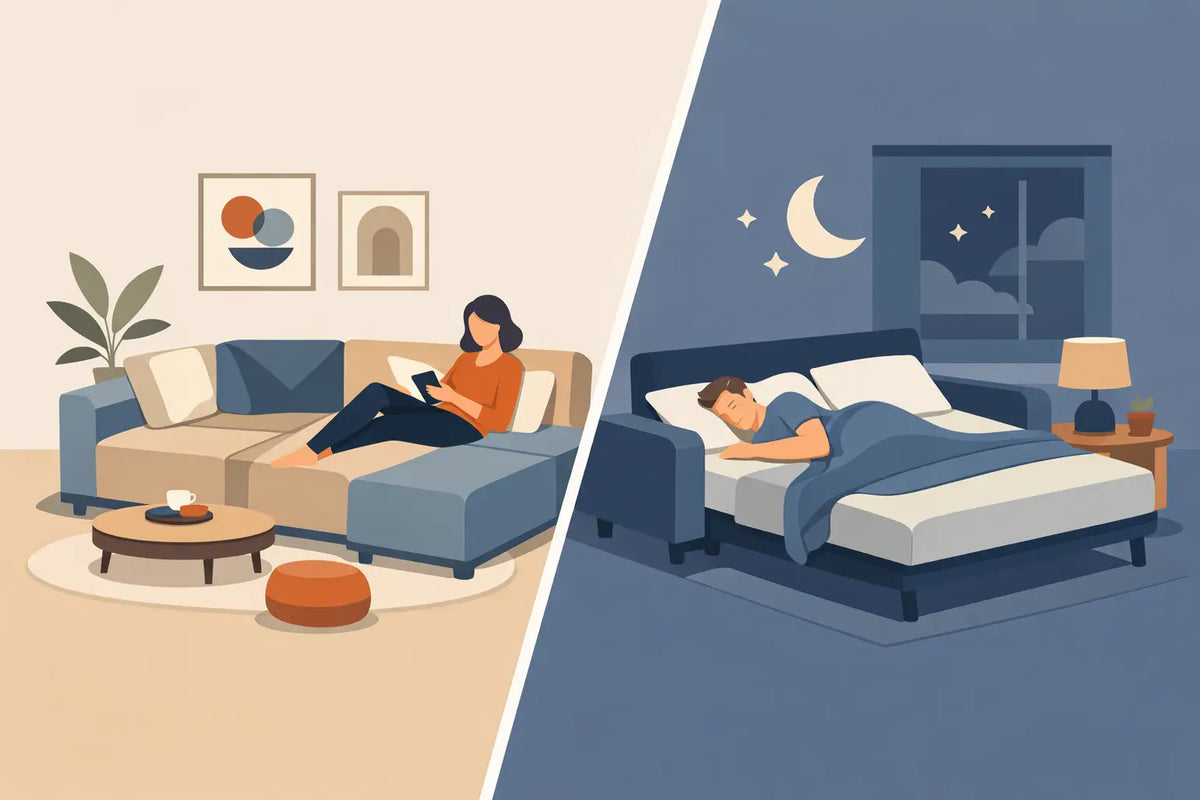
A modular sofa versus sleeper sofa decision is rarely just about where guests will sleep. It is about how your living room works on an ordinary Tuesday, when no one is visiting, the laundry is waiting, and you want a seat that feels as good as it looks. The right choice should support your real routine, not ask you to rearrange your life around a piece of furniture.
For some homes, a classic sleeper sofa is the clearest answer. For others, modular seating or a foam sofa bed offers more freedom to shift, host, stretch out, and refresh the room over time. Here is how to tell which design belongs in your space.
Modular Sofa Versus Sleeper Sofa: The Core Difference
A traditional sleeper sofa is a sofa with a concealed bed mechanism. Pull out the mattress, unfold the frame, and the seating area becomes a guest bed. It is a familiar format, especially when occasional overnight guests are the main reason for the purchase.
A modular sofa is built from separate sections that can be arranged in different ways. Depending on the design, those sections may form a straight sofa, a chaise lounge, a sectional, separate seats, or a sleep-ready surface. Modularity is about layout freedom first. Sleeping capability depends on the specific model.
That distinction matters. A modular sofa does not automatically become a bed, and a sleeper sofa does not automatically adapt to a new floor plan. But a modular foam sofa bed can bring both ideas together: flexible seating by day and an inviting sleep surface when needed.
Choose Based on the Job Your Sofa Does Most
The best option is usually the one that performs better for the 90 percent of the time guests are not sleeping over. Start with the role your sofa plays every day.
When a traditional sleeper sofa makes sense
A sleeper sofa can be a smart choice for a dedicated guest room, a home office that occasionally hosts family, or a living room where the furniture layout is unlikely to change. If you want a conventional sofa profile and expect to open the bed only a few times a year, a pull-out design may fit the brief.
The trade-off is that many sleeper sofas prioritize the hidden mechanism. They can be heavier to move, more fixed in their footprint, and less forgiving when you want to rework the room. Opening the bed can also mean moving a coffee table, removing cushions, and clearing enough floor space for the frame.
Comfort varies widely. A good sleeper sofa can provide a pleasant night for a guest, but thin mattresses, support bars, and worn mechanisms are common concerns in older or lower-quality designs. If overnight comfort is a priority, test or carefully review the actual sleep surface, not just the appearance of the sofa when closed.
When modular seating is the stronger fit
A modular sofa is made for homes that change. You may move from a studio to a larger apartment, turn a spare room into a nursery, host friends for movie night, or simply want the freedom to swap the chaise from one side to the other. Separate pieces make those changes possible without replacing the entire sofa.
This format is especially useful in apartments and multifunctional rooms. A compact two-seat arrangement can become a lounge-ready sectional when you have more room. In an open-plan home, modules can help define a conversation area without creating a permanent visual barrier.
The key question is whether the modular design also offers a practical sleep setup. If it does, you gain more than an occasional guest bed. You gain a flexible surface for overnight visitors, relaxed weekends, kids' sleepovers, or a temporary bed during a move.
Think About Guest Sleep, Not Just Guest Capacity
A sofa that technically converts into a bed is not always a sofa your guest will want to sleep on. Look at how it transforms and what supports the body overnight.
Traditional pull-out sleepers often use a folding mattress on a metal frame. This can work well for occasional use, but the experience depends heavily on mattress thickness, frame quality, and how flat the surface feels. A bed that requires a topper to be comfortable may be fine for one night, but less ideal for frequent visitors.
Foam-based sofa beds create a different experience. Rather than pulling out a separate mattress, the sofa cushions or modular sections form the sleep surface. High-quality foam can feel supportive and even across the body, without a center bar or hinged frame beneath you. It also removes the mechanical steps that can make last-minute hosting feel like a project.
For frequent guests, consider the bed dimensions as carefully as you would for a standard mattress. Ask whether one or two adults can sleep comfortably, how easily bedding fits, and whether the setup leaves room to walk through the space. A generous sleep surface is more useful than a complicated conversion feature you avoid using.
Measure the Room in Both Modes
The most common furniture mistake is measuring only the sofa in its seated position. A sleeper must fit when it is open. A modular sofa must fit in the arrangement you want now and the one you may want later.
For a pull-out sleeper, measure the distance from the back of the sofa to the far edge of the open bed. Then account for a path around it. Doors, hallway turns, coffee tables, media consoles, and rugs all affect whether conversion is actually easy.
For modular seating, measure the full width and depth of each planned layout. Pay attention to chaise depth and arm placement, particularly in narrow rooms. It helps to tape the footprint on the floor before ordering. You will quickly see whether the room still feels open, and whether a reconfigured layout could solve a future need.
Do not forget delivery access. Apartment elevators, stairwells, tight entryways, and older homes can make a one-piece sleeper difficult to bring inside. Lightweight modular pieces are often easier to carry, place, and move later, which is a practical advantage that is easy to overlook at checkout.
Consider Care, Fabric, and Long-Term Ownership
A sofa bed is likely to see more than normal sitting. It may handle snacks during streaming nights, visiting pets, children building forts, and guests sleeping on it with sheets that shift around. The upholstery needs to suit that level of life.
Removable, washable covers can make a major difference, especially for light colors or busy homes. Instead of treating a spill as a permanent event, you can clean the cover and return the sofa to everyday use. Swappable covers also give you a way to update the room's color story later without buying new furniture.
Fabric choice deserves the same attention as layout. Consider texture, abrasion resistance, the feel against bare skin, and how the material works with your light. Requesting fabric samples before committing helps prevent the familiar surprise of a color looking different under your own lamps and windows.
At Seesofa, the FLOW and FLOWY collections are designed around this kind of ownership: configurable foam seating that can support everyday lounging, guest sleep, washable-cover care, and a look that remains distinctly yours.
The Decision Comes Down to Flexibility
Choose a traditional sleeper sofa when your main need is an occasional, concealed guest bed and your room layout is settled. It is a straightforward solution for spaces that do not need much rearranging.
Choose a modular sofa when layout freedom, easy moving, and personalized seating matter most. Choose a modular sofa bed when you want that freedom without giving up the ability to host overnight. It can be the better fit for a home that needs one room to do several jobs well.
Price should be viewed through that same lens. A less expensive pull-out can be perfectly reasonable for rare use. But if the sofa is central to daily life, investing in comfort, durable materials, and a format that can evolve with your home may offer more value over the years.
Your sofa should not force a choice between a beautiful living room and a welcoming place for guests. Measure honestly, imagine the room on a normal day, and choose the configuration that gives you the most comfort and freedom to live your way.



Leave a comment
This site is protected by hCaptcha and the hCaptcha Privacy Policy and Terms of Service apply.