


A Friday-night guest should not mean dragging a mattress through the living room or apologizing for a couch that was never meant for sleeping. The right modern sofa bed apartment setup gives one room two clear roles: a place to settle in every day and a genuinely comfortable place to rest when company stays over. The goal is not to make a small home feel like a compromise. It is to choose furniture that earns its footprint.
Start With What Your Room Actually Needs
Before choosing a silhouette, fabric, or color, look at how your apartment works from morning to night. A sofa bed in a studio has a different job than one in a one-bedroom with an occasional guest. In a studio, it may be your primary bed, your daily sofa, and the visual anchor of the room. In a larger apartment, it may be a relaxed lounge piece that turns a home office or den into a guest space when needed.
That distinction matters because the best configuration is rarely the largest one. A compact sofa bed with comfortable proportions can make a narrow living room feel open, while an oversized model can leave no clear path around the coffee table or to a balcony door. Give yourself room to move, open drawers, and live around the furniture - not just look at it in an empty floor plan.
Measure for Open and Closed Positions
Measure the wall where the sofa will sit, then measure the full area it needs once converted for sleep. This second measurement is where apartment plans often fall apart. A bed that fits on paper can still block a doorway, press against a media unit, or leave guests with no place to set down a phone or glass of water.
Think about circulation, too. Keep a comfortable route from the entry to the kitchen, bathroom, and bedroom area. If the sofa bed will open frequently, avoid placing it where every conversion requires relocating several pieces. Flexible living should feel easy, not like a furniture puzzle at the end of a long day.
What Makes a Modern Sofa Bed Apartment-Ready?
A modern sofa bed should look intentional in its sofa form. Clean lines, low visual weight, and tailored upholstery help it sit naturally in a contemporary apartment rather than announcing itself as a spare bed. But good looks are only half the decision. The better question is whether it supports the way you use your space every week.
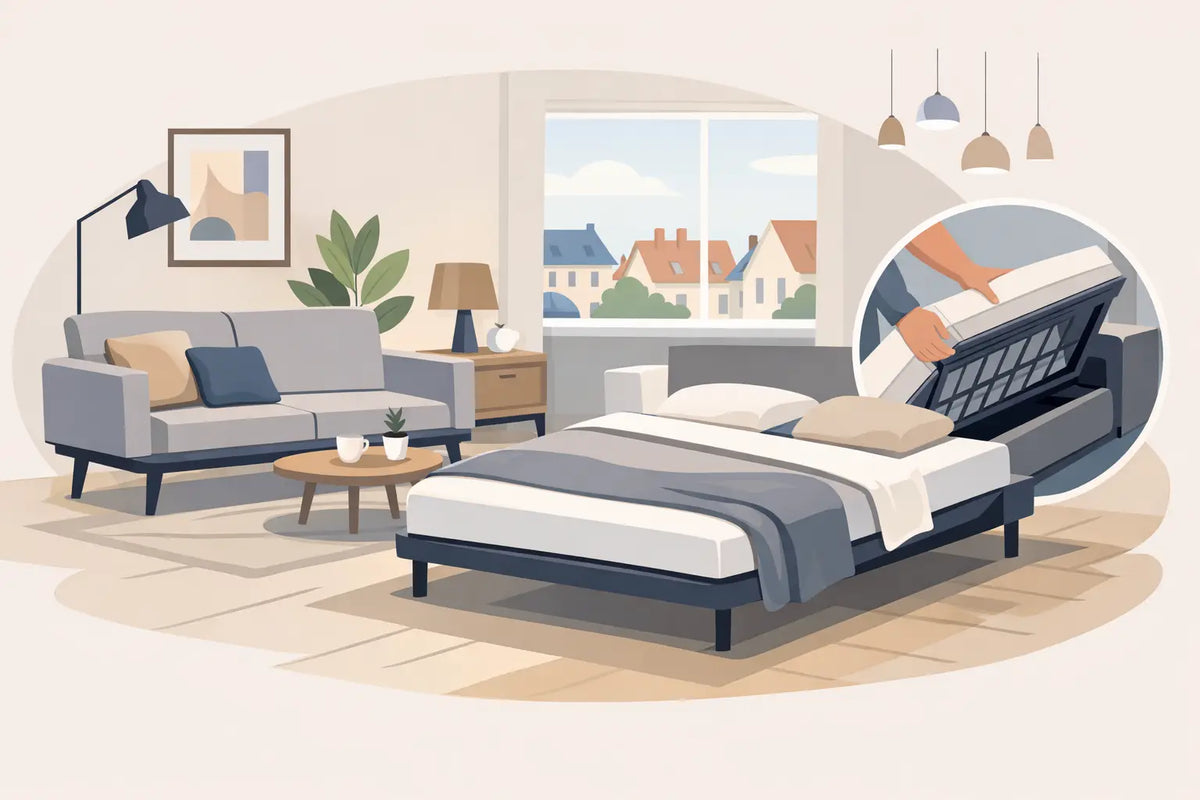
For everyday seating, pay attention to the feel of the cushions, seat depth, and back support. For sleep, consider the quality of the surface rather than treating the bed function as an emergency-only feature. Foam sofa beds can be particularly appealing in apartments because they offer a supportive, continuous sleep surface without the hard bars or uneven gaps associated with some traditional pull-out mechanisms.
Lightweight construction is another practical advantage. Apartment moves often involve elevators, tight stairwells, hallway corners, and changing floor plans. A sofa that is easier to handle gives you more freedom to rearrange your room or take it with you when your next place has a different layout.
The conversion itself should suit your habits. If guests stay over once a year, a more involved setup may be fine. If you host often or use the bed nightly, choose a design that shifts between functions quickly and without a complicated mechanism. The less effort it takes to make the bed, the more likely the feature will serve you well.
Design a Sofa Bed Around Your Space
Apartments benefit from furniture that feels chosen, not merely fitted in. That is where personalization makes a real difference. The same sofa bed can look soft and relaxed in a warm textured fabric, crisp and architectural in a tightly woven neutral, or more expressive in a deep, saturated color.
Start with the elements that are hardest to change: flooring, wall color, and large wood or metal finishes already in the room. Then decide whether you want the sofa bed to blend in or create contrast. A pale neutral can make a compact room feel lighter, while a charcoal, forest green, or rust-toned upholstery can ground an otherwise minimal space.
Fabric should be a lifestyle choice as much as a style choice. If you have a pet, young children, frequent guests, or a habit of eating dinner on the sofa, removable washable covers can make ownership far less stressful. They allow you to enjoy a light color or a textured fabric without treating your living room like a no-touch zone.
Details such as metal leg finishes also matter more than they seem. Matching them to lighting, shelving hardware, or a side table creates a more pulled-together room. At Seesofa, the FLOW and FLOWY models are designed around that freedom to configure - so the sofa can reflect your layout, preferred fabric, and everyday routine rather than forcing you into a fixed format.
Give the Sofa Bed Room to Breathe
A sofa bed does not need to sit flat against the longest wall simply because that feels like the obvious choice. In an open-plan apartment, it can work as a soft divider between the living area and dining zone. Floating it slightly from the wall may create a more considered layout, especially if the back of the sofa is finished cleanly and there is enough room to walk behind it.
Use a rug to define the seating zone, ideally large enough that the front legs of the sofa and nearby chairs sit on it. This creates visual order without adding bulky furniture. A slim coffee table, nesting tables, or a movable ottoman can provide surface space while staying easy to shift when the bed is opened.
Keep the area beside the sofa bed useful but uncluttered. A small side table with a lamp makes the room feel like a proper guest space at night. During the day, it is simply a practical place for coffee, books, and charging cables. If storage is limited, choose a bench, ottoman, or console that can hold extra bedding out of sight.
Be Honest About the Trade-Offs
There is no single best sofa bed for every apartment. A generous, lounge-like design may be perfect for movie nights but take up more floor space. A smaller option can preserve an airy layout but may offer less room for stretching out. Dark upholstery is forgiving with everyday marks, while a lighter shade can make a compact space feel more open.
The smartest choice depends on which function matters most. If it will be your primary bed, prioritize sleep comfort and ease of conversion first. If it is mainly a sofa for entertaining, focus on seating proportions and visual presence, while still choosing a bed surface that guests will appreciate. If your apartment changes with your needs - a new roommate, a hybrid work schedule, more frequent visitors - modular flexibility can be worth more than a fixed, traditional couch.
It also helps to think beyond the purchase day. Ask how the fabric will wear, how you will clean it, and whether the sofa can move with you. Certified materials, durable construction, and practical care features are not background details. They are what help a major piece of furniture continue to feel good years after the first delivery.
Make Hosting Feel Effortless
A well-planned sofa bed setup lets you host without turning your apartment upside down. Store a fitted sheet, light blanket, and two pillows nearby so the bed is ready without a late-night search through closets. Choose bedside lighting that works for both reading and winding down, and leave a clear spot for a guest's bag.
The best part is what happens after they leave. With a sofa bed that suits the room, you do not have to restore your living space from a temporary sleeping arrangement. You simply fold, reset a few cushions, and get your apartment back exactly as you designed it: comfortable, personal, and ready for whatever the week brings.


Leave a comment
This site is protected by hCaptcha and the hCaptcha Privacy Policy and Terms of Service apply.