

Memory Foam Sofa vs. Regular Sofa: Which Is Right for You?
There's a particular kind of tired that hits at 7 p.m. on a Wednesday. The day is over but not really, dinner is somewhere between idea and reality, and what you need is a place to land. The sofa is the answer – which means how it feels under you matters more than almost any other piece of furniture in your home.
If you've been shopping recently, you've probably seen the term memory foam sofa showing up everywhere. So what does it actually mean, how does a foam sofa compare to a traditional one, and which version genuinely suits your daily life? Below, we walk through the differences, the trade-offs, and the cases where each option wins – ending with a specific recommendation from our own range.
What Is a Memory Foam Sofa?
A memory foam sofa is a sofa whose seat (and sometimes back) cushions use viscoelastic foam – the same family of foam developed by NASA in the 1960s and later popularised in mattresses. The defining feature is temperature-responsive contouring: the material softens slightly under body heat and reshapes around you, then slowly returns to its original form once you stand up.
It's worth distinguishing between three things that often get confused:
- Polyurethane foam (PU foam) – the standard foam in most sofas. Springy, supportive, comes in different densities.
- High density foam sofa – a sofa built with higher-density PU foam (typically 35–50 kg/m³). Firmer, more durable, holds shape over years of daily use.
- Memory foam sofa – a sofa with a layer (or full core) of viscoelastic foam. Softer feel, body-contouring, slower rebound.
In practice, most quality memory foam sofas use a layered construction: a high-density base for support, a memory foam top layer for comfort. This is the sweet spot – the slow, pressure-relieving feel on the surface without sinking through to the frame.
The foam seat sofa concept isn't new, but materials have improved over the last decade. Modern memory foams are more breathable than early versions, and many include cooling gel infusions or open-cell structures.

Benefits of Memory Foam
A memory foam sofa offers a different kind of comfort from a regular sofa – not necessarily better in every dimension, but distinct in a few specific ways.
Pressure relief. Memory foam distributes weight evenly across the contact surface. If you spend long evenings on the sofa, this matters. The pressure points that begin to ache on a firmer cushion after 90 minutes simply don't develop the same way.
Body contouring. The foam adjusts to your shape rather than asking your shape to adjust to it. People with back issues, joint sensitivity, or recovery-related discomfort often find this genuinely helpful.
Reduced motion transfer. When someone sits down next to you, you feel less of it. Subtle – but if you nap on the sofa, you'll notice.
Quiet support. No squeak, no settling sound, no spring noise.
Longevity at the surface. Quality memory foam recovers shape slowly but reliably, keeping the cushion silhouette longer than a softer fibre-filled equivalent.
What to watch out for:
- Temperature sensitivity. Lower-quality memory foam can feel warmer in summer. Look for open-cell or gel-infused versions to avoid this.
- Initial firmness. Memory foam can feel firmer when the room is cold; it warms up under you within a few minutes.
- A different feeling. It's not bouncy. If you love the "spring back" of a traditional sofa, memory foam can feel unfamiliar at first – test before you commit.
For ongoing care, a high density foam sofa with memory foam top layer benefits from being rotated and flipped (if cushions are reversible) every few weeks – we cover this in a dedicated sofa care guide.
Regular Sofas: Pros & Cons
"Regular sofa" in practice means a sofa filled with PU foam, fibre, feathers, or a combination – most sofas you've sat on in your life fall here.
Pros:
- Familiar feel – bouncy, supportive, predictable.
- Wide variety – almost any silhouette, fabric, or style exists in this category
- Lower entry price – standard foam construction keeps the price floor lower.
- Easier to fluff and reshape, especially with fibre-filled cushions.
-
Cool feel – no heat retention.
Cons:
- Less pressure relief after long sitting sessions.
- Faster shape loss with lower-density foams (under 30 kg/m³).
- More motion transfer – springs and standard foam pass movement across the cushion.
- More variable quality – "foam sofa" can mean anything from premium 50 kg/m³ moulded foam to a thin layer over flat board. Reading the spec matters.
A high-quality regular sofa with a high density foam sofa core can absolutely outperform a cheaper memory foam alternative. Density and construction matter more than the foam category alone.
Which Sofa Is Best for Daily Use?
Here's where things get genuinely useful. Neither type is universally better – the right answer depends on how you actually use the sofa.
A memory foam sofa makes the strongest case if you:
- spend more than two hours a day on it,
- experience back, hip, or joint discomfort,
- nap on the sofa regularly,
- live somewhere with cooler indoor temperatures most of the year,
- share the sofa with a partner whose movements wake you when napping,
- want a quieter, more cushioned feel under you.
A regular sofa is the better call if you:
- mostly use the sofa for short sittings,
- prefer a bouncier, more upright support,
- live in a warm climate without strong air conditioning,
- want wider design variety at a lower entry price,
- have children who treat the sofa like a trampoline (regular foam takes the abuse better).
If you answered "long hours, cool room, naps, comfort over bounce" – a memory foam sofa is genuinely worth the extra cost. If you answered "short hours, family use, design variety" – a high-quality regular sofa will serve you better.
A practical note on fabrics: memory foam sofas look best in upholsteries that drape softly and don't fight the contouring underneath. Bouclé, brushed cotton, washed linen, and matte velvet all work well. We've written more about matching fabric to use case in a separate fabric guide.
Our Recommendation: Flow Sofa
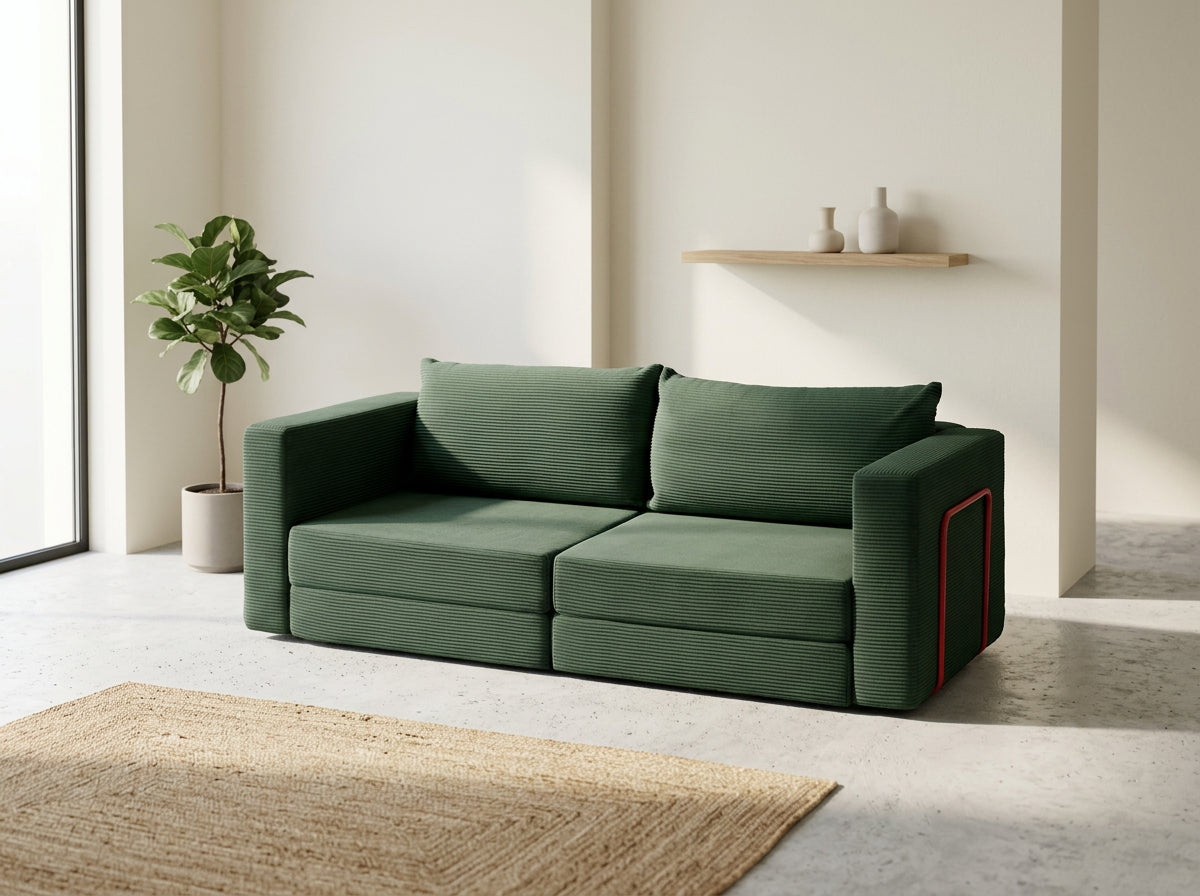
If we had to pick one model that captures everything good about the memory foam sofa category without its common downsides, it's the Flow Sofa.
What makes Flow worth the recommendation:
- Layered construction. A high-density base for long-term shape retention, topped with a memory foam layer for contouring comfort. You don't sink through; you settle in.
- Breathable foam. Open-cell memory foam designed to release heat rather than trap it – the answer to the "sleeping hot" reputation of older memory foam.
- Considered silhouette. Modern lines, generous seat depth (around 60 cm), low-slung back – the kind of shape that ages without looking dated.
- Removable, washable covers. Practical for daily family use; everything that can be cleaned, can be cleaned.
- Frame. Solid hardwood frame with reinforced corners – designed to outlast the foam itself.
It works particularly well as a primary living-room sofa for households where the sofa is genuinely the centre of the evening. Reading, working, watching, occasionally falling asleep – Flow handles all of these without complaining.
A few things to consider before ordering:
- Measure twice. Flow's depth is generous; in smaller living rooms, the two-seater version often works better than instinct suggests.
- Choose fabric for daily use. A bouclé or performance weave handles family life best.
- Allow a settling-in period. Like any memory foam product, Flow softens slightly in the first two to three weeks as the foam fully responds to your body and your room's temperature.
You can explore the full configuration – sizes, fabrics, leg finishes – in the Flow Sofa product page on seesofa.com and compare it with the rest of our sofa range to make sure it fits your space and your life.

Frequently Asked Questions
How long does a memory foam sofa last?
A well-made memory foam sofa with a high-density base typically lasts 8–12 years of daily use. The hardwood frame outlasts the foam, which can usually be replaced.
Is a memory foam sofa good for back pain?
For many people, yes. The contouring distributes pressure evenly and supports the natural curve of the lower back. Individual experience varies – if possible, try one in person before buying.
Does a memory foam sofa sleep hot?
Older versions had this reputation; modern open-cell and gel-infused memory foams are significantly cooler. Look for "breathable" or "open-cell" in the specification.
Is a high density foam sofa the same as a memory foam sofa?
No. High-density foam is firmer, springier PU foam (35–50 kg/m³). Memory foam is a different material – softer, slower to rebound, temperature-responsive. The best sofas often combine both.
The right sofa is the one your body recognises at the end of a long day – the one that says sit, you're home now. Whether that's a contouring memory foam build or a more traditional spring-and-foam construction depends entirely on how you live.



Leave a comment
This site is protected by hCaptcha and the hCaptcha Privacy Policy and Terms of Service apply.